
Users should know what is going to take place. So a well-designed website has to be user-friendly. This can be possible by having familiar or common elements, labels, and actions on both pages. That is called maintaining consistency across all of the pages of a website.
Some other consistent signals influence people’s perceptions of reliability as well. The buying process can become easier with standard buttons, menus, and error messages. Consistent websites wins everytime, just like CNC milling wins between manual vs. CNC milling. In case of entering information, well-planned form templates can simplify the process.
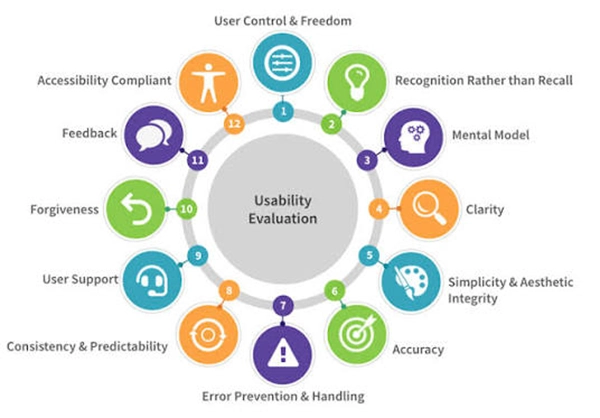
Interface consistency is a web design principle that has to do with uniformity. Redirecting links should remain consistent, buttons should be the same if they offer the same functionality, and headings should be enhanced consistently. It doesn’t have to be the same format on every page – the visitor must be able to interpret the page without making assumptions. Knowing what industrial automation is gives a good base to take inspiration from how a smooth process works.
Colors, spacing, typography, icons, layouts, and the response to action have to be consistent. A magnifying-glass icon should be consistent. If a search opens in one location, then a search should open in another location as well. Simple patterns enable users to acquire knowledge and re-use it later.
Having a universal look reduces users’ struggle to deal with a site. These visitors do not need to learn menus on each page or risk clicking on a link they may have known before but have forgotten the new way. Tasks like searching for a product and updating an account are easier to handle.
Predictable patterns additionally enable users to stay clear of errors. By always saving a change with a press of “Save” and clearly leaving without saving on “Cancel”, visitors feel more confident in their actions. A confirmation pop-up will let them know if the web page is reacting in a way that was expected.
From launch to build, teams can incorporate consistency into their design. Shared rules guide designers and developers as user testing shows problems. Useful actions include:
Consistency can be especially beneficial for individuals using screen readers, keyboard navigation, or magnification. Predictable interfaces help to make websites more usable for people with disabilities, and this is quoted by the W3C’s Web Content Accessibility Guidelines for consistent navigation and consistent identification.
If an icon is used or is the only one on a specific button, then provide a useful text alternative. Also, the button’s action should not be confused by having a different text label on different pages.
Consistency isn’t always the same layout on each page. The goal of a product page, help article, and checkout screen will differ, and therefore each will have a different structure. Maintain predictable shared functions and customize content to meet task requirments.
Don’t do a pattern because it already has one. If the test result reveals that the identity is confusing for visitors, enhance the label, icon, or layout throughout the site instead of keeping the error. Consistency facilitates clarity and should not make a website more cumbersome.
In conclusion, consistency with interfaces improves the usability of sites, making them easier to learn, with predictable actions and less prone to error. Incorporating patterns sensibly and usability testing with actual visitors will result in simpler and more reliable sites.
Ans: Interface consistency in website design refers to a simple interface that is easy to navigate throughout all pages and makes a website easier to use and more reliable.
Ans: Interface consistency helps users understand how a website works, find information more easily, complete tasks with confidence, and avoid mistakes because actions are predictable.
Ans:Adding an identical layout on every page can make it harder to support different tasks. Websites should maintain consistent shared elements while adapting page structures.
