
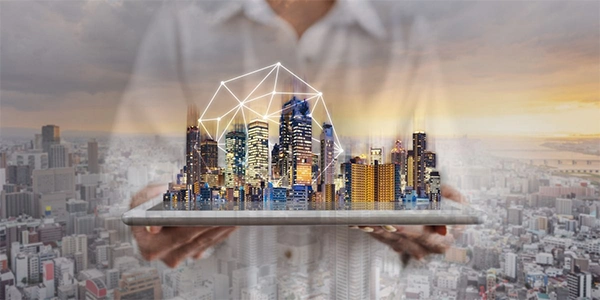
Today, commercial buildings evolve extremely fast, and having a desirable location and a stylish design will not be enough for success in 2027. Building proprietors and developers need smarter solutions when it comes to tasks such as managing energy resources, ensuring safety, and controlling expenses for maintenance work.
The use of new technologies has already impacted the process of designing and running commercial properties significantly. The costs of energy are growing, and the expectations of future tenants are becoming higher and higher.
Nevertheless, there are many different tools, and only some of them really influence the market. Here, you will find six technologies used in the sphere of property management today, according to the opinions of specialists.
Long before a commercial building is finished, its success is often decided by how well stakeholders can picture it. The flat layout of the floor plan and simple sketch were once the norm for proposing a new project to potential investors and borrowers. Today, photorealistic CGI gives everyone involved a true sense of scale, light, and design long before commercial construction even begins.
Giovanni Scippo, Founder and Creative Director of 3D Lines, has watched this technology become a genuine driver of project success rather than just a marketing extra.
“Developers used to show investors flat floor plans and hope they could picture the finished building. Now we build photorealistic CGI that lets a stakeholder walk through a smart lobby before a single wall goes up. One commercial client used our renders to secure planning approval two months faster than their previous project. Great visuals do not just sell a building; they help everyone involved understand it before it exists.”
This type of visualization is not only about making the presentation deck look good. It helps planning boards, investors, and future tenants fully understand a building’s design and purpose, which speeds up approvals and reduces costly misunderstandings later in the process. A clear picture early on saves time and money throughout the entire project.
The cost of energy is among the highest continuous costs for any business premises, and this makes energy management systems one of the best investments in 2027. Solar panels, battery storage, and efficient lighting systems are no longer niche additions reserved for environmentally focused projects. They have become standard expectations for any building hoping to control long-term operating costs.
Kelly Govier, Director of MD Govier Electrical Engineering, has seen firsthand how quickly these systems shift from an added expense to a genuine competitive advantage.
“Commercial clients used to see solar and battery storage as a cost, not an investment worth prioritizing. We installed a combined solar and battery system for one client that cut their energy costs by nearly a third within the first year. Our NICEIC-approved team also handles EV charging installs, which more facility managers are requesting every single month. Smart energy upgrades pay for themselves faster than most building owners expect.”
This transformation is part of a larger trend occurring within commercial real estate. Building owners are realizing that energy efficiency is not just good for the environment; it is good for the bottom line. As more tenants expect EV charging and efficient systems as standard features, buildings without them risk falling behind in a competitive leasing market.
In addition to the use of solar panels and battery storage, smart lighting and building management systems have started transforming operations in commercial buildings. These systems automatically adjust lighting, heating, and cooling based on occupancy and time of day, cutting waste without requiring constant manual adjustments from staff. A building that once relied on someone remembering to turn off lights now manages itself through sensors and simple automation.
Facility managers are increasingly drawn to these systems because they reduce both energy waste and maintenance headaches at the same time. A single dashboard can now show a manager exactly which areas of a building are using too much energy, allowing problems to be fixed before they show up as a surprise on a utility bill. This level of visibility was not possible in commercial buildings even a few years back.
Predictive maintenance based on sensors happens to be one of the subtle yet most useful changes that commercial buildings are experiencing. Instead of waiting for equipment to fail, modern systems track performance data continuously and flag small issues before they become expensive breakdowns. This approach saves money by catching problems early, rather than paying for emergency repairs after something already went wrong.
Elevators, HVAC systems, and electrical panels are among the most common targets for this kind of monitoring in commercial buildings today. Those facility managers who practice predictive maintenance experience fewer unplanned shutdowns and lower costs of repairs over the lifespan of the building. This proactive approach is quickly becoming the standard rather than the exception in well-run commercial properties.
Safety systems are easy to overlook until something goes wrong, yet fire protection remains one of the most important systems in any commercial building. Standpipes, hydrants, and pressure systems are designed to perform under extreme pressure during an emergency, but only if they are properly maintained and tested on a regular schedule. Many property owners take the systems to be functional simply because they haven’t made use of the systems lately, and this is a risky practice to follow.
Taylor Pace, Owner of Flow, Standpipe Flow Testing, has seen firsthand how routine testing catches problems long before they become real emergencies.
“Commercial property managers often forget that fire protection systems need regular testing just like any other building system. We perform five-year standpipe flow testing across Virginia, Maryland, DC, and North Carolina to catch pressure failures before they become real emergencies. One property avoided a costly violation because our flow test caught a failing valve months before its scheduled inspection. A building is only as smart as its weakest safety system.”
This is an example that proves that intelligent buildings are more than just about fancy technology. Reliable, well-tested safety systems remain just as important as solar panels or automated lighting, and they deserve the same level of attention from building owners and facility managers alike.
This culminates with the development of data dashboards that serve as the centralized point where all of the technology is connected. Instead of managing energy use, maintenance schedules, and safety testing through separate systems, many buildings now funnel this information into a single platform that facility managers can monitor in real time. This consolidation makes it far easier to spot patterns and make smart decisions quickly.
A good dashboard can show a facility manager exactly when a battery system needs attention, when a fire safety test is due, and where energy use is spiking, all from one screen. Such visibility transforms the numerous smart systems of the building into an integrated process, not just a group of disparate tools. As more buildings adopt this kind of centralized monitoring, the gap between smart buildings and outdated ones will only continue to grow.
All six technologies discussed in the guide have one thing in common. Each one solves a real, specific problem that commercial property owners face today, rather than offering a flashy feature that looks impressive but delivers little practical value. Photorealistic visuals, smart energy systems, automated building management, predictive maintenance, tested fire protection, and centralized dashboards all work together to make a building genuinely smarter rather than just more expensive.
These building owners benefit tremendously in more than just reduced utility costs due to making this investment early on. They attract better tenants, avoid costly emergencies, and build properties that hold their value well into the future. That lesson, shared by experts working directly in design, electrical engineering, and fire safety, may be the most valuable takeaway any commercial property owner can carry into 2027 and the years that follow.
Ans: Smart buildings are office spaces that rely on technological devices and tools to perform core functions within these structures. Such systems can control how much energy is consumed, increase security, simplify maintenance, and make the building more efficient to work and live in.
Ans: The technology makes use of various solutions such as solar panels, energy storage units, EV chargers, and energy-saving lighting, which decrease the use of electric power from non-renewable sources.
Ans: A BMS (building management system) is a centralized system used to control and manage building systems such as lights, heating, ventilation, and air conditioning.
Ans: Fire protection devices like standpipe, hydrant, and pressure testing require regular checks for them to work appropriately at times of emergency. Testing will enable identification of defects in these items and also improve the fire safety standards.
