
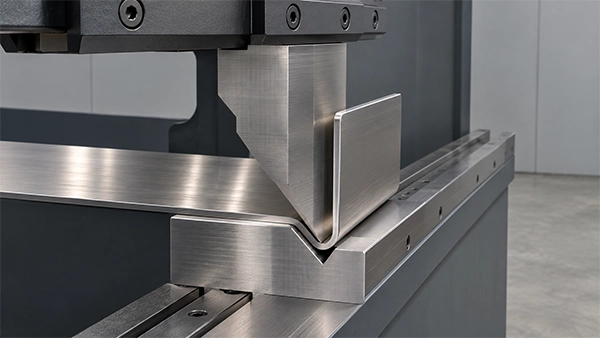
Your stainless steel sheet may lie evenly on the cutting table, and once it’s bent, your problems begin.
You may see your corner springs open, your hole near the bend becomes distorted, or your brushed finish picks up scoring that’s visible when it’s being put together.
So when you want to have your sheet metal bent. Ensure that you think about the following points before your sheet hits the bending press. If you’re searching for sheet metal bending services or need your parts made, here are some things to consider.
There are a lot of grades of stainless steel to select from. Different grades will permit your bracket/cover/equipment to avoid corrosion and bending better.
Grade 304 is commonly used for typical stainless steel parts. 316 will offer more resistance to chlorides and is good to ask about when using salt spray or other profound cleaning methods.
There are also things to think about with the sheet itself.
Stainless steel that is annealed and in an austenitic state will often be simpler to bend when compared to that of a hard material. Based on how hard the material is, you may require a bigger radius and separate tooling.
When inquiring about metal bending services, ensure you let them know what grade and how thick the material is and what kind of finish. Also tell them what it will be utilised for; corrosion resistance can usually come into play as well. They will be able to review your drawing before they begin.
Your part might include a good crisp-looking corner, but your bend radius may be far too tight for the sheet you’re working with. The outer surface of the sheet expands as it bends, and this could be the reason for your material cracks.
The inside bend radius is the curve on the inside of the formed fold. It will depend on the grade, sheet thickness, condition, and bending method you’re using.
If you’re operating with annealed austenitic stainless steel, you can begin by using a bend radius equivalent to the thickness of the sheet you’re working with. If you’re working with a 2mm sheet, your bend radius would be 2mm. This is an estimated guideline, and a lot of tools may not permit you to use such a small radius.
As mentioned earlier, if the sheet is cold-worked or hardened, you may need to allow a larger radius on your bend. One more thing to watch out for when using small radii is to make sure that your edges are free of any rough edges near the bend line.
Rolling direction is something to consider; based on your sheet condition, bend performance can vary when the bend line runs along or across the rolling direction, and if you have any worries, speak to your fabricator, and they can double-check your part orientation.
It’s not the case every time that you need to design with larger bend radii; just permit room for the bend you’re trying to attain.
Stainless steel will typically grow back from its bent position. You can bend your sheet over what you require it to, and once pressure is switched off,f it will spring back to what you’re searching for.
This can be on the basis of grade, sheet condition, thickness, radius, and tooling you’re utilising.
When working with stainless steel, you can expect to require more power than other steels. As per Cedinox, which is the Spanish association for stainless steel, annealed austenitic stainless steel requires around 50-60% more power to bend in comparison to low carbon steels.
You will require a machine and tools that can offer you sufficient power to bend your stainless steel sheet. Once you have acquired that, you also need to permit for spring back; it’s not common that you can hit an angle on your tooling and receive the same angle once your sheet metal is unbent from the die.
You may find that on a few of your parts you need to modify your bend a couple degrees to get the angle you’re searching for; if you’re producing large amounts, you will need this to be repeatable.
When the sheet metal you are using is flat, your blank must have the right bend allowance in it to get you to the dimensions after it’s been bent.
Bend allowance is the acquired length of the bend estimated along the material’s neutral axis; this will differ based on your thickness, bend radius, angle, and how far your neutral axis is established within your material.
Utilising bend data that your supplier has provided you, or your K factor, should get you to the right size, but don’t expect what you’re using on a different material will provide you the right size when you’re using stainless.
Features that you should provide space for when bending sheet metal;
Forward your drawing or sheet metal package to your supplier, and display where your bend lines are, the angle, and what dimensions you wish to hold when bending.
Getting your flat pattern checked will help you save time if you’re producing many parts and they aren’t to size.
If you’re hoping for your stainless to appear good and stay corrosion-resistant, poor handling can destroy that.
By working with protective film and clean tooling, you can reduce any surface marking. Just ensure that the tooling you’re working with can be used while bending your material; inappropriate tooling can cause surface marks, so verify that the tools match the sheet and finish.
As well as surface markings, you want to prevent contaminating your stainless with dirt or rust; these can all show up on the surface and may look like the stainless is corroding, but actually it’s from contamination.
Try to store carbon steel far from your stainless steel, make sure that your tools are cleaned and work space separated if possible. Handle your sheets with care.
Always let your supplier know which face you’re worried about keeping clean; if you have a brushed finish running one direction, tell your fabricator this when nesting your sheet.
Two pieces may look the same but can really be off by a few tenths; while you’re trying to assemble the parts, you will observe this.
Your flange could be longer by a few tenths; your bend angle can have an impact on where your hole ends up after it’s bent. Just ensure that you know what dimensions you’re searching to hold on when your parts get bent.
Some instances are;
Talk to your fabricator about what tolerances they can hold; you shouldn’t fix one general tolerance for every part.
If you’re not satisfied with your prototype, check what you can change in the material, bend radii, flat pattern, bend order, etc.
Ans: The best way to confirm that your sheet will be bent easily is to select the correct sheet from multiple options. The factors which can help you do this is the grade of your steel, its radius and material kind. A hard material usually bends with great difficulty and needs a bigger radius.
Ans: The most common reason for this is the kind of material on your sheet. If the sheet you are using is too hard, bending it on a small radius makes the outer surface expand, and thus the sheet cracks. So, it is advised to either use a sheet made of annealed material or to keep a bigger radius.
Ans: Keeping your stainless steel looking new and fresh is quite easy because all you have to do is handle it properly. Use good, clean tools on it, as inappropriate tools can cause surface marks. Moreover, store it away from carbon steel.
