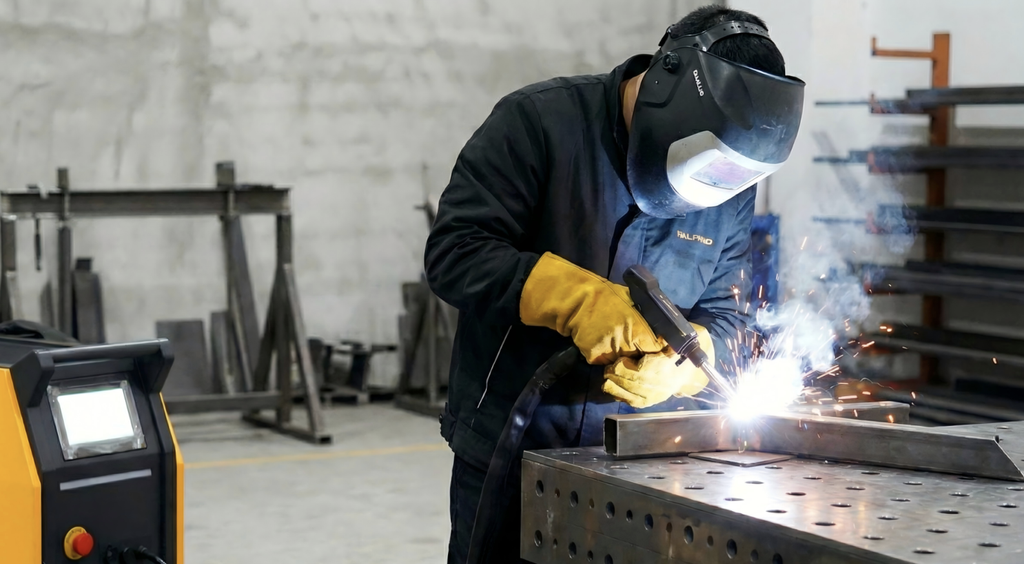
Fabrication work relies on accuracy, consistency, and efficient production. Traditional welding methods are useful, but laser welding provides you with another way to create precise joints while also controlling the heat surrounding the metal.
When reviewing laser welding machines for sale, one must look beyond headline specifications, as a machine needs to match the materials, thickness ranges, production demands, joint designs, and more.
This article highlights the most important features, allowing individuals to compare systems based on practical fabrication requirements.
Laser power is one of the initial specifications you will notice, but maximum output does not tell you everything about welding performance. What matters more is how effectively you can use and control that power for different jobs.
Thin sheet metal usually requires careful heat management, while thicker materials may need greater energy for sufficient penetration.
Look for controls that enable you to change laser output without complicated menus. Fine adjustment can allow you to manage penetration while reducing unnecessary heating.
Useful controls may allow you to:
These capabilities are useful when your shop handles several materials or product designs.
Repeating the same setup manually can introduce variations between jobs. Machines that allow saved parameter profiles can make repeat work easier.
You might create one setting for thin stainless steel and another for thicker carbon steel. Operators can then redirect back to a proven starting point instead of recreating every parameter.
Saved settings do not remove the need for adjustment. Surface condition, fit-up, material composition, and joint geometry can still affect the final weld.
Laser welding works by concentrating energy into a small area. How that energy reaches the joint influences weld shape, penetration, and heat distribution.
A stable beam helps you maintain consistent results. Focus control is equally important, as focal position determines where laser energy is concentrated relative to the material.
An incorrectly positioned focus can impact penetration or make welding less stable. Proper adjustment helps place energy where it is needed.
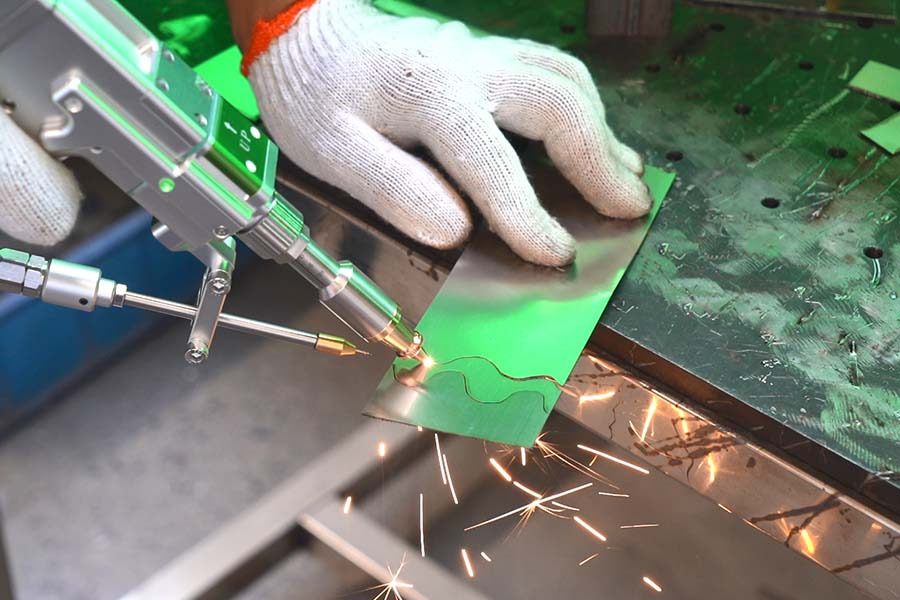
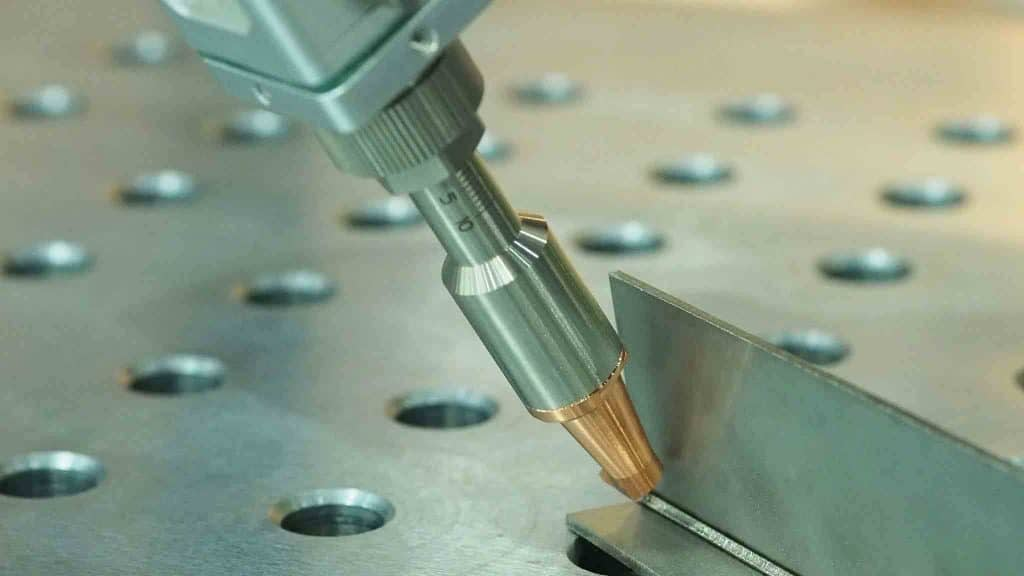
When comparing machines, check whether the welding head provides practical focus adjustment. Also consider its shape, handling, visibility around the joint, nozzle configuration, and access to replacement components.
Laser systems generate heat during operation, including within internal components. Effective cooling helps equipment maintain suitable operating temperatures during production.
Cooling may depend on air or liquid circulation, with each design serving different workloads and shop environments.
Air-cooled equipment can minimize the number of supporting components required, which may simplify installation or movement. Water-cooled machines use circulating liquid to manage internal heat and may suit applications with greater thermal demands.
Before purchasing, ask:
These questions can display practical differences that specification sheets may not show clearly.
A laser welding machine should match the materials you work with most often. Different metals respond differently to concentrated heat, so settings suitable for a single material may not work for another.
Stainless steel, carbon steel, and aluminum have different welding characteristics. Material thickness, surface condition, joint preparation, and fit-up also affect the energy required.
Create a simple production profile before comparing equipment.
| Production factor | What to review |
| Material | Identify the metals you weld most often |
| Thickness | Record your normal working range |
| Joint design | Review your common joint types |
| Production volume | Determine whether work is repetitive or varied |
| Finish requirements | Assess acceptable cleanup |
| Workspace | Measure available operating space |
This method gives you a clearer way to judge equipment than simply choosing the highest output.
Higher power is not always better. Thin material requires controlled energy to prevent excessive heat or burn-through, while thicker components may need greater penetration.
Some laser welding applications need no filler material, while other joints benefit from wire feeding.
A wire feeder can help when additional material is required to fill a joint or manage certain fit-up conditions. Check feed speed control, delivery consistency, spool access, and wire replacement processes when evaluating this feature.
Your operator interacts with the welding head, cable, controls, and workspace throughout the shift. Poor ergonomics can make capable equipment harder to utilize efficiently.
Consider torch weight, grip design, cable flexibility, trigger position, and working reach. A welding head should enable controlled movement without unnecessary strain.
Portability may also matter where workpieces cannot easily be moved. Review machine dimensions, cable length, electrical requirements, working reach, and storage requirements before deciding where the system will operate.
Laser welding equipment needs careful safety planning because concentrated laser energy can create serious dangers when used incorrectly.
Review whether the machine and workspace support:
The surrounding environment matters too. Reflective surfaces, ventilation, nearby workers, and workpiece positioning all need attention.
Operators must understand machine controls, parameter adjustment, maintenance requirements, safe procedures, and emergency shutdown steps before beginning production work.
Repeatability becomes increasingly important as production volume expands. Even small setup differences can create variation between parts.
Laser welding systems may include stored parameters, digital controls, fault notifications, and automation compatibility. These features help create a more repeatable process.
Automation does not guarantee better welds. Proper settings, joint preparation, positioning, and inspection still hold importance. Its main value is helping you reduce unnecessary variation once a reliable process has been established.
When comparing laser welding machines for sale, focus on how every feature connects to your work. Maximum output matters less when a machine is difficult to control, uncomfortable to operate, poorly matched to your materials, or complicated to maintain.
Some manufacturers, including Denaliweld, offer laser equipment for different metal fabrication requirements, which serve as a practical reference point when evaluating a system. Evaluate power control, cooling, welding head design, material compatibility, wire feeding, safety features, and everyday usability instead of concentrating on one specification.
Choosing a laser welding machine becomes easier when you consider equipment around real production needs. Power matters, but beam control, adjustable parameters, cooling, material compatibility, ergonomics, wire feeding, safety features, and repeatability can have just as much impact on everyday performance.
Begin by documenting the materials, thicknesses, joints, production volumes, and working conditions you handle most. Then compare each machine against those requirements. A carefully matched system can provide you with better process control while supporting a more efficient, consistent, and practical fabrication workflow.
Q1) What are the features that are worth checking?
Ans: The following are some of the features that are worth checking:
Q2) What are things that impact operator comfort?
Ans: Torch weight, grip design, cable flexibility, trigger position, and working reach are some of the things that affect operator comfort,
Q3) Why is cooling important?
Ans: Laser systems generate heat during operation, including within internal components. Effective cooling helps equipment maintain suitable operating temperatures during production.