

When mobility becomes restricted, even basic daily movements can become dependent on assistance. With time, that individual may become less confident in their daily decisions and actions due to the limitations of their range of motion.
Constraining movement will not only limit the ability to get out into the community but will also significantly limit an individual’s overall independence. However, new methods provide individuals who require assistance with independent mobility to get from one place to another without the need to expend physical energy.
One example of this new advancement in mobility is the power wheelchair, which allows people with limited mobility to manage their mobility with simple powered assistance, reducing the physical effort required to propel themselves.
Let’s read more about it!
KEY TAKEAWAYS
- Getting around the house, going out, or performing other normal everyday activities may require some type of assistance for an individual with mobility limitations.
- Power wheelchairs can provide additional independence and improve the quality of everyday life by assisting an individual in movement and completing tasks through the individual’s own power.
- Users of power wheelchairs will be able to perform daily activities with less energy and will have complete control over how they maneuver throughout their daily routines.
A power wheelchair replaces physical pushing with a motorized control system, which provides movement by a simple game controller or control system. This change implies that the user no longer has to rely on body coordination to travel to another location. Rather, motion is a real-time reaction to user input.
Consequently, daily mobility can be more precisely controlled and more consistent throughout the day. Users have the freedom to explore at any time they wish without relying on others. This provides a more relaxed mentality in dealing with daily routines.
This enhances practical independence over prolonged periods, as there is no longer any physical limitation to movement. The strain is substituted with supervision, and mobility becomes more predictable. This enables users to become engaged in their standard daily setting with more self-confidence.
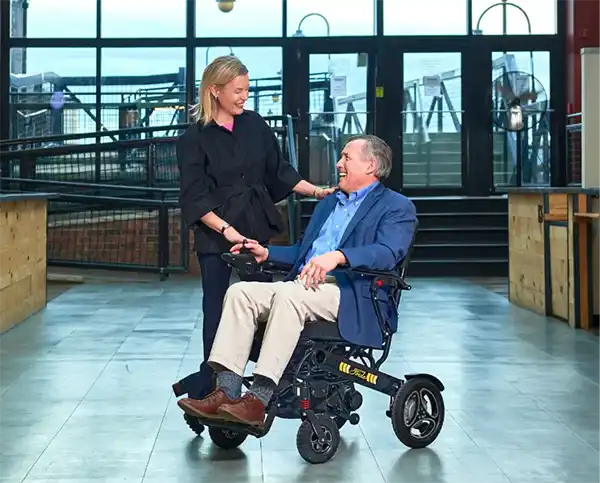
Daily home flexibility is not simply the ability to move between the various spaces but also the ability to access the exact components needed to perform the corresponding tasks. A power wheelchair improves access to essential areas such as bathroom arrangements, kitchen counters, storage shelves, and areas used personally without manual support. This creates a practical link between forward motion and the accomplishment of tasks.
When these areas are accessible, users can be more independent in carrying out everyday tasks. Tasks like taking care of oneself, making meals, or making arrangements to meet daily needs can be handled without the demand for assistance. This changes the status of being able to move among objects to being able to do the daily chores independently.
Eventually, this access to functional zones translates to creating a more feasible form of self-reliance. Every day life is not as reliant on communication with other people and is more focused on personal ability and power.
When it becomes easier to move all over the house, users can also start performing daily chores independently. This is aided by a power push chair that helps the user to sit in a comfortable position to do activities like taking care of personal routines, buying groceries, or arranging some important things. It is no longer about discovering access to spaces but rather performing tasks in these spaces.
Consequently, day-to-day tasks are successfully completed with reduced reliance on others. It makes tasks easier as participants do not have to physically move to stay at the required location without physical strain or interruption. This enables daily activities to be performed in a more organized and autonomous manner.
With time, this contributes to a more intense feeling of being self-sufficient in practical life. The independence not only translates to the ability to move within the house, but also to the performance of practical daily activities independently.
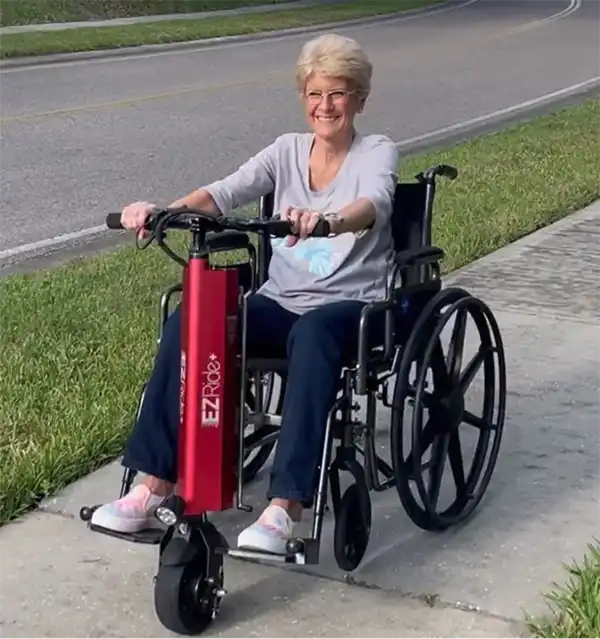
Beyond the house, mobility is usually what defines the extent to which an individual can engage in daily living activities. They can also be supported outside of rooms with a power wheelchair, which makes it easier for them to explore the outdoors. This enables them to move around in order to make appointments, run errands, and even socialize without transport or motorized support.
With the increased access to outdoor movement, community life becomes increasingly involved. The users can also stay in frequent touch with the family, attend events, or make the required outings with fewer restrictions. This assists in setting up a more balanced and integrated everyday routine.
Gradually, the mobility is expanded to a broader environment, which supports both social interaction and practical needs. The user can now participate in everyday activities outside the house, extending the idea of independence beyond the confines of the house.
Continuous movement through manual effort or physical assistance often leads to fatigue. Weariness during daily tasks is frequently caused by constant movement requiring manual labor or physical assistance due to the need for constant physical exertion while moving. As a result, everyday mobility becomes easier to manage without placing strain on the body.
With reduced effort required for movement, users can direct their energy toward other essential activities such as communication, personal care, or household tasks. This shift allows daily routines to feel less exhausting and more balanced. It also provides longer periods of activity without discomfort building up quickly.
Over time, this upgraded energy management contributes to a more stable daily lifestyle. Users are better able to sustain steady activity levels as physical strain becomes less of a barrier.

Independent movement depends greatly on the ability to make real-time decisions while navigating different environments. This control is made possible by power wheelchairs, which use straightforward operating systems to let users instantly change direction and speed. This ensures that movement aligns directly with personal intent rather than external assistance.
As navigation becomes more responsive, users can confidently adapt to changing surroundings without waiting for help or guidance. This makes it easier to manage both familiar and unfamiliar spaces with greater flexibility. It also improves day-to-day practicality in movement.
When the user maintains control, their confidence in their mobility naturally grows. This autonomy eventually fosters a more independent way of living, where decisions about movement are made on one’s own, in comfort, throughout the day.
The use of power wheelchairs improves independence by changing how an individual moves throughout their daily lives and performs daily activities. The use of power wheelchairs may reduce the amount of physical effort required and enable greater accessibility to various locations.
As the positive effects of power wheelchairs combine to create a more manageable and less dependent way of living, the individual will develop a more consistent, stable, and confident lifestyle, both within their home and within their community. They will also be able to maintain their independence nearly.
