
Imagine this: It’s 2 AM, and your plant’s DCS throws a critical alarm. Finally, an input module from Yokogawa has gone bad after running perfectly for fifteen years, and production has stopped.
The item was discontinued 8 years ago, and you have no spare inventory. This scenario is repeated in facilities across the world where Yokogawa control systems are at the heart of process automation. These robust platforms have been designed to last decades, but the components within them do eventually reach end-of-life status, and maintenance technicians find themselves scrambling to source replacements from an ever more complex marketplace.
The stakes are high.
Procuring the wrong obsolete Yokogawa part can introduce system incompatibility, compromise safety interlocks, or worse—install a counterfeit component that fails catastrophically under load.
Incompatible firmware revisions, suppliers with questionable inventory practices, the pitfalls are many and expensive.
In this article, you’ll be walked through the most common mistakes technicians make when buying discontinued Yokogawa components and provided with practical, field-proven solutions to help you source parts with confidence, maintain system integrity and keep your operations running without unnecessary risk or downtime.
Key Takeaways
- Understanding the Market for Obsolete Yokogawa Parts.
- Exploring the common pitfalls in sourcing obsolete Yokogawa components.
- Evaluating the risks and rewards of using surplus Yokogawa drives and parts.
- Assessing the practical solutions for integrating surplus Yokogawa components.
A Yokogawa component is considered “obsolete” when the manufacturer has officially discontinued production and technical support for a particular model.
This ranges from DCS processor cards and I/O modules to Yokogawa drives for variable speed applications. These parts are obsolete. But they are still necessary.
Many thousands of facilities globally are using legacy Yokogawa control systems, including the CENTUM CS and CS 3000 platforms, where replacing an entire system can cost millions of dollars and take months of engineering work.
To operate these systems you need to find the exact components they were built around.

The supply chain for obsolete Yokogawa parts operates across several tiers.
Sometimes there is stock left over from authorised distributors, but it is hit or miss.
The bulk of the gap is filled by third party suppliers and surplus markets, where pulled, refurbished or new-old-stock components are available at different levels of quality.
There are also independent brokers working in this space that sometimes aggregate inventory from decommissioned plants around the world. The first and most important step to navigate this landscape effectively is to know your exact part numbers, hardware revision codes and firmware version requirements.
An AAI143-S00 module can look identical to an AAI143-H00 module, but there are internal differences that can affect signal processing and bus communication.
Always cross-check part specifications against your system technical data sheets before purchase.
Even seasoned maintenance professionals are caught in predictable traps when urgency influences procurement decisions.
Knowing these pitfalls in advance makes all the difference between an easy repair and a compounded failure.
Not all variants of a discontinued module will work with your particular installation of a Yokogawa control system.
A processor card made in 2003 may have different firmware than the same model number made in 2007, and the difference in firmware can prevent proper communication with your existing bus architecture.
The hardware revision letters and firmware build dates are hugely important, but techs will often assume that if the base part number matches, it will be a drop-in replacement.
Before you buy, check the technical data sheet for your installed module and compare the revision code, PROM version and communication protocol support with what the seller is offering. If documentation is not available, contact Yokogawa’s legacy support line. They often have compatibility matrices available for even discontinued products.
The market for obsolete parts is a lure for counterfeiters who will re-label generic boards or refurbish damaged parts with no real testing.
A counterfeit Yokogawa part might work fine on the bench but fail in production under thermal stress or high I/O loads. Protect yourself by checking serial numbers against Yokogawa’s manufacturing records when possible.
Take a close look at the quality of the PCB, connector plating and label printing as fake products often show signs of inconsistent font spacing or lower quality solder joints. Work with suppliers who can provide detailed photos of actual stock and return policies, and who can show traceability for where their inventory comes from.
The most costly mistake in obsolete parts management is waiting for a part to fail before you begin searching for a replacement.
Discontinued Lead Times Yokogawa modules can take weeks or months, especially for speciality cards with limited availability worldwide. During that window your system runs without redundancy or is totally offline.
Create a critical spares list based on failure probability and impact on the system – then source those parts proactively. Establish relationships with two or three approved suppliers who specialise in legacy Yokogawa inventory so you have immediate options when failures occur.
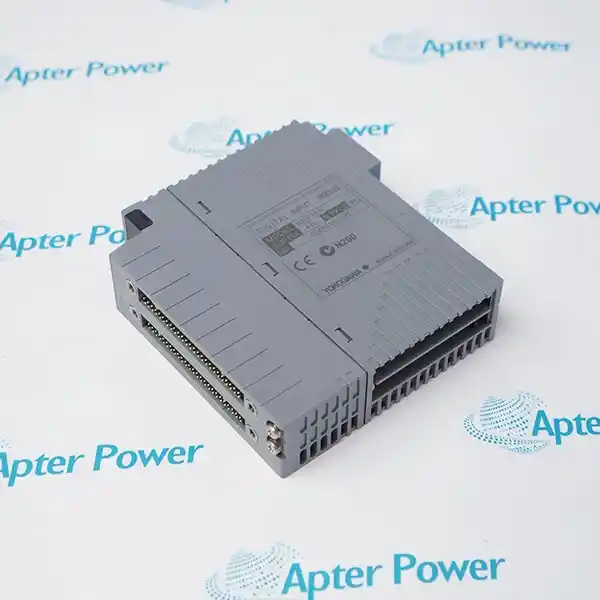
Surplus Yokogawa components have a special place in the obsolete parts ecosystem.
They usually are functional units salvaged from decommissioned systems, surplus stock from closed-down plants, or stockpiled stock from distributors who bought in bulk before the discontinuation.
The primary reward is obvious: savings of up to 40-70% over new-old-stock prices, and immediate availability that avoids long procurement cycles.
For legacy Yokogawa drives, or older DCS architectures, spare parts are often the only viable economic option for continued operation when it comes to motor control applications.
However, the risks are proportional to the savings.
Surplus Yokogawa drives may have accumulated thousands of operating hours, degrading capacitors, relay contacts, and power semiconductor junctions in ways that aren’t visible during a visual inspection.
A drive pulled from a coastal petrochemical facility might carry corrosion on internal connectors that only manifests as intermittent faults weeks after installation.
Unknown storage conditions present another concern—electrolytic capacitors in Yokogawa parts stored improperly for years can dry out, reducing their capacitance below functional thresholds.
The key to enjoying the rewards whilst mitigating risk is a thorough inspection and functional test before putting it into service.
Ensure any spare Yokogawa unit is power tested, not just powered up for a few seconds. For long-run tests, request thermal imaging to identify hot spots that indicate degraded components.
Make sure that all firmware and configuration settings are compatible with your system needs, and always demand documentation of the part’s operational and storage history whenever possible. By adhering to strict testing protocols and maintaining transparent inventory logs, vendors such as Apter Power can identify discrepancies before they ship, thus saving weeks of troubleshooting after delivery.
If a vendor refuses these requests, or cannot provide testing data, then throw them out of your vendor list, regardless of how much cheaper they may be.
You can’t just plug a spare or obsolete Yokogawa part into an available slot on a live system and expect it to work. A disciplined pre-installation verification, careful installation procedures and post-installation validation is the difference between a seamless repair and a cascading failure event.
Make sure a full compatibility check is done before the component leaves the bench.
Verify that the replacement module’s hardware revision, firmware version and jumper or DIP switch settings match the configuration recorded for your installed unit.
Clean all edge connectors and backplane contacts with isopropyl alcohol and check for oxidation, bent pins or cracked solder joints under magnification. Check that the power stage capacitors are not bulging or leaking electrolyte and that the cooling fans spin freely if the part is a surplus Yokogawa drive.
When installing, follow Yokogawa’s original wiring diagrams to the letter.
Legacy systems will not tolerate signal pair reversals or incorrect termination resistors. Once the module is in position, set the node address and communication parameters to match your existing bus topology before applying power.
For analogue I/O modules, do a full calibration pass with a known reference signal at zero, mid-scale, and full-scale points.
Log every single setting change in your maintenance management system for future reference.
Once the system is up and running again, pay close attention to the replacement part for the first 48 to 72 hours.
Look for communication timeouts, unexpected alarm states or signal drift that may indicate poor performance.
Use your DCS trending tools to pull the historical data from the original component and overlay it with the new module’s output behaviour. Only after this period of validation should the integration be considered complete.”
Firmware mismatches are the most common integration challenge with legacy Yokogawa control systems.
If your redundant pair has a spare processor card with a different firmware build than the other, the system might not even accept the standby card.
In many cases, Yokogawa’s engineering tools, such as the System View utility for CENTUM platforms, enable you to flash older firmware onto a newer revision card if the hardware supports it.
ALWAYS take a FULL backup of your system before doing any firmware modifications.
If you have a surplus module which uses a different baud rate or protocol variation than your field network expects, you have a communication protocol conflict. The solution is to first connect the module to a stand-alone engineering station, adjust its communication parameters in isolation and then integrate it into the live network.
Physical fit issues are less common but do happen when mounting hardware or connector styles are changed between production runs of the same model. Have a stock of adapter brackets and transition cables from retired Yokogawa cabinets to solve these mechanical mismatches without changing your existing rack infrastructure.
The best defence against failures sourcing obsolete parts is to prepare long before any component actually fails.
Build and maintain relationships with 2 or 3 certified suppliers that specialise in legacy Yokogawa inventory. Visit their plants whenever you can, learn about their testing procedures and negotiate framework agreements that assure you priority access to critical spares.
A trusted vendor who understands your system configuration can flag compatibility problems before they are shipped, saving you weeks of troubleshooting after the fact.
Documentation discipline distinguishes between reactive and proactive maintenance teams. Keep a live database of all Yokogawa modules in your system.
Record hardware revision codes, firmware versions, installation dates and operating hours where trackable. When installing a surplus or replacement component, record the source of the component, test results, and any configuration changes made during integration.
That institutional knowledge is invaluable when the next failure occurs, or when new technicians need to be brought up to speed without the context of the past.
Conduct quarterly system audits specifically focused on obsolescence risk. Identify which installed Yokogawa components have the fewest available replacements on the global market, which modules are approaching their statistical mean-time-between-failure thresholds, and which parts lack any spare coverage in your inventory.
Use this assessment to prioritize procurement spending and justify budget requests with concrete risk data. Pair this with a long-term migration roadmap that identifies natural upgrade points for the most vulnerable subsystems, balancing the economics of continued spare sourcing against the capital cost of modernization.
Technicians who adopt this structured approach transform obsolete parts management from a crisis-driven scramble into a controlled, predictable maintenance function.
Chasing obsolete Yokogawa components doesn’t need to be a game of chance. But it does require discipline and foresight.
The obvious pitfalls: ignoring hardware and firmware compatibility leads to modules that will not talk to your existing control system, fake or inferior parts add hidden failure modes that can impact safety and production, and poor planning around lead times turns a manageable maintenance event into a protracted outage.
Each of these risks is amplified by decisions made in the heat of unplanned downtime.
The solutions are just as simple.
Before you commit to a purchase, check every spec against your installed system documentation. Vet your vet suppliers well.
Ask for traceability, functional test data and clear return policies. Build critical spare inventories based on failure risk assessments, not failure! Introduce excess Yokogawa components in a systematic way, with phased evaluations, adequate tuning, and long observation periods.
Keep a running log of every revision code, configuration change, and supplier communication.
By adopting these practices, technicians move from reactive crisis management to controlled, predictable maintenance operations, extending the productive life of their Yokogawa control systems while protecting both their facilities and their peace of mind.
Legacy systems can be maintained by opting for obsolete Yokogawa parts. But a speedy selection process can result in costly downtime and compatibility issues. Always check part numbers, supplier credibility and product condition before purchasing.
Also, look for warranty options, testing certifications and availability over time to avoid sourcing issues down the line. A little research up front can save you a lot of repair and replacement costs.
By working with trusted vendors and planning carefully, businesses can keep critical industrial systems running smoothly without compromising reliability or performance.
