
Managing a field task becomes much more complex and unproductive when supervisors are working from a distance and are following delayed approaches. This is where the mobile command centers make the real difference.
They simply bring communication, live data, monitoring tools and smart decision-making accessible to the right person. With this, clarity becomes routine, and operations become productive.
Keep reading this post to understand how mobile command filed centers makes the operations and supervision effective.
A mobile command center is a command room on wheels. It is built inside a van or a box truck and served with the communications, power, and computing a supervisor needs to run operations from the worksite instead of a faraway office. The vehicle stays useful whether it is parked near a flood zone, a construction site, or a stadium girth.
The core idea comes directly from emergency management: command, control, and communication in one place. A supervisor inside the vehicle can carry live camera feeds, talk to every crew on the ground, and make calls based on current data rather than a report that is already an hour stale. When the fixed office is too far away, or the local setup is down, the command center turns into office.
Also, learn how digital mileage tracking makes the operation tracking easier and simpler.
Connectivity is the part that simply has to work, because every aspect depends on it. A serious build never depends on one link. It layers various so that when one drops, the others carry the load. That ineffectiveness is the difference between a vehicle that keeps running a scene and one that goes dark at the worst possible moment, which is same why public safety agencies plan around interoperable emergency communications rather than a common carrier.
| Connectivity layer | Role in the vehicle | When it carries the load |
| Satellite (such as Starlink) | Wide-area internet with no local tower required | Remote sites and post-disaster dead zones |
| Cellular routers | Fast routine data and backup bonding | Anywhere with standing network coverage |
| Two-way radio | Direct voice to crews on the ground | Close-range connection and comms failover |
Power cannot be compromised. A command center runs its screens, routers, and radios off an off-grid battery system, usually lithium, layered by some mix of solar, alternator, shore power, and an optional generator. Sizing that system to the real duty cycle is what allows a vehicle work a twelve-hour incident without fixing the engine the whole time.
On top of that sits the real workspace: swivel chairs, modular desks, wall-mounted monitors, and live dashboards that connect from field sensors and cameras. This is where the supervisor wastes the shift, and it is why the interior layout matters as much as the technology added into it.
The build starts with the vehicle, and the right vehicle relies on where the work happens. A Sprinter-style van with all-wheel drive is the pick when you need to reach unique terrain in a smaller, more robust package. A box truck is the better call when interior room is the most important, since it offers considerably more usable space at a similar length and height.
Cost tracks the mission more than the identification badge on the hood. Utilities are a good example: they balance the spend against downtime, since faster field coordination is easy to put a number on. That framing helps illustrate why the price of a purpose-built Mobile Command Van by Next Gen Vans scales with battery storage, connectivity, and interior fit-out rather than the base vehicle alone, with drone-capable and special-purpose builds sitting well above a basic coordination unit. Assessing what the vehicle must do on an average day, before shopping for hardware, is what keeps that budget open and transparent.
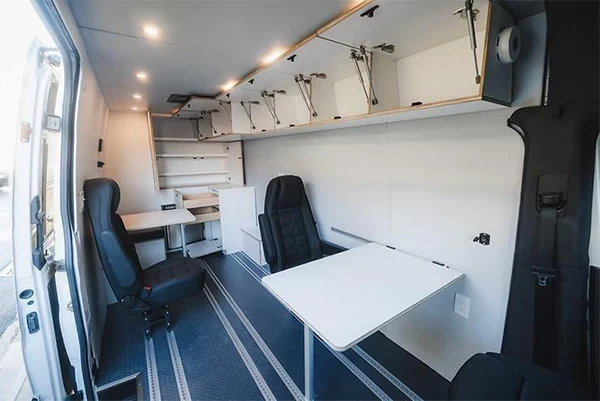
Distance is the adverse effect of a good field decision. The further a supervisor sits from the work, the more they lean on secondhand accounts, and secondhand accounts age fast. A crew radios in a problem, the supervisor queries for a photo, the photo takes ten minutes to arrive, and by then the crew has already constructed a fix that nobody signed off on.
Three failure points continue to repeat across field-heavy operations:
A command center bombards all three at once. It combines the feeds, unifies the channels, and gives everyone on the operation a single source of real data to work from.
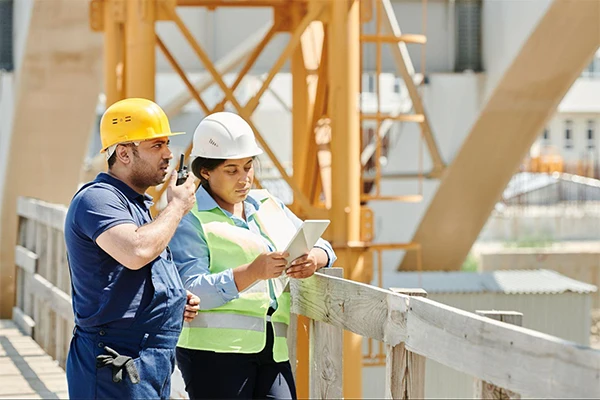
Having the hardware is only the beginning of it. The other half is structure, and this is where a command center reserves its keep for supervision specifically. The most effective operations borrow the incident command system that FEMA’s Ready program puts out, because it gives a messy scene a clear chain of choices.
Inside the vehicle, roles get handed out instead of assumed. An incident commander sets priorities and transfers resources from the workspace. An operation lead directs the crews doing the actual restoration, repair, or auditing. Everyone works from the same feeds, so when the commander reprioritizes, the change reaches the field straight away rather than through a game of telephone. That single jointly owned picture is what turns a parking lot full of trucks into a coordinated operation, and it is the part a disconnected office can never quite replicate.
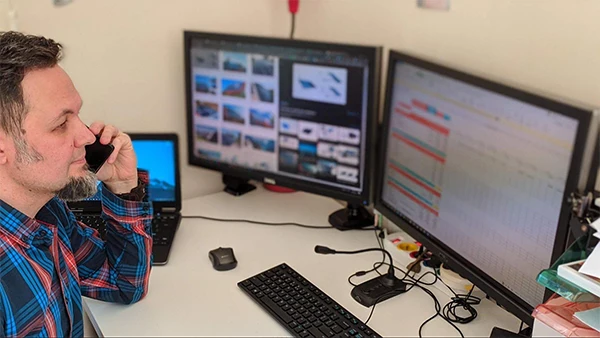
The buyers represent more industries than most people expect. The common thread is simple: any team that has to make motions in the field, with live data and communication, benefits from sharing the control room with them.
Energy operators sit at the extreme end of that list, which is why they were early adopters. The U.S. Energy Information Administration records how digital tools and analytics have improved operational reliability across the sector, and a command center is the field-side extension of that shift, putting the same data in front of supervisors who are right next to the work rather than finding out about it later.
A command center is far more efficient when it plugs into the tools your operation already depends on instead of remaining apart from them. Dispatch is the easy one. If your crews are assigned through an existing system, the vehicle should nourish that system, not compete with it, and there are straightforward ways of automating dispatch without breaking the ERP that keep assignments smooth while a supervisor works the scene live.
Fleet visibility is the other key win. A command center already records where its crews and vehicles are, and combining that with the telematics data from your fleet gives a supervisor a live map of who is where, how long they have been on task, and where the next road block is forming. Tie those two data routes together, and the vehicle stops being a communications base and starts being an operations processor.
Also, learn why manufacturing companies need better control over their operations.
At the end of the day, a mobile command center collects everything that is usually spread out when things are managed from a distance. It simply brings people, communication, information and technology to a single place.
With the right connection with each other, sufficient power, and the integration of all the existing systems in a single place makes the operations become smoother and much clearer. This way, it can help supervisors to make faster decisions while keeping things in line.
Ans: A mobile command center is a kind of vehicle equipped with communication power, technology and workstations to manage operations better.
Ans: A work van carries tools and people, while a command center boasts the ability to run an operation. The distinction is in the systems: layered connectivity, off-grid power, workstations, and live data feeds built for teamwork rather than transport. That fit-out is what lets a chief executive make real-time decisions from inside the vehicle.
Ans: Most serious setups layer satellite internet, cellular routers, and two-way radio so no single failure takes the vehicle offline. Satellite networks serve remote sites with no local tower, cellular handles fast everyday data, and radio delivers direct voice to crews. Private and guest networks usually sit on top, so field devices and visitors stay disconnected.
Ans: A well-built command center is intended to be operational quickly, often within an hour of parking. Power and connectivity come up first, followed by the computer systems and feeds the supervisor needs. Because the vehicle operates its own systems, it does not depend on local infrastructure being pristine.
Ans: Yes, that is the essence of the design. Off-grid battery systems, backed by solar, an alternator, shore power, or a generator, keep the electronics functional without a shore hookup. Satellite links deliver internet where cellular coverage is weak or knocked out, which is common right after a storm.
Ans: They are used by police and SWAT teams, fire and EMS agencies, emergency planning offices, utility and telecom providers, and event security teams. Build, engineering, and inspection firms use them for remote or multi-crew sites, and research, public health, and news crews use them for fieldwork. Any group that makes alterations away from headquarters is a candidate.
Ans: Cost hinges on the platform, the battery system, the connectivity package, and the interior build rather than the vehicle alone. A basic planning unit sits well below a drone-capable or tactical build with heavier power and screen specs. The clearest way to budget is to outline the daily use case first, then deal with the systems that support it.
Ans: Consider the van when you need all-wheel drive and the ability to reach varied terrain in a smaller footprint. Choose the box truck when interior space is the primary concern, since it offers more usable space at a lesser overall size. The key factor is where the vehicle will operate most often and how many people must perform tasks inside at once.
Ans: The supervisor works from a predetermined setup, usually modeled on the incident command system, with clear roles for attention to detail and for directing field crews. Everyone works from the same live feeds, so a change in direction reaches the ground with no delay. This shared picture is what keeps multiple crews from creating duplicate work or leaving gaps.
Ans: Yes, and it is far more functional when it does. The vehicle can feed an existing dispatch or ERP workflow, so assignments keep moving while the supervisor works the scene. Integration of it with fleet telematics gives a live map of crew locations and task times, moving the command center into a solid operations hub.
