

SaaS SEO is the best way to bring a new audience to your product through organic search. At the same time, there is a lot to consider beyond getting your blog content ranked.
Prospects will research their problems with the different tools available, and you should know how they upgrade before coming to the final point of which subscription to get.
The checklist also create you to know what the technical aspects of your site and you make ensure the working on the pages which eventually leads to the conversation you had.
The 10 tips also create the environment to support the founders and grow the people to increase capability in what they actually need to improve, and what to create and how to measure growth factors from organic SEO.
Firstly check the key pages are being found and indexed by search engines. Ensure your XML sitemaps are set up correctly, and there are no broken links.
Also verify robots.txt rules and canonical tags, ensuring there are no broken links and duplicate URLs. Main pages like product, pricing, feature, and integration should be accessible by search engines.
Use Google Search Console to check why certain pages are not being indexed. While having a sitemap will eventually help pages get found, it doesn’t guarantee they will be indexed. Correct any accidental no indexes, pages being blocked unintentionally, and canonical tags pointing to the wrong pages.
You should block intentionally private accounts and app pages.
Checklist action: Fix technical issues so your key URLs are not being excluded from search.
Buyer searches change as needs develop. For the awareness-stage query “what is project management,” you should explain. If someone searches the best project management apps, they are likely comparing different tools, while if they search project management app pricing, then they are researching prices.
Different search terms require different pages. If you only have general blog posts, it will frustrate people looking to compare or sign up. Use the search results to ensure you are providing the right type of pages.
If the search terms appear to be a guide, comparison, feature, or pricing page, ensure you match the format. This will help you attract the right audience.
Checklist action: Match the search terms to the correct stage and page type.
Start your SaaS keyword research by looking at the problems your ideal customer needs to solve. Think about the relevance to your business, search intent, and competition instead of focusing on search volume. For example, using Inventory software for multi-location retailers may attract more relevant prospects than inventory management.
You should use long-tail keywords, integration requests, product comparisons, and pain-point-based keywords. Conversation between product marketing, sales, and customer success teams: SEO for SaaS companies to ensure your keyword research aligns with what your buyers are saying.
Ask which questions are being asked frequently by your customers. This will help you understand what you can do to improve based on the answers.
Checklist action: Prioritize keywords by customer fit and likely conversion value.

Feature, solution, integration, and comparison pages are often high-intent pages. Ensure each page has a clear purpose. For example, your integration page should explain what is being integrated, what workflows it supports, and whether there are any requirements.
Ensure your page uses clear headings, product details, helpful screenshots, and short FAQs. Make it clear what your next step is for your visitors, whether they need documentation, a free trial, or a demo.
Be careful not to have keyword cannibalization. If you have multiple pages targeting the same query and intent. Ensure you clearly define what each page is for. If there is overlap, remove any duplication.
Checklist action: Make sure each key landing page has a clear intent and conversion path.
Great on-page SEO will help people understand what your page is about before and after clicking. Verify your specific title tags and accurate meta descriptions, recognizing that Google may generate different snippets. Organize information under one clear main heading and useful subheadings.
Use relevant keywords naturally instead of repeating phrases. Keep URLs readable and give informative screenshots descriptive alt text. Make important information easy to scan, especially when visitors are comparing plans or capabilities. Clear writing and navigation contribute more than keyword repetition.
Checklist action: check your titles, headings, descriptions, URLs, and alt text on key pages.
Product-led content will answer practical questions and show how your software will fit into their solution. Make sure your content is helpful in providing setup tutorials, migration guides, workflow guides, implementation checklists, and balanced comparisons. For example: An expense management platform could provide a guide on how to set up an approval workflow using annotated screenshots.
Be specific with your content. Draw examples from your support tickets, onboarding sessions, and implementation teams; make sure your instructions match the current interface. Do not use too much sales language. Someone should be able to solve a problem even if they are not ready to subscribe.
Checklist action: create a content calendar around common questions and real product use cases.
Internal links always help visitors and crawlers to find related pages. For example, if you have an article on automated invoice approvals, you should link to the feature page explaining the workflow. Group related tutorials that guide people together so they can move from basic questions to implementation details.
Use descriptive anchor text that describes the destination, not vague wording like “click here.” Add links where they support the next logical question, rather than inserting them in every paragraph. Audit key pages that are several clicks away from the homepage or don’t have relevant links pointing to them.
Checklist action: improve navigation paths to helpful but underlinked pages.
Slow or unstable pages can interrupt visitors before they finish a demo request or trial signup. Ensure your pricing and conversion pages are optimized on mobile, not just desktop. PageSpeed Insights provides lab diagnostics and, where enough real-user data is available, Core Web Vitals for loading, responsiveness, and visual stability. Verify whether the real-user results apply to the individual page or the wider site.
Check for large images there, unused JavaScript, shifting elements, and third-party scripts that delay interactions. Also confirm that navigation, pricing tables, and forms work on smaller screens. A good performance score is useful, but visitors must still be able to complete their tasks.
Checklist action: focus on improvements that will improve high-intent mobile landing pages.
Editorial backlinks work best when you have relevant websites to reference your content. By providing original research, helpful templates, detailed case studies, and expert explanations, you can earn backlinks from industry publications. For example, a benchmark report for a specific category may provide editors something genuinely useful to share.
Look for sites whose readers resemble your ideal customers. Relevance and editorial quality are more meaningful than the raw number of backlinks. Do not buy any backlinks to pass ranking power, as this goes against Google’s link spam policies. Any link from paid advertising or sponsorship links should be marked with rel=”sponsored” or rel=”nofollow”.
Checklist action: create a single piece of original and helpful content and share it with relevant publications.
SaaS organic traffic matters when it brings qualified people closer to action. Track search queries, clicks, impressions, and page trends in Google Search Console.
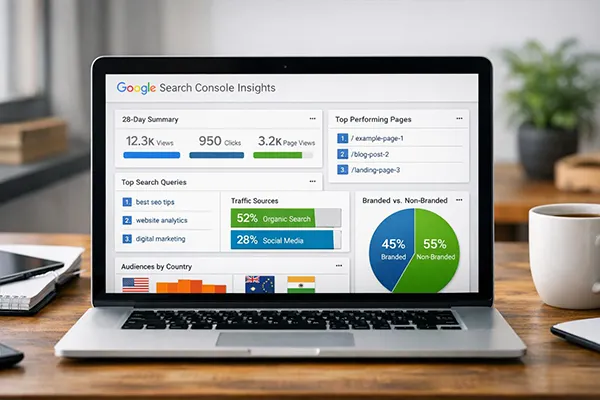
Use Google Analytics 4 to measure organic sessions and configured key events, such as trial signups and demo requests. Where possible, connect those actions to lead quality and pipeline data.
Ensure your key events fire on successful signups or form submissions rather than button clicks alone. Keep reporting periods and attribution settings consistent, and do not expect Search Console clicks to match GA4 sessions exactly.
Review results monthly by landing page and buyer intent, not total visits alone. Evaluate changes over suitable timeframes, allowing for indexing delays, seasonality, and longer SaaS buying cycles. Update screenshots, improve pages attracting mismatched audiences, and test clearer calls to action. Revisit keyword priorities as product positioning, features, and customer demand change.
Checklist action: Report on visibility, qualified conversions, and the next area to improve.
Final Recommendations: Make SaaS SEO an Ongoing Growth Process
A successful SaaS SEO strategy will have easy pages, targeted keywords, helpful product content, and meaningful metrics. You can improve technical issues to ensure crawlers can reach important pages; useful answers and clear conversion paths help people decide what to do next.
Avoid tackling everything immediately. Solve the biggest obstacle, then measure the result. Repeat the process as your product and market upgrade. Sustainable organic visibility comes from making the website more useful to the customers it serves.
Ans: While there may be some immediate improvements you can make technically, real improvements via organic traffic will normally take a few months. This depends on how much competition there is within your industry, how well your site is set up, the quality of content, and how well it is implemented.
Ans: Target keywords that relate to your product’s features, problems your customers have, use cases, integration, pricing, and comparisons.
Ans: Ensure your landing pages are aligned with the search intent, include clear descriptions of the benefits your product provides, include credible proof, and include relevant calls to action depending on where the buyer is in the funnel.
Ans: Yes. Having relevant backlinks from editorial sources can help search engines find and understand your content. Focus on providing useful resources and genuine relationships within your industry.
