
AI glasses have been trending for the last few years. And the new technology, the thing that people only have watched in cartoons and movies becoming real, and other aspects like these are promoting AI smart glasses automatically.
But when AI glasses have an in-built calling system, a high-quality camera which helps you to record and search or translate in real time, speaker to listen to music without disturbing others, and modern home renovation with AI assistance, the question that arises is: will AI smart glasses replace smartphones in a decade or two?
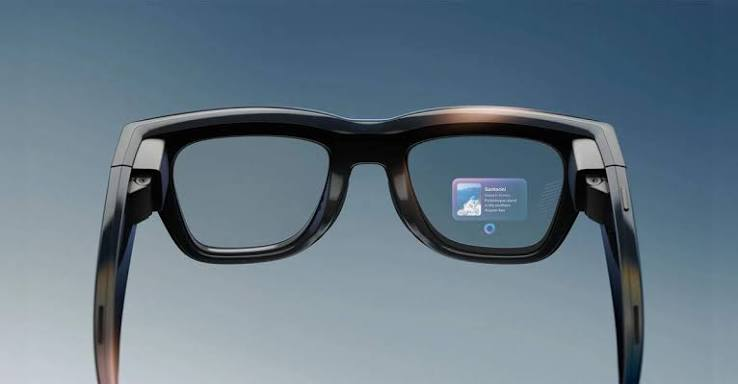
Intelligent eyewear represents the shift from passive screens to active spatial computing. It is hardware designed to disappear.
Your smartphone requires your total attention. You must stop walking, retrieve the glass rectangle from your pocket, unlock it, open an application, and type a confusion. The friction is immense. AI frames remove that friction altogether. They observe your environment continuously. They listen for a wake word. They respond straight into your ear using directional speakers.
The initial technology relies on extreme hardware miniaturization. Engineers have successfully compressed heavy computational power into a body weighing less than fifty grams. We are looking at custom silicon chips designed especially to manage power draw. Battery life dictates the success of wearable tech. If a device shuts down by noon, it goes into a drawer permanently. Modern AI frames utilize localized processing for common tasks and push heavy computational requests to the cloud. Want the sour engineering reality of shrinking these components? Check our breakdown on hardware miniaturization trends. The endgame isn’t just another piece you have to manage. It is seamless assimilation. The user experience must seem like a biological upgrade. Not some kind of plastic bolted to your head.
Utility decides survival. If a product doesn’t kill an immediate daily friction point, consumers will toss it on a shelf and forget it exists. The current wave of intelligent frames hammers three particular actions. Visual search, zero-lag translation, and instant capture.
Visual search rewires how you move through physical spaces. You sit down in a Tokyo cafe. You stare at the menu. You ask for a translation. The silicon in your glasses grabs the image data, parses the text, and sends the English equivalent straight into your ear canal. Real time. Zero friction. Or maybe your sink bursts. You look at the rusted pipe. You demand the replacement part number. The camera captures the core dimensions, cross-references a global hardware database, and spits out the exact SKU you have to buy.
This changes the whole dynamic of digital assistance. Wearing glasses with a camera and AI features means the AI shares your exact perspective. You are not forced to define a problem verbally. The AI sees the problem.
Audio Feedback: Most frames utilize open-ear audio. Small directional speakers rest just above the ear canal. You hear the digital assistant clearly. The person sitting next to you hears nothing.
Contextual Awareness: The onboard models understand location. If you are shopping in a grocery store, the AI prioritizes queries about ingredients and prices.
Memory Assistance: The cameras can capture moments in real time. No fumbling for a phone. The optical sensor records exactly what your eyes are looking at.
Look at the hardware cycles. The smartphone market is purely saturated. Consumers are exhausted. We hold onto our devices for three to four years because the annual upgrades bring nothing but incremental camera bumps. Tech conglomerates require a new revenue pipeline. They have to build a new platform to dominate.
The metrics are clear. High-level analysis of the wearable market trajectory suggests massive capital reallocation from traditional mobile development into wearable AI. The big businesses know the glass rectangle is a dead end. We currently stare at screens for generally seven hours a day. We have hit the biological limit of smartphone dependence. There are usually no more hours in the day to sell to advertisers.
To increase engagement, the computer must move from the hand to the head.
This is a land grab for the next operating system. Whoever controls the hardware on your head controls the data pipeline of your life. The adoption rates for artificial intelligence are increasing faster than any innovation in human history. Corporate reports on enterprise AI adoption show that integration is occurring at a breakneck pace, and hardware is the bottleneck. Software alone cannot sustain the tech industry’s growth. They want you to buy a new physical product. The number of global connected devices continues to explode, and the face is the most valuable remaining real estate.
The privacy debate is loud. It is also purely hypocritical.
Critics argue that AI frames will destroy public anonymity. They worry about facial recognition and covert recording. These are valid technological concerns. But people already lost the privacy war a decade ago. We walk around with high-definition cameras in our pockets. Retail stores record our movements with biometric scanners. Ring doorbells monitor every suburban street.
The form factor is simply evolving. We are moving the camera from the palm to the bridge of the nose.
Hardware manufacturers are attempting to face backlash with physical privacy indicators. Most AI frames feature a hardwired LED light that illuminates whenever the camera or microphone is active. If the light is tampered with, the glasses disable themselves. These are hardware-level fail-safes designed to appease regulators. Whether they appease the available public remains to be seen.
People will trade their privacy for convenience. They always do. If an AI frame saves a user forty minutes a day by automating mundane tasks, that user will wear the camera anywhere.
Buying early-stage hardware is a risk. You are essentially paying to be a beta tester for trillion-dollar companies. If you are ready to shift from your phone, you must evaluate the hardware based on utility, not marketing copy.
Consider these exact metrics before purchasing:
Weight: Anything over 50 grams will cause headaches after a couple of hours. The frames must mimic the weight of traditional prescription lenses.
Battery Chemistry: Look for continuous processing time, not standby time. Standby time is a useless metric. You have to know how long the AI can actively listen before the battery dies. Four hours of active use is the current baseline.
Lens Integration: Ensure the frames support prescription lenses. If they only offer clear glass or sunglasses, they are a novelty item.
Data Latency: Test the response time. When you ask the AI to identify an object, it should respond in less than two seconds. Any delay longer than that prevents the illusion of a seamless assistant.
Do not buy hardware based on promised future software updates. Buy it for what it can do right now. The software ecosystem is still fragmented. You can witness the growing pains when analyzing the differences between spatial computing and AI. Spatial computing needs heavy graphic rendering. AI frames depend on lightweight audio processing. Make sure you know which one you are actually purchasing.
The transition will not happen in one night. Smartphones will serve as the heavy computing anchor in your pocket for the next five years. They will perform the heavy lifting while the glasses act as the frontend interface.
But the trajectory is locked. The moment an AI frame can successfully make a phone call, buy an online phone number, send a text via voice, and visually navigate you to a coffee shop without demanding that you look at a screen, the phone becomes a secondary device. We are currently watching the hardware shrink, the large language models optimize, and the battery constraints convenience. The global supply chain is already retooling to manufacture micro-displays and directional audio drivers at scale. By 2029, pulling a glass slab out of your pocket to check the weather will look archaic.
AI eyewear is smart glasses equipped with features such as cameras, microphones, audio feedback, and AI assistants to provide hands-free digital support.
Not yet. AI glasses can handle tasks such as translation, visual search, and voice assistance, but smartphones remain useful for complex apps, detailed displays, and intensive computing.
Consider battery life, weight, prescription lens compatibility, response speed, privacy controls, and the features available on the device today.
