
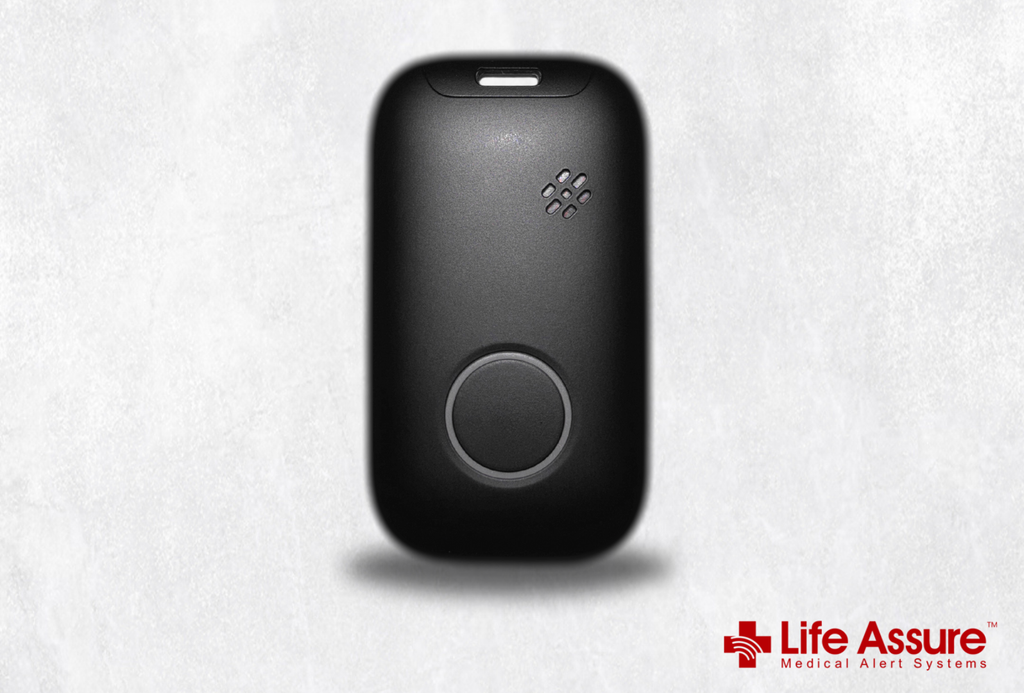
Alt text: Black mobile medical alert device with a round gray help button and speaker grille on a pale gray background, with the Life Assure logo in the corner
Many systems are judged on small things including page load times, monthly uptime, and ticket backlogs. But a medical alert service is being judged on a single moment. Often at 3:00 AM, when an older person has fallen and presses one button.
That moment depends on a long chain of engineering decisions. Life Assure, a Canadian medical alert provider, is a very useful example that provides a lineup and monitoring details that you’ll find on their website. It provides many services, including live location access, monitoring, and much more. Learn more about the software through this article.
The product looks like a gadget from the outside, but from inside, it is a full stack with four layers, and each one can fail on its own.
Life Assure’s range shows how the first layer is different. Its Classic Home system uses a base unit inside the house, while its Premium Mobile Plus device travels with the user; but both still supply the same three layers following them.
For engineering leaders, scope is the useful lesson, and a failure in the chain looks similar to the user.
A server code can be fixed in the same day, but firmware on a device since 84 years cannot be fixed. Every update risks disabling a unit that someone’s safety depends on, so the firmware has to be right early.
However, firmware follows a few strict habits, which are given below:
Fall detection adds the next level of difficulty, and an accelerometer must separate a real fall from a dropped device or a sudden sit. Too sensitive, and responders go under in false alarms, but too cautious, and a real fall goes unreported.
Expanding the team that builds the code of discipline by itself. TechZeel has a practical guide on how to scale medical device software teams, which accepts leads planning.
A medical alert device is nearly as good as its battery on the worst day. Engineers balance three demands that pull against each other: a strong radio, an always-listening button, and a long time between charges.
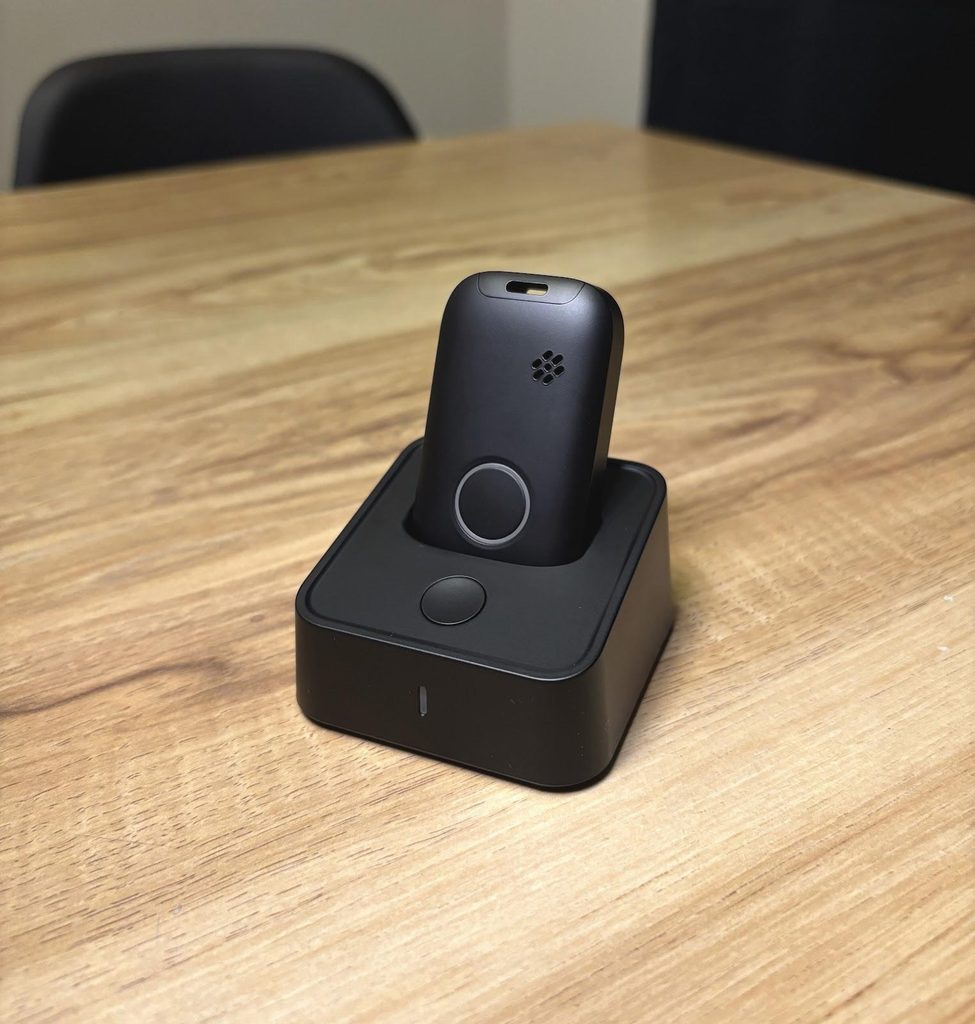
Alt text: Black mobile medical alert device standing upright in its black charging cradle on a wooden table
A mobile unit that checks its location every minute drains far faster than one that checks every hour. A large speaker helps a user with hearing loss but costs power on every call. The charging routine is also a design decision because a perfectly drawer-fitted design protects nobody.
That is why the charging nativity deserves as much thought as the circuit board. Good cradles make the habit easy:
Small details like these turn a lab battery figure into real protection at home. They also give the support team a computable signal to watch.
A home unit can depend on a known location, but a mobile unit cannot. It moves between towers, buildings, parking garages, and rural roads, although the user is under stress.
Cellular design choices matter more than in most consumer products; teams usually weigh three questions:
The last point is often lacking attention. A SIM card is an identity on a carrier network, and that identity needs guarding. TechZeel’s overview of the security features of an IoT SIM card is a good primer for advisor who scope these projects.
Location is the other half of movement. Life Assure supports GPS tracking for the mobile devices that help to find out where the user is. That feature only works if the device can report its position consistently, even indoors.
A sound design treats every alarm as a durable event. It is written to storage before anything else happens, and it is only closed when a human marks it resolved. Nothing depends on a single server, a single region, or a single carrier.
Device health is the second job; a Life Assure app shows how this will appear to the families. This app lets the family members view each unit’s power level and signal strength. It allows them to edit emergency contacts and push alerts for a fall, an emergency, or a draining battery.
Those features hint at the remote sensing underside. Every device must check in on a schedule, and the platform must notice when one goes quiet. A silent device is a support case waiting to become an emergency.
It appeals to automate the whole response, and medical alert services show why that is a mistake.
When a user presses the button, Life Assure makes the call to its 24/7 monitoring center. There, Medical Alert Specialists contact with the user, and a specialist sends the exact help the situation needs.
This application supports judgment instead of replacing it. A good responder comfort shows the user’s profile, contacts, and location at a glance. It skips the time between “Hello, are you okay?” and the right decision.
The same pattern applies to enterprise automation; automate the routing, the context, and the paperwork. Keep a trained person on the decisions that carry real risk.
Figures can not prove much here alone; a platform can be “up” while one carrier quietly drops alarm messages. Endurance has to be measured completely.
Strong teams test the full chain on a schedule:
High Availability relates to the same test plan Life Assure says it designs its products to be accessible to people with visual, hearing, motor, and intellectual challenges. In practice, that means testing with real users who have those needs, not only with engineers.
Most of the TechZeel real-time analytics readers never build a device, but many build systems where a missed event costs money, data, and trust. The same principles apply.
A connected safety service is an extreme case. That is exactly why it makes a useful benchmark for everyday enterprise work.
Ans: Many do not. Mobile units typically use a cellular connection, so they can call for help at home or away from it.
Ans: The sensor must tell a real fall apart from everyday movement. Tuning that balance takes large amounts of real-world motion data and careful testing.
Ans:There is no single standard. Many teams set a daily heartbeat as the floor, then shorten it for mobile units when the battery budget allows.
Ans: Often it is not the server at all. Flat batteries, weak signals, and devices left in a drawer can all stop an alarm before it starts.
