

Ecommerce PPC can mask profitable sales. Revenue increases, ROAS looks healthy, and campaigns continue driving spend into products that convert well, not products that make money.
That distinction matters as a catalog grows.
Searchbloom addresses that issue with its ecommerce PPC agency service. Product feed optimization, category architecture, bidding, conversions work and budget distribution are handled, but it also focuses on profit instead of just revenue.
When it comes to established ecommerce brands, the biggest selling point has been greater control over the source of profitable growth.
4.5 / 5
Verdict: Ideal for mature ecommerce teams who desire granular control of Shopping, profit-driven optimization, and 1:1 access to a paid media expert.
| Rating Category | Score |
|---|---|
| Ecommerce PPC Expertise | 4.7 / 5 |
| Profit & Performance Optimization | 4.7 / 5 |
| Communication & Support | 4.8 / 5 |
| Cross-Channel Capabilities | 4.5 / 5 |
| Value for Money | 4.1 / 5 |
| Overall Rating | 4.5 / 5 |
Scores reflect an assessment of the documentation, public feedback, pricing and delivery evidence.
For the right account, yes.
Searchbloom describes its paid media service as hands-on management. As of this writing, its pricing page shows Google Ads PPC management starting at $2,000 per month. Prices scale upward as monthly ad spend and project complexity grow. That may work better for a retailer with existing paid media volume than a small advertiser just experimenting with PPC.
Its PPC case studies range from wholesale apparel to home remodeling to outdoor gear to ecommerce retail. Results reported are vendor-published (not independently audited), but the pattern is the same: slice and dice accounts more finely, polish ad assets, tighten targeting, then continue to tweak based on conversion profit.
Reviews by the general public on Clutch provide an outside perspective. Some of the comments mentioned most often are about quick response times, meeting deadlines, expert consultants, honesty, and going above and beyond on projects.
Technical depth combined with client facing ownership is why this service rates highly for marketing teams looking for an agency inside the account.
The product feed is central.
Searchbloom’s Google Shopping management services features budget optimization, bid strategy optimization, category optimization, and ongoing product feed management within Google Merchant Center. Additional components include titles, descriptions, imagery, attributes, availability and campaign structure.
Why does that matter?
Google explains that Shopping and Performance Max campaigns use Merchant Center product data to generate ads and match products to applicable searches. See Google’s product data guidance. Therefore Feed quality impacts campaign performance. It’s not just housekeeping.
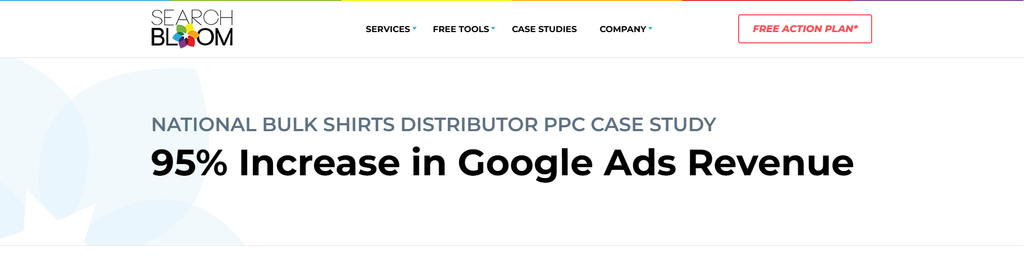
One example of this process in action can be seen in Searchbloom’s wholesale apparel case study. Searchbloom learned that an account had been bidding too expansively across their massive product catalog, so Searchbloom narrowed down product assignments, rebuilt campaign groups, fixed remarketing lists, and wrote tailored ad copy. Searchbloom’s case study claimed a 95% lift in Google Ads revenue between the two periods being compared.
Retailers that manage hundreds or thousands of catalogs will find that product-level granularity far more persuasive than vague assertions about next-generation PPC management.
ROAS measures revenue returned from ad spend. It does not measure profitability of that revenue after product margins.
Searchbloom released an ecommerce case study centered around POAS (profit on ad spend). By feeding profit information into Google Ads, bids could be made based on margin variations between products instead of just optimizing for revenue.
That shifts the question from “What products sell the most?” to “What products sell the most profitably?”
Searchbloom discusses modifying profit goals during high and low seasons, shifting conversion actions to profit conversions and testing various campaign types using this new model.
POAS is one of the most differentiated areas of the offer for an ecommerce manager with uneven margins. It ties paid media decisions directly to actual unit economics.
Searchbloom’s operating model is unusually direct for an agency.
According to its website, clients have partners assigned to them rather than having their own account manager. These partners work with a team so clients can have their PPC team collaborating with SEO, CRO, analytics and development folks. This is important when an advertising issue is really a feed, landing page, tracking or conversion issue.
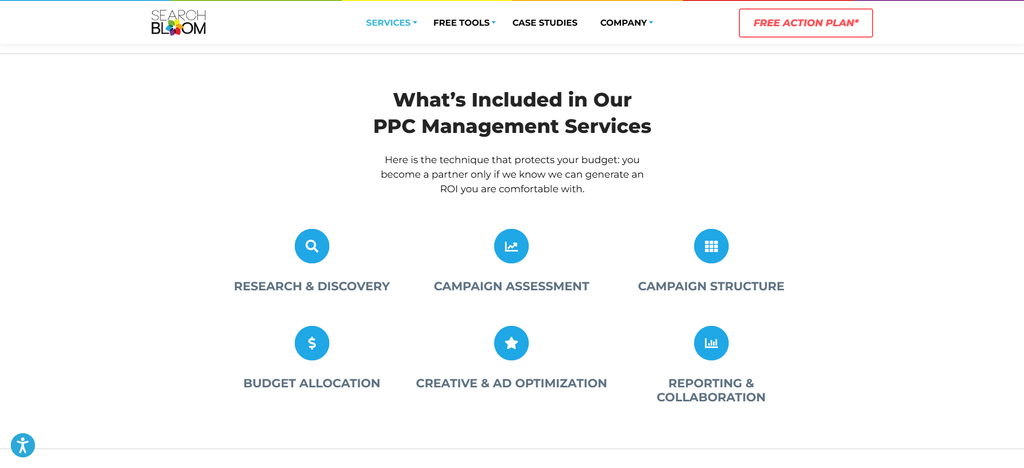
Searchbloom covers work across Google Ads, Microsoft Ads, Google Shopping, Performance Max, remarketing and other paid channels. Case studies demonstrate campaigns moving between channels when opportunities shift.
Clutch feedback aligns with the communications half of the model through responsiveness, transparency, and proactivity in managing projects.
The practical advantage is fewer handoffs between strategy and execution.
What works
What doesn’t
The best candidates are maturing ecommerce brands that have meaningful catalog, sufficient ad spend for managed PPC to make sense, and internal data that the agency can leverage.
It is especially attractive when:
An extremely small store with low spend will likely not realize sufficient value from the management layer. An entity operating a subscription-first business should also verify Shopping eligibility prior to optimizing Google Shopping as a first party acquisition source.
Searchbloom is most powerful where ecommerce PPC gets tricky: massive catalogs, inconsistent margins, feed quality management, cross-channel allocation, and the need to integrate advertising decisions with site and analytics efforts.
POAS is superior. Having a dedicated analyst simplifies the service operations and objective customer reviews confirm that communication is a strength.
There are limits. Small advertisers may not be able to justify the fee and merchants still want clean product data to provide the agency with something legitimate to optimize.
If an ecommerce team is mature and looking for a paid search agency to run paid search as a profit center vs collection of ad campaigns, definitely add Searchbloom to the shortlist.
Qualified prospects can also request a free action plan to assess fit before committing.
