

The nearshore software development companies domain sounds simple enough until you’re actually trying to hire one. The labels fall fast: offshore teams marketed as nearshore, thin profiles hiding real gaps, and protection gaps that nobody wants to talk about.
After reviewing multiple providers across Eastern Europe, a clear pattern emerges: proximity on paper and actual proximity in real projects are two very unique and different things.
This guide covers five companies worth looking at seriously, with honest insights behind each pick.
Public information influences every decision here. Company websites, client case studies, ratings across review platforms, and verifiable track records in software development outsourcing were all factored in. Only providers with real delivery history made the cut.
→ See the full research breakdown
Picking a nearshore partner is one of those tasks that looks simple until it isn’t. A lot of teams get burned by providers who check every box on a capabilities list but can’t deliver consistent development velocity or retain developers past the six-month mark.
The real challenge isn’t eliminating a company that claims to be nearshore. It’s finding one where the time zone overlap is genuine, the technical depth holds up under scrutiny, and developer attrition doesn’t quietly derail your project timeline.
When the fit is right, the disparity shows up fast: faster team setup, higher on-time delivery rates, and development velocity that doesn’t plateau after the first release cycle. That kind of consistency is rare, and it’s worth taking seriously when you’re evaluating options.
Note: All data in this table is sourced from review platforms and the official websites of the listed companies.
| Company Name | Headquartered In | Rating |
| Netcorp Software Development Company | Estonia | 4.9/5 |
| Mobilunity | Kyiv, Ukraine | 4.8 (Clutch) |
| Slingshot | Louisville, KY | – |
| Belitsoft | Warsaw, Poland | 4.9/5 |
| Intellias | Chicago, Illinois, USA | – |
Netcorp Software Development Company – Best for Nearshore Software Development Outsourcing and Dedicated Development Teams
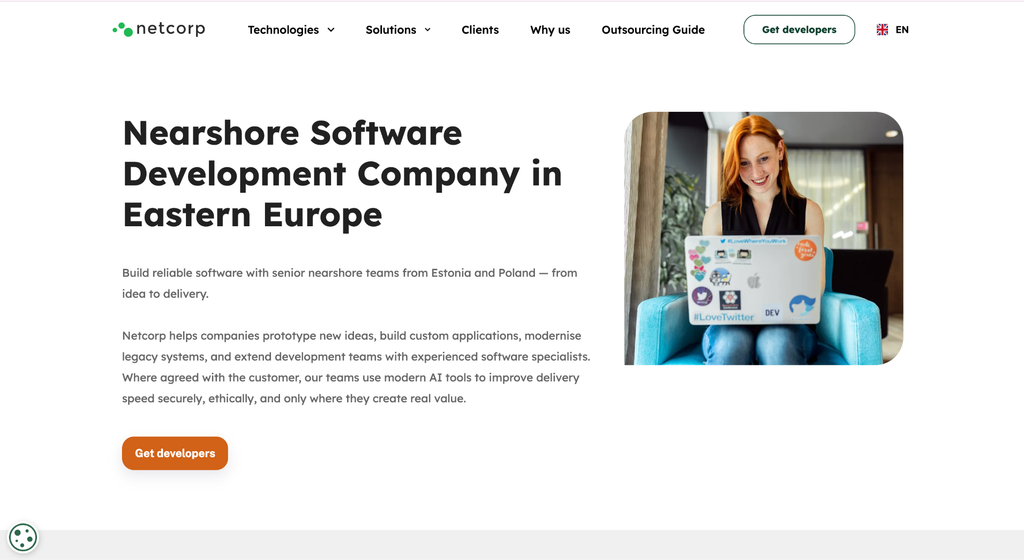
How Is Netcorp Software Development Company Different?
Netcorp is an Estonia-based nearshore provider that attracts talent from Poland and Estonia, with 15 years of delivery experience and 250 or more in-house developers. They handle dedicated development teams and full project delivery for clients that span Scandinavia, Northern Europe, the UK, and the US. Their 4.9/5 Clutch rating reflects a real pattern: clients like Telia and Monese don’t hang around without consistent results. Projects can kick off within one to eight weeks, which matters when time-to-hire is eating into your timeline.
What Sets Netcorp Software Development Company Apart from Other Nearshore Software Development Companies?
One of the most challenging problems in nearshore outsourcing is finding a provider whose financial stability and operational track record precisely match what their website claims. Netcorp holds an AAA credit rating, placing them in the top 4.2% of Estonian companies, and that kind of signal is genuinely hard to fake.
What Users Are Actually Saying:
Clients generally point to delivery reliability and technical depth as the standout qualities. The 4.9/5 Clutch score across 85 or more projects isn’t a small sample, and it’s not an easy rating to hold at that volume. Reviewers flag the team’s communication quality and low turnover as reasons they keep coming back.
Mobilunity is a Kyiv-based nearshoring and offshoring company with 16+ years consultants, working with clients across 30+ countries including Telia-scale telecom, fintech, and e-commerce names like Republic Bank, Klevu, and FinExpert. Their model puts the client in direct control of the team – sprints, tools, priorities, while Mobilunity handles recruitment, payroll, HR, and legal in the background. Teams typically launch in 3-6 weeks, with vetted CVs back in as little as 5 days.
Most companies providing dedicated development teams compete on speed or price alone. Mobilunity’s difference is what happens after placement: its 3R model (Relationships, Recruitment, Retention) is built specifically to keep the same engineers on a project for years, not months. Average client partnership duration sits at 4.2 years.
Across Clutch reviews, Mobilunity holds a 4.8 overall rating. Clients most frequently cite reliability, timeliness, and communication. One enterprise client (Glopal) reported zero turnover across a multi-year engagement and consultants staying more than two years each. A VP at a US telecom firm called the commitment level unlike anything he’d seen from a previous team, while a training services provider in Germany credited Mobilunity with 37 feature releases over 26 months on a from-scratch enterprise build.
How Is Slingshot Different?
Founded in 2005, Slingshot has spent nearly two decades elevating ideas from concept to shipped product across more than 250 completed projects. They work across AI, cloud, enterprise software, mobile apps, web development, and healthcare applications. What separates them from typical dev shops is how deeply they tie strategy and design into the development process itself, rather than treating design as a handoff step. Their Eastern European staff augmentation capability makes them relevant for organizations evaluating nearshore options.
What Sets Slingshot Apart from Other Nearshore Software Development Companies?
Many outsourcing providers treat design as optional or an add-on, but Slingshot builds it into every engagement from the start, which dramatically cuts down on costly rework cycles. That kind of integrated approach tends to show up directly in better delivery outcomes, especially on complex enterprise and AI projects.
What Users Are Actually Saying:
Public review data for Slingshot is limited compared to some other providers on this list, which makes it harder to draw firm conclusions from client sentiment alone. Their case study portfolio handles a lot of the credibility work here, with enterprise-scale projects across multiple industries pointing to genuine delivery capability.
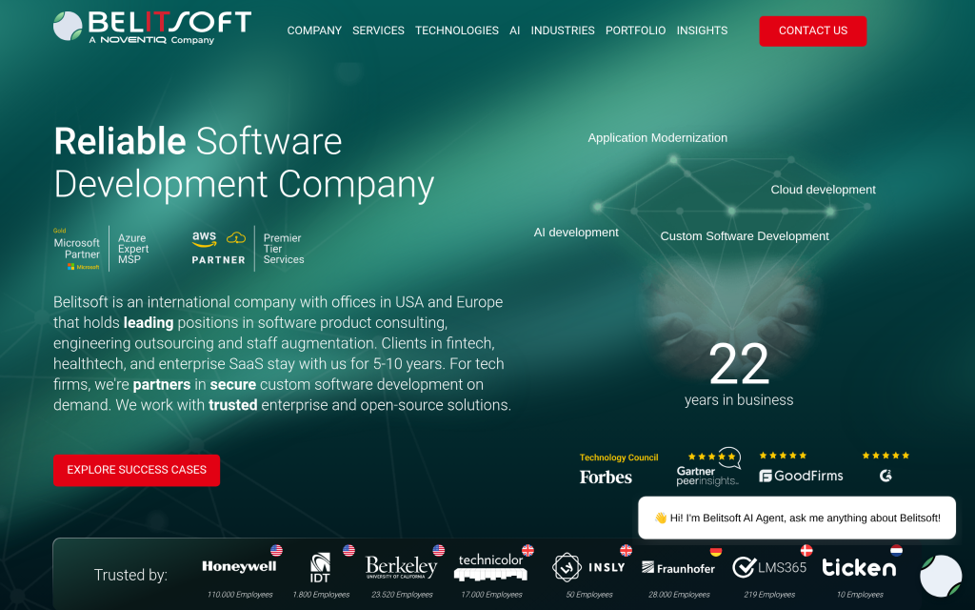
How Is Belitsoft Different?
Belitsoft has been in the market for 20 years, headquartered in Warsaw with offices in the US and across Europe. They are focused on full-cycle custom software development and IT staff augmentation, with 250 developers and a client retention rate of 90% after the first delivery. Their rate range sits at $30 to $70 per hour (transparent pricing with weekly budget reporting, which is rarer than it should be). Microsoft Gold Partner status and a React Native Competence Center of Excellence signal real technical depth, not just a credentials list.
What Sets Belitsoft Apart from Other Nearshore Software Development Companies?
Long-term client relationships spanning five to ten years are common in their portfolio, which says a lot about how they address continuity and developer stability. Companies working on fintech or healthcare projects, where regulatory knowledge and code quality matter, tend to find Belitsoft’s specialization worth the investment.
What Users Are Actually Saying:
Across Gartner, GoodFirms, and G2, Belitsoft holds a 4.9/5 overall rating, which is generally enough to take seriously. Reviewers frequently mention project management transparency and the quality of technical output on complex, long-running engagements. That kind of pattern across multiple platforms is a good sign.
How Is Intellias Different?
Founded in 2002 in Lviv, Ukraine, Intellias has evolved into a global operation with 3,368 professionals across 17 countries and 23 offices. They cover AI services, data engineering, product engineering, cloud infrastructure, and DevOps, with clients including Siemens, LG, and Deloitte. For organizations pursuing enterprise-scale engineering needs, the depth here is hard to match. With 170 or more global clients, they’ve clearly figured out how to operate across time zones without losing delivery quality.
What Sets Intellias Apart from Other Nearshore Software Development Companies?
For teams considering nearshore partners for complex AI or cloud infrastructure work, the scale and cross-industry experience Intellias brings is difficult to replicate with smaller providers. Their recognition as a top employer across Poland, Spain, and India directly connects to developer retention, and low attrition shows up in better project continuity for clients.
What Users Are Actually Saying:
Intellias doesn’t have a single consistent public rating to point to, but their 2025 Global Top 100 Inspiring Workplaces recognition and their Corporate Equality Index standing reflect well on how they’re run internally. A workplace reputation this visible tends to correlate with the kind of team stability that clients actually feel during delivery.
How Is Newxel Different?
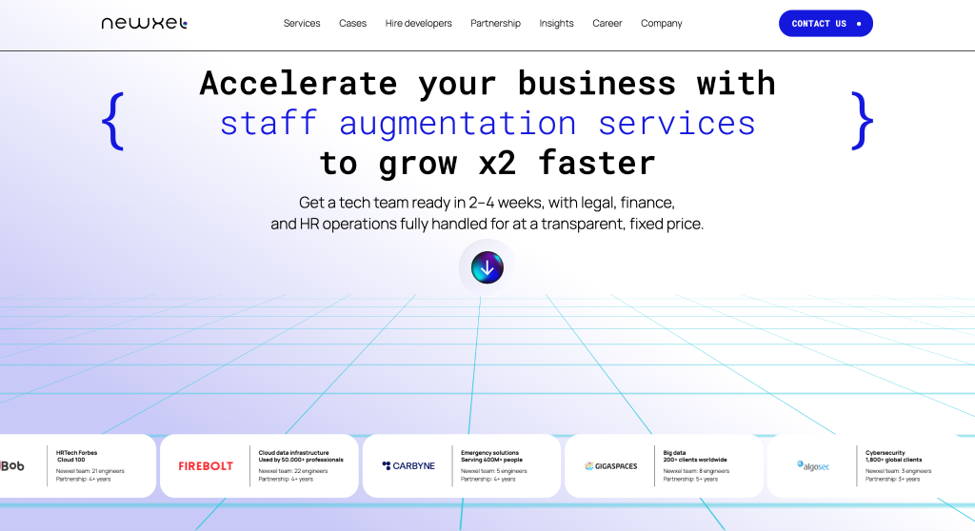
Newxel launched in 2017 out of Kyiv and built a focused model around IT staff augmentation and full-cycle R&D services. With 500 or more tech talents across their network, a 98% retention rate, and client relationships stretching beyond five years, they’ve clearly built something stickier than a typical staffing model. Their $30 to $70 per hour range keeps them accessible, and their Clutch Top Firm recognition from 2020 also brings some early credibility to the picture. They serve clients in fintech, AI, healthcare, and cybersecurity.
What Sets Newxel Apart from Other Nearshore Software Development Companies?
The 98% retention rate is the number that stands out here. Attrition is one of the quieter cost drivers in outsourced development that most teams don’t account for until it’s already hit their timeline. For organizations looking for a long-term partner other than a project-by-project vendor, that kind of stability changes the math on total cost of engagement.
What Users Are Actually Saying:
Clients who have stayed with Newxel for multiple years consistently emphasize team consistency and communication quality. Partnerships exceeding five years don’t happen by accident, and the pattern across their client base points to a provider that actually prioritizes continuity over churn.
The following are the methods utilized to create these picks:
The research first began by pulling a broad list of nearshore software development companies active in Eastern Europe from multiple sources: software development directories, review aggregators, industry publications, and company listings that surface frequently in searches relevant to this topic. The goal at this stage was volume, not quality filtering. A wide initial pool ensures that strong but less-marketed providers don’t get dismissed simply because they spend less on visibility.
Once the initial list was assembled, companies without verifiable delivery history were dismissed first. That meant filtering out providers with thin review profiles, no identifiable case studies, or ratings that couldn’t be traced back to named client relationships. Review patterns were analyzed across platforms to identify consistency, not just average scores. A single high score on a specific platform carries much less weight than a steady rating pattern across multiple independent review sources over several years.
Claims made on company websites were tested against what clients actually reported in reviews. Team size figures, technology stack depth, and sector experience were all cross-referenced against case studies and publicly available project histories. Where a company claimed deep fintech or healthcare experience, that claim was checked against specific project examples. Where it held up, it contributed toward the final assessment. Where it didn’t, the discrepancy was factored in negatively.
Beyond client reviews, signals of broader industry recognition were assessed. These included awards from reputable technology and workplace ranking organizations, mentions in industry publications, and any proprietary research the company had produced. A company that shows up consistently across different credibility contexts is likely to reflect an organization that’s genuinely active in its field, rather than one focused only on its own marketing materials.
The final layer of evaluation focused on nearshore software development experience. Companies were screened for dedicated service pages covering nearshore delivery models, verified client reviews mentioning team proximity, time zone alignment, and communication quality, and case studies where nearshore-specific delivery conditions were documented. Providers that could point to real, verified project outcomes in a nearshore context were prioritized over those with only generic outsourcing credentials.
Choosing the right nearshore partner comes down to more than rate cards and team size. The factors that ultimately determine project success tend to be more specific. Here’s what to focus on when making your decision:
Eastern Europe has untapped depth in software development talent, but not every provider in the region delivers what their profiles recommend. The five companies covered here each bring something distinct: Netcorp’s financial credibility and rapid setup, Belitsoft’s long-term client retention, Intellias’s enterprise scale, Newxel’s stability model, and Slingshot’s integrated design approach. The right fit depends on your team configuration, timeline, and sector. That specificity is exactly where the decision should start.
Ans: The following are the things to focus on:
Ans: Newxel launched in 2017 out of Kyiv and built a focused model around IT staff augmentation and full-cycle R&D services. With 500 or more tech talents across its network and a 98% retention rate.
Ans:For teams considering nearshore partners for complex AI or cloud infrastructure work, the scale and cross-industry experience Intellias brings is difficult to replicate with smaller providers.
