
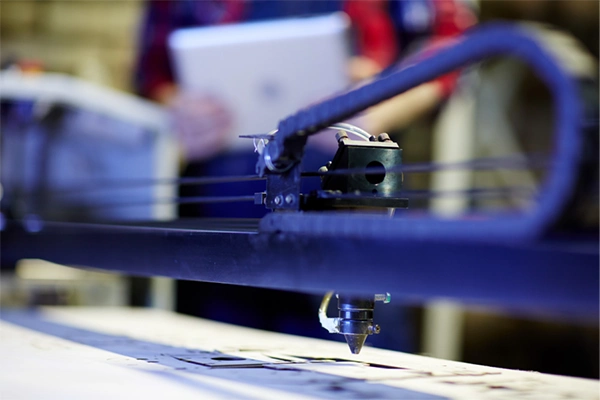
“Quality comes not from inspection, but from the improvement of the production process.” – W. Edwards Deming (Composer & Economist)
In precision manufacturing, it’s not just all accuracy. The real challenge is repeating that accuracy across hundreds or thousands of parts without increasing waste, rework, or production time.
Laser engraving machines replace much of the variability of manual work with digitally controlled, repeatable processes. From maintaining consistent dimensions and fine details to reducing material waste and accelerating batch production, modern laser systems can make precision easier to achieve and, more importantly, easier to reproduce. Here are five ways they support more reliable manufacturing.
Using tools manually makes you tired. Hands tremble. Even the most precise craftsman is bound to make minor discrepancies over a lengthy manufacturing process. This is not a problem in the case of the laser engraving machine since it eliminates the operator factor.
As long as a design is ready, the laser will cut and engrave precisely according to it, cut after cut, engraving after engraving. There is no fatigue, drift, or speculation in the operation. No matter if it is the tenth piece or the first one, it will look the same.
Accuracy becomes especially important on a very fine scale. Some fiber laser engravers are accurate to within 0.001 mm that cannot be achieved with any manually operated tool. This becomes especially important for those who manufacture metal and crystal engravings. It is because of this kind of precision that the final result of the work will be flawless rather than flawed.
Even the smallest elements of a design, such as fine text or thin lines, will be engraved in the right place and will not be distorted during the process.
Material waste also grows exponentially. Any misalignment in cutting or overheating the edge requires the job to be done again, and any extra work costs extra money. Precision manufacturing demands perfect work only on the first try, not five attempts.
Cameras already integrated into such equipment significantly decrease material losses. Positioning cameras (which can be seen on such machines as A1 Pro and Xmax) allow manufacturers to preview how their design will look when placed on the equipment. It allows catching misalignments before making cuts, thus not wasting material but saving it, as well as the additional time required to do things again.
One more thing about UV laser engravers is the “zero burn edge” technology. It enables machines to prevent burning the material with the laser. Since there is no scorching or charring, fewer material pieces need to be discarded.
As time goes by, it results in significant savings. A workshop producing dozens of pieces weekly will waste much less material due to possible mistakes; it results in better productivity since more of each sheet of acrylic or piece of wood becomes a manufactured product rather than a scrap one.
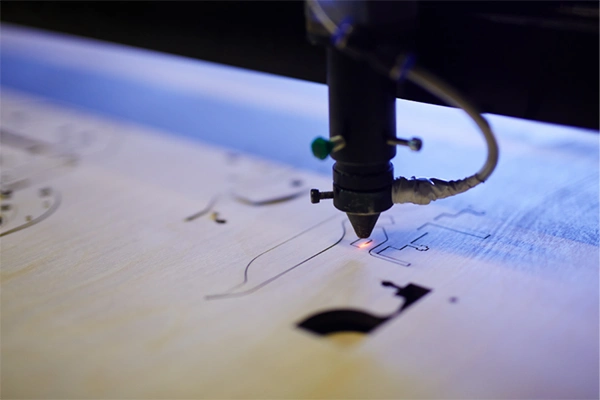
In manufacturing, they don’t use just one single material. The batch may use wooden materials one day, then shift to acrylic, then to metal or leather within the same week. Tool change in this case will take more time.
Laser engravers don’t have to change the tool. They just adjust themselves accordingly. A diode laser engraver is the right device to process wood, leather, paper, and any other material. If the manufacturer needs to work with metals, a fiber laser is used. UV laser engravers are good for marking or engraving glass, stone, and any other material where regular methods of heating fail.
One laser engraver device is capable of performing multiple tasks without switching tools. Small manufacturers who deal with different batches of goods benefit from such machines. They save a lot of space as well as time for adjusting the devices to perform certain tasks.
PRO TIP
A CO2 laser handles 90% of all laser engraving materials brilliantly.
Some designs will require a degree of finesse that cannot be achieved through any manual tool. Such designs will include:
All of these require an instrument that can move with total precision.
The UV laser engraver is perfect for achieving such a level of accuracy. This is because, with its 355nm laser, it can perform inner sculpting and 3D relief engraving, which can do depth engraving. This is something that cannot be achieved through manual carving, and therefore layered designs, which would have required many hours of engraving manually, are able to be completed within seconds, with every layer flawlessly aligned with the desired design.
With the precision comes speed, which makes the whole procedure even more efficient. For instance, the Z11 fiber laser engraving works at speeds of up to 10,000mm/s. So, the fine details don’t get compromised in favor of speed. The manufacturer thus gets both the sharpness and complexity desired without compromising on speed. 5-axis CNC machines lead in complex designs with 99% yield.
This mix of speed and depth creates opportunities for designs which would otherwise have been difficult to engrave at such a small scale and using such simple machines.
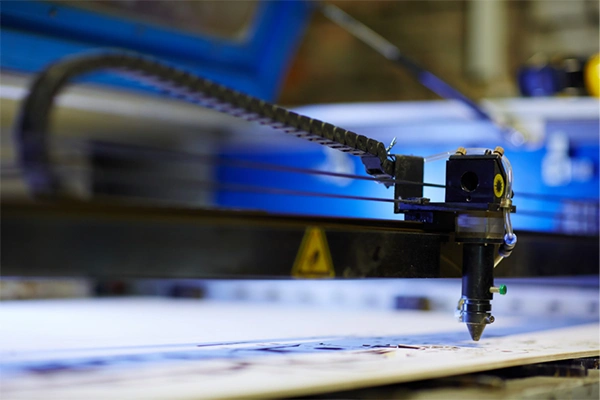
Making one unique piece is hard enough. Creating fifty exact copies is even harder. In precision manufacturing, repetition is key. And repetition relies on a process that remains unaffected by increasing output levels.
Digital design files facilitate such processes. Once the design template is set in software like LightBurn or some custom application, it can be repeated over and over without any manual adjustment. The fifth execution will match the first, or the fiftieth.
As the volume of orders increases from one-of-a-kind pieces to whole batches, the digital design file persists. Hence, you can stop worrying about quality control of each piece.
This approach has special value for small businesses moving from project-based work to large-scale manufacturing. A designer who began with creating unique one-of-a-kind items can now transition to batch manufacturing without compromising their unique precision manufacturing skills. They no longer need to train the machine on their design; they just need to repeat it.
Precision manufacturing is not just about getting the right product in one shot. It’s about delivering the right product in a consistent manner despite the type of material used or the quantity of the order. This is possible through laser engraving machines, which eliminate the variables that cannot be controlled using manual methods.
The right machine makes precision not only achievable but guaranteed for a variety of applications. This is what distinguishes a manufacturer from a hobbyist.
Ans: They use digitally controlled laser beams to reproduce a design with consistent positioning and depth that reduce variations caused by operator fatigue, hand movement, and inconsistent pressure.
Ans: Yes. Accurate positioning and repeatable cutting or engraving can reduce mistakes that result in discarded parts and rework.
Ans: Depends on its laser type and specifications. Diode lasers are commonly used for materials such as wood and leather, while fiber lasers are suited to many metals. UV lasers can be useful for materials that are sensitive to heat, including glass and certain plastics.
