
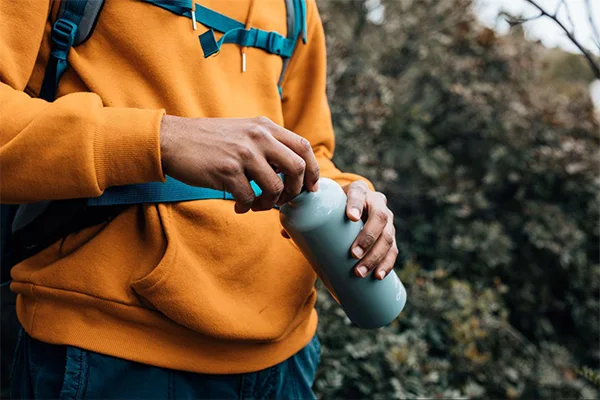
There are many different variants of branded water bottles, such as stainless steel water bottles, new plastic water bottles, and foldable water bottles.
But no matter what outdoor activity you do, be it afternoon hiking, mountain day hiking, or heading for a backpacking adventure, it is essential to have branded water bottles that help you enhance your performance and keep you hydrated for long.
Here are a few factors that you need to consider when selecting a hiking water bottle.
Key Takeaways
- Dehydration has a massive impact not only on endurance but also on concentration and makes the hike harder, causing a lot of discomfort and increasing the chances of injury
- Determining the right size depends entirely on the duration of the hike, weather, and the number and locations of rehydration points
- It is also necessary for you not to overlook the total weight of the equipment you carry, and your water bottle is a vital factor in this respect
- There isn’t such a thing as the ideal hiking water bottle. It all boils down to finding the right one that suits your requirements the best
Dehydration has a massive impact not only on endurance but also on concentration and makes the hike harder, causing a lot of discomfort and increasing the chances of injury.
Remember that a good water bottle will help you:
The right choice will depend entirely on your hiking style, how often you refill, and various other personal factors, so it is important to conduct thorough research.
There are numerous styles of hiking water bottles, each style having its unique benefits. Many prefer hard plastic bottles, which are very light, and not only do they not contain BPA but are also very economical.
Determining the right size depends entirely on the duration of the hike, weather, and the number and locations of rehydration points.
As a general guide:
Where there are streams on the way that either recharge or have filtering stations, it is possible to carry along a small water bottle when outside, as long as you have another one that serves as a backup.
United States alone uses 50 billion single-use water bottles every year, making it evident that there is a need for some alternatives. Each type of water bottle for outdoor use comes with its strengths based on the individual.
Plastic
Stainless Steel
Aluminum
Silicone
It is always wise to decide first what is most important before making any decision regarding materials to use.
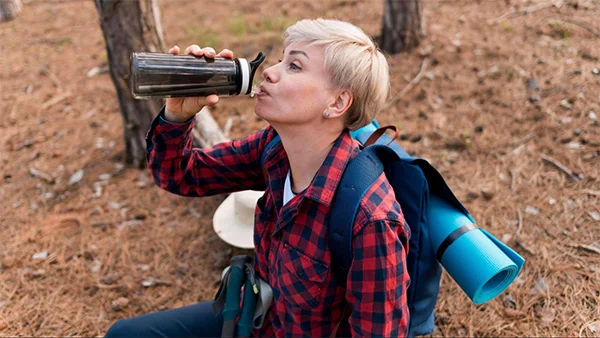
In addition to size and material, some design aspects can enhance your hiking experience.
Look for:
Companies like Save Your Ink provide products that are incredibly sturdy, useful, and comfortable to wear, especially if you hike frequently.
There are benefits to using hydration reservoirs and traditional bottles.
Hydration Reservoirs
Traditional Water Bottles
For experienced hikers and adventurers, it goes without saying that you should probably pack both options.
However, it is also necessary for you not to overlook the total weight of the equipment you carry, and your water bottle is a vital factor in this respect.
Here are some things to remember when looking for a water bottle:
A comfortable bottle will make you drink more frequently and stay hydrated throughout the whole hike.
Did You Know?
You get about 20% of your daily water from food. Fruits like watermelon are over 90% water.
There isn’t such a thing as the ideal hiking water bottle. It all boils down to finding the right one that suits your requirements the best.
There are many considerations in deciding which bottle to select, including plastic varieties, steel, and insulated water bottles. These include the bottle’s capacity, material, insulation, and portability.
Ans: The right choice will depend entirely on your hiking style, how often you refill, and various other personal factors, so it is important to conduct thorough research.
Ans: The following are the key features of the stainless steel material:
Ans: It is necessary for you not to overlook the total weight of the equipment you carry because ultimately, if the bag is too heavy to drag along with you, it would just become a hassle in longer hiking adventures.
Ans: A 500–750 ml water bottle would do just fine in short hikes that take about 1-2 hours to complete, providing you with a hydration option all the way.
