
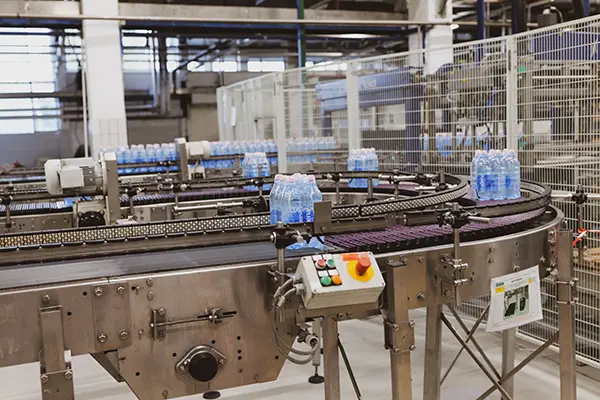
If you are part of the industry, many devices within factory environments will be connected to digital networks.
Using IIoT technology, information can be shared between sensors, machines and industrial controllers to monitoring dashboards, cloud services and remote maintenance solutions.
It basically supports manufacturers in gaining insights into their performance, identifying issues with equipment and increasing productivity.
It can expose networks to security vulnerabilities. If an employee account has been compromised, a remote connection is left open or a vulnerability exists on a device, then attackers can gain access to critical systems.
This can cause problems with your equipment, product quality or shut down your production line.
The risk is significant; an analysis has shown that 62% of successful OT attacks take over a month to detect and on average it takes seven months to recover from an attack.
To reduce this risk, industrial organisations should implement risk-based controls to protect their critical processes while ensuring they can still complete maintenance.
This will allow teams to identify, isolate and recover from incidents.
Industrial sites connect programmable logic controllers, sensors, supervisory control systems, engineering workstations, cloud dashboards and office IT. These assets have different risk tolerances. A patch that works for a laptop could disrupt a validated production system if a team deploys it without testing.
This is where IT and cybersecurity planning must account for operational realities. Moonshot Solutions recommends a broader business-technology approach to protect networks, identities and business data while employees focus on core work. Industrial companies should pair such enterprise controls with an OT-specific plan for plant-floor equipment.
That distinction helps clarify where a managed IT partner fits. Enterprise controls can reduce exposure across business systems. Plant engineers, on the other hand, validate safeguards against OT uptime and safety requirements. An accurate asset inventory shows which systems teams can update routinely, which need a maintenance window and which need compensating safeguards.
Aon’s cyber risk report found that 31% of its manufacturing clients lacked segmentation between OT and IT. On the other hand, 21% did not separate OT networks from the internet. These gaps can let an attacker move from a compromised office account toward production systems.
Manufacturers can create zones around critical processes, restrict traffic to what each system needs and route remote access through secure gateways. They should require multifactor authentication for remote users, assign unique accounts to vendors and limit access to specific tasks and time windows. Plant engineers should test these changes before implementation.
“Patch everything immediately” sounds decisive, but it can create new operational risks in industrial settings. Some legacy controllers cannot tolerate standard endpoint tools, and updates can conflict with vendor-supported configurations. Teams should maintain an accurate inventory, track known vulnerabilities and rank fixes by exploitability, exposure and consequence.
Test patches in a representative environment first. Deploy high-priority updates during maintenance windows that operations teams approve, with a rollback plan and verified configuration backups. When a system cannot accept a patch, restrict network access, disable unnecessary services and increase monitoring until a safer upgrade becomes possible. This replaces blanket delays with documented decisions.
A World Economic Forum analysis found that 77% of surveyed organizations experienced an attack that compromised confidential data or disrupted OT. On the other hand, 24% of detected attacks required a halt to OT workflows. Industrial firms need signals that reveal suspicious activity before it becomes a production crisis.
Monitor unusual logins, unexpected remote sessions, changes to control-system configurations and traffic between network zones. Tie alerts to clear response steps, with operations leaders involved in decisions about isolating systems. Keep protected backups of critical data, control configurations and recovery instructions. Test restoration, not just backup creation, and run exercises that include IT, OT, safety, production and communications teams.
Leo Simonovich, Vice-President and Global Head of Industrial Cyber and Digital Security at Siemens Energy, and Filipe Beato, Manager of Technology warn that “With digital systems integrated into OT workflows, companies that fail to secure their OT environments risk disruption.” The lesson is not to disconnect every machine. It is to detect deviations, contain incidents and recover without improvising under pressure.
Employees and suppliers need digital access to keep equipment running. Replace shared credentials with named accounts, set clear approval routes for vendor connections and remove access when a task or contract ends.
Train staff to report unusual behavior quickly, without fear that an honest mistake will trigger blame. Short, role-specific guidance works better than rules operators cannot follow mid-shift.
Industrial firms reduce cyber risk most effectively when they treat uptime and security as joint goals. Map critical assets, segment networks, test changes, limit remote access and rehearse recovery. These measures help teams reduce exposure while keeping production moving.
| Key Findings | Recommended Action | Business Implication |
| OT attack detection | 62% took over a month to discover. | Continuous monitoring improves visibility. |
| OT incident recovery | Average recovery took seven months. | Tested recovery plans support resilience. |
| IT-OT segmentation gaps | 31% lacked IT-OT separation. | Network segmentation limits lateral movement. |
| Internet exposure | 21% lacked OT-internet separation. | Secure gateways reduce exposure. |
| Cyberattack impact | 77% reported data compromise or OT disruption. | Early detection supports faster containment. |
| Operational shutdowns | 24% of detected attacks required OT workflow stoppages. | Incident rehearsals improve response readiness. |
Industrial cybersecurity works best when protection and productivity move together. Manufacturers do not need to choose between securing their systems and meeting production targets. They need a clear understanding of their most critical assets, controls that limit access without obstructing essential work, and security updates that fit operational schedules.
Network segmentation, continuous monitoring, controlled remote access and tested recovery plans help teams reduce exposure before a cyber incident escalates into costly downtime. Just as importantly, IT specialists and plant engineers must share responsibility for security decisions.
The goal is not simply to prevent cyberattacks, but to ensure that when threats emerge, production can continue safely or recover quickly. That is how industrial firms build cyber resilience without sacrificing operational efficiency.
Ans: Manufacturers can reduce cyber risks by segmenting IT and OT networks, scheduling security updates during planned maintenance, and monitoring unusual system activity. They should also test patches before deployment, restrict vendor access, and maintain recovery backups. These measures strengthen industrial cybersecurity while minimizing production downtime.
Ans: Unsecured connections between IT and OT networks create significant cybersecurity risks. Attackers can exploit these pathways to access industrial control systems, manipulate equipment, or interrupt production. Legacy software, weak remote access controls, and delayed security updates increase exposure, particularly in manufacturing environments that rely on continuous operations.
Ans: Industrial companies should review OT cybersecurity risks at least annually and whenever they introduce new equipment, network connections, or significant system changes. Critical environments may require more frequent assessments. Regular reviews help identify exposed assets, prioritize vulnerabilities, and align security improvements with production schedules and operational safety requirements.
