
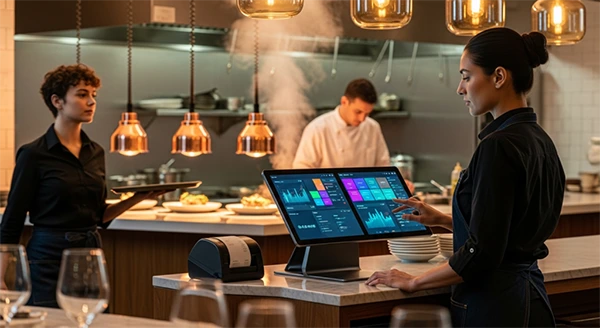
As digital transformation accelerates, the POS systems of restaurants have evolved into a critical operational platform. Industry data indicates that total restaurant sales will hit a staggering $1.55 trillion in 2026. Yet, many businesses remain stagnant and stick to their traditional operations.
Recent studies show that 37% of restaurant operators avoid switching to a modern system because of the perceived time and hassle of learning the platform from scratch. But, they aren’t aware of the fact that these modern software are capable of delivering savings of upwards of $3,100 per month through automation and efficiency.
This article lists the top seven platforms that help operators make smarter decisions, offering them unique strengths and custom solutions for every business.
Key Takeaways
- POS systems help restaurants achieve scalability a lot quicker than sticking with traditional methods
- They help businesses optimize their operations and improve customer opinion over the long-term
- It also comprises data-driven features, like real-time inventory forecasting, to help restaurants stay prepared at all times
- Every platform offers specific advantages to its users, depending on the business’s goals and targets
The following is the list of the best seven restaurant POS systems (in no particular order) that allow businesses to scale effectively and reach new heights in little time.
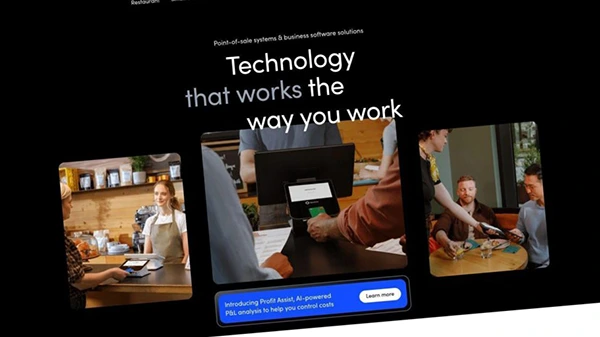
High-volume bars and independent restaurants looking for back-of-house integration and user-friendly operation usually find SpotOn a strong choice in 2026.
SpotOn is a highly capable restaurant POS that combines payment processing, staff management, and marketing all into a single interface.
A major differentiator this year is their enhanced Tip Template settings, which provide managers with unprecedented flexibility in how gratuities are handled across different service types.
SpotOn’s Profit Assist, an AI-powered profit and loss tool, automatically analyzes costs and suggests strategic adjustments using real-time data. With 74% of operators expecting AI capabilities, SpotOn’s integrated intelligence positions it as a reliable investment for forward-thinking businesses.
| Feature | Details |
| Target Market | Independent restaurants and SMBs |
| Key Differentiator | AI-driven profit analysis, 24/7 personalized support |
| Pricing Range | Free to $99/month |
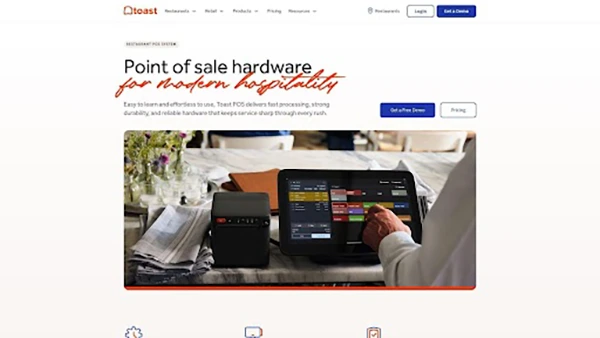
Toast is recognized by many operators in intense environments as the most durable, Android-based cloud POS system. It also supports over 140,000 locations and processes a great portion of U.S small-restaurant payments, displaying its consistent reliability in high-pressure situations.
The Toast Go handheld devices have become the standard for tableside ordering. By allowing servers to create tickets directly from the floor, this feature considerably reduces “dropped tickets” and long queue times.
Furthermore, digital ordering prompts have been shown to boost average order value with the assistance of automation and targeted upselling.
When combined with the Kitchen Display System (KDS), the entire workflow becomes paperless, routing orders from the table to the specific station in the kitchen instantly.
| Feature | Description |
| Hardware | Spill-proof Toast Flex and Toast Go terminals |
| Kitchen Display | Real-time KDS routing tickets from tableside to kitchen |
| Payroll | Built-in team management and automated payroll |
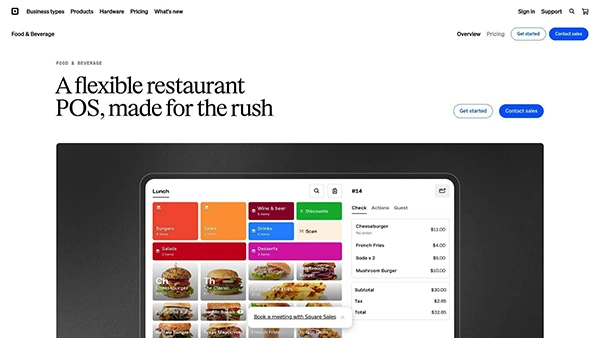
Operators transitioning from manual systems or legacy registers will appreciate Square’s straightforward interface. The app-based platform streamlines staff training, often enabling completion in under an hour.
In 2026, Square continues to lead in small- to mid-sized hospitality, building on its extensive payment processing experience from recent years. The new Square Handheld enables contactless payments and independent ticket management. For businesses experimenting with new concepts, Square’s free tier provides a cost-effective way to implement advanced technology.
| Feature | Details |
| Target Market | Solo operators to mid-sized restaurants |
| Key Differentiator | App-based simplicity with a free entry plan |
| Pricing Range | Free to $69/month |
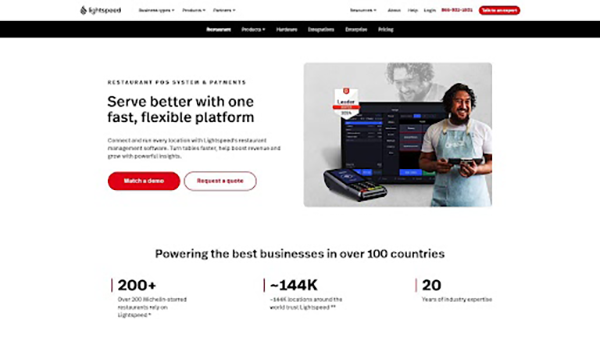
Running a complex operation—such as a fine dining establishment or a multi-location hospitality group—requires more than just a payment processor. Lightspeed is a robust omnichannel commerce platform that specializes in granular inventory management.
With the launch of Lightspeed AI, the platform has added an intelligence layer that shifts operators toward predictive decision-making. For establishments with massive wine lists or hundreds of unique ingredients, Lightspeed tracks stock at a microscopic level across multiple locations. This enables automated decision-making workflows that save hours of manual data entry each week.
| Feature | Details |
| Target Market | Fine dining and multi-location hospitality groups |
| Key Differentiator | Granular inventory tracking, Lightspeed AI |
| Pricing Range | Custom pricing based on business tier |
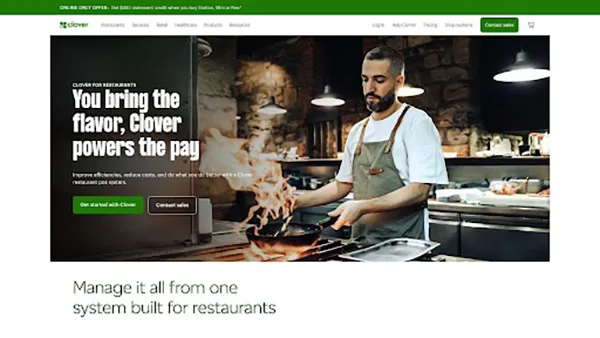
Clover is widely recognized for integrating sleek, high-end hardware with a robust third-party app marketplace. This open-ended approach allows the creation of a personalized technology meant for specific operational requirements.
For operators seeking loyalty programs, specialized CRM, or unique accounting solutions, Clover’s app marketplace offers custom options.
This adaptability proves crucial, as 2026 data show loyalty members far outperform anonymous guests. Clover’s hardware, including the Station Duo and Flex, delivers both robust performance and a polished presentation.
| Feature | Details |
| Target Market | Customized casual dining and retail hybrids |
| Key Differentiator | Massive third-party app marketplace |
| Pricing Range | Varies by payment processor |
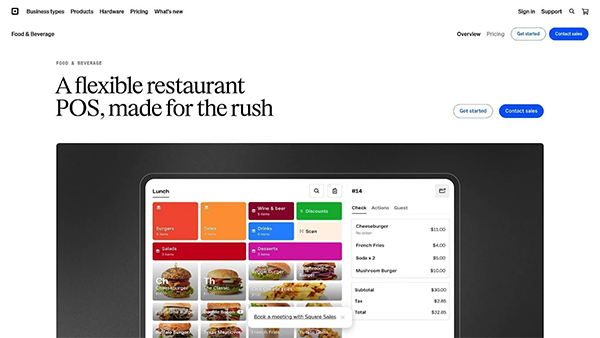
When a restaurant group surpasses small-business solutions, Revel Systems becomes the practical next option. This iPad-based enterprise POS system is created to incorporate complex workflows of multi-location brands that require rapid expansion.
Revel performs exceptionally well at automated inventory forecasting and real-time data synchronization across multiple stores. While its learning curve may be difficult to grasp in comparison to other competitors, it is designed for large-scale operators who prioritize consistency.
Integrated scheduling tools help managers reduce labor costs by leveraging data-driven staffing methods.
| Feature | Details |
| Target Market | Mid-market to enterprise multi-location groups |
| Key Differentiator | iPad-based enterprise functionality, robust sync |
| Pricing Range | Custom enterprise pricing |
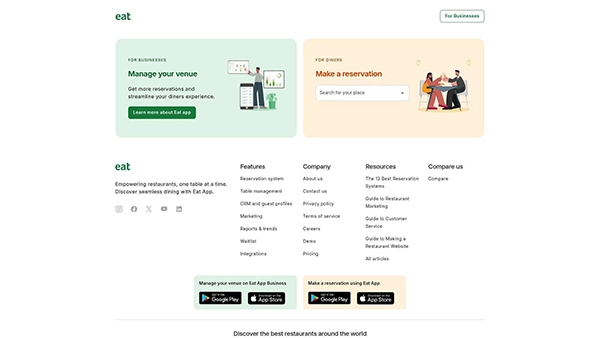
While kitchen operations remain essential, guest experience is equally important. Eat App enhances this experience by providing a centralized CRM and reservation platform integrated with POS systems.
Their biggest draw in 2026 remains their zero-per-cover-fee model. Unlike traditional reservation systems that charge per diner, Eat App lets high-volume spots save a fortune. It pulls spending history directly from the POS to automate VIP tagging and personalized marketing. By using automated Google review requests and segmentation tools, Eat App helps you build a digital reputation that keeps diners coming back.
| Feature | Details |
| Target Market | High-volume restaurants prioritizing reservations and CRM |
| Key Differentiator | Zero per-cover fees, deep POS data integration |
| Pricing Range | Free to $239/month |
This table displays each platform’s advantages, drawbacks, and pricing compared across multiple options to help businesses make the right decisions based on their requirements:
| Name | Pros | Cons | Pricing |
| SpotOn | Automated AI cost analysisStrong BOH integrations24/7 personalized support | Primarily focused on the US market | Free to $99/month |
| Toast | Restaurant-grade rugged hardwareDeep front-to-back connectivity | Locked into proprietary payment processing | Custom pricing |
| Square | Solid free entry tierVery intuitive app interface | Add-on features can get pricey | Free to $69/month |
| Lightspeed | Advanced inventory trackingConversational AI insights | Onboarding takes time for complex menus | Custom pricing |
| Clover | Huge third-party app marketplaceGreat customized workflows | Hardware must be purchased upfront | Varies by processor |
| Revel Systems | Built for multi-location groupsGranular ingredient-level reporting | Noticeable learning curve for beginners | Custom pricing |
| Eat App | Zero per-cover reservation feesExcellent guest CRM database | Focuses more on front-of-house CRM | Free to $239/month |
Upgrade your POS system to automate various everyday operations and gain a significant competitive advantage in 2026. Take control of your restaurant’s future, and make the change today.
Begin your migration with a reliable cloud platform and grab the opportunity to cut costs, streamline workflow, and secure your business’s standing in the trillion-dollar hospitality market now.
