
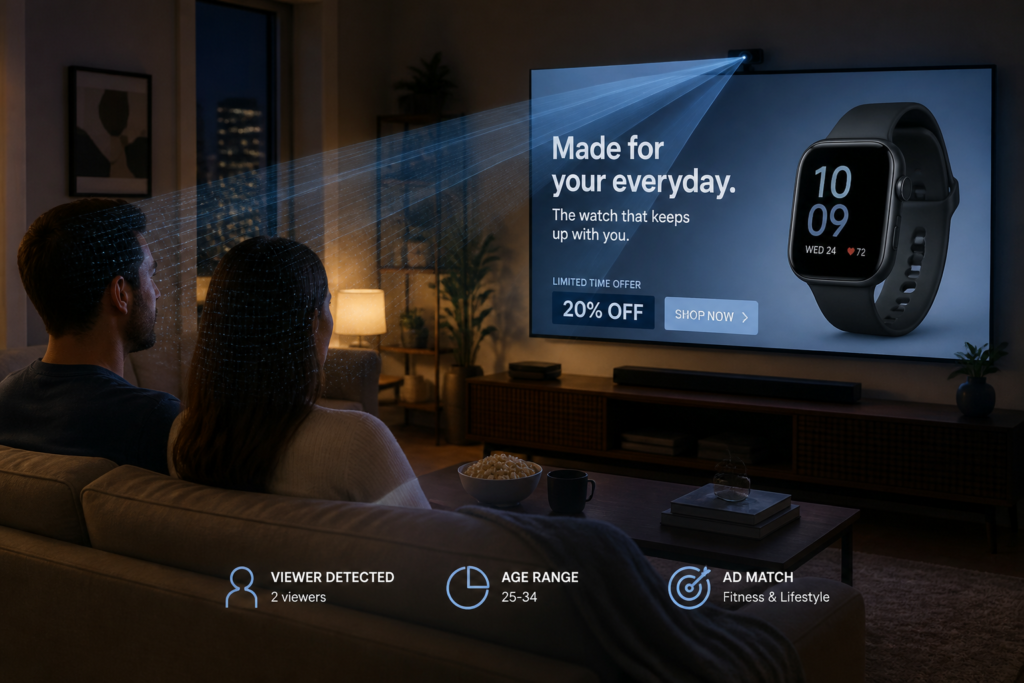
Automatic content recognition (ACR) is mainly known for identifying songs, but over time, its use cases have grown drastically beyond that simple identification process. Radio stations use it to track broadcasts, podcast publishers use it to check ad playback, and live events use the associated audio data to better understand audience data.
As recognition technology is getting more accurate, it is transforming podcasts, radio, and live events. To understand this better, keep reading to explore how ACR has moved beyond music.
Radio has consistently generated royalties. In most of the world, every time a song airs on a mainstream or internet radio station, money is owed — to the songwriters, the publishers, and in most countries other than the United States, the recording artists and music producers as well.
Collecting that money involves knowing exactly what played, on which station, at what time. For most of radio’s history, that detail was collected through cue sheets submitted by stations, sampled spot-checks, and statistical modeling centered on limited monitoring — a system that was always incomplete and often deceptive.
Audio fingerprinting changed the practical aspects of that problem. Instead of sampling a fraction of broadcasts and adding up, recognition systems can now continuously monitor thousands of live station streams in parallel, logging every track that plays by comparing seconds of audio against a fingerprint database encompassing over 100 million tracks. Each match is timestamped, linked to an ISRC code — the international symbol for a specific recording — and fed into a report that a winning rights organization can use directly for royalty arrangement.
ACRCloud, one of the companies that has developed the infrastructure this market runs on, indexes more than 50,000 global radio and TV stations in its broadcast directory. Soundcharts, a music industry analytics program, uses ACRCloud’s fingerprinting engine specifically because the system pays attention to raw audio rather than relying on “now playing” metadata that stations can alter or that simply goes dark when a station’s data feed drops. The fingerprint algorithm works on what was actually broadcast, not what a station listed.
The downstream ripples reach into corners of the music industry that most listeners never see. In Croatia, a supplier called Poslovna Spajalica uses ACR-based assessments to compile airplay reports for the country’s copyright union, which then distributes those royalties to rights holders. In Australia, the Community Broadcasting Association cooperated with ACRCloud to give independent artists real-time insights into when and where their music airs on community stations — a sector where airplay tracking had at first been entirely manual. In Brazil, the service GH3 uses broadcast analysis to help advertisers verify that their commercials correctly aired at the times and on the stations they paid for. Across each of these use cases, the recognition process is the same; the commercial problem it’s solving is unique.
Also, learn how AI is revolutionizing creative workflows across every industry.
Beyond royalty compliance, broadcast monitoring through ACR analytics delivers the music industry something it recently lacked: granular, real-time insight into regional listening trends. A label that releases a track can now see within hours which markets are soaking it up, which stations are assigning it to rotation, and at what rate the song’s airplay is climbing or stalling.
Record labels and music managers use this data to decide where to place promotional resources, which regional markets warrant a physical tour date, and how radio revenue compares to streaming numbers in the same nation.
Airplay remains the only strictly localized promotion and consumption channel in a streaming world that otherwise treats geography as an add-on. A track that is performing moderately on Spotify globally might be ruled by morning drive radio in three specific cities — intelligence that directs tour routing, promotional spend, and sync licensing conversations.
ACR-based airplay analytics detect that intelligence automatically, without asking anyone to listen to hundreds of hours of regional radio or phone program directors for in-person updates.
For advertisers who buy radio inventory rather than tracks, the same auditing infrastructure provides ad verification: confirmation that a segment aired as contracted, at the scheduled time, in the correct form. The tendency to audit radio advertising through automated recognition rather than station-reported logs modifies what advertisers can demand from broadcast partners and updates the accountability dynamic for the entire sector.
Podcast measurement has been one of the most serious problems in digital media. Unlike streaming video, where platform-side playback data is detailed and standardized, podcast listening is messy across hundreds of apps and players, with no universal method for confirming that an ad actually played, let alone that a listener observed it rather than leaving it.
Downloads — still the primary metric shared by most podcast platforms — count file transfers, not completed listens. An episode that was compiled by five hundred thousand people and pulled down after thirty seconds by four hundred and eighty thousand of them would still display the same download number.
NPR’s development of RAD — a remote audio data technology standard crafted in partnership with nearly thirty companies from the podcasting industry — points to one attempt to address this gap through generic in-stream measurement.
RAD embeds measurement markers within audio files that permit publishers to collect data on listener behavior: how far into an episode a listener advanced, whether an ad segment played in full, whether it was skipped, and at what point listening ended. The data is anonymized and aggregated, but it gives publishers and advertisers a psychological signal that raw download rates cannot provide.
ACR-based techniques related to podcast measurement attack the same problem from a different angle. Rather than incorporating measurement into the file, recognition technology can identify when a podcast episode — or a specific ad within it — airs on a connected device, by matching audio against a symbolic fingerprint of the original file. This matters for advertisers who want to verify that a freshly inserted ad actually reached listeners, especially on platforms where the insertion is conducted on the fly and may not be listed in the publisher’s own analytics.
It also counts for host-read sponsorships where the audio is produced as part of the episode and indistinguishable to the listener from the accompanying content — ACR can identify the sponsorship segment regardless of how the publishing platform categorizes it.
The podcast analytics market is still taking steps toward standardization, but the direction is clear: recognition-based verification is moving from unneeded to expected as ad spend in audio continues to grow and buyers ask for the same accountability infrastructure they have in digital video.
The live events sector delivers the most unusual application of recognition analytics, and the one with the most open questions still attached. Venues and promoters have long sought to understand audience opposition to performances in real time — not the delayed signal of ticket resale prices or post-show social media viewpoints, but what’s actually happening in the room during a show. Acoustic analytics offer one entry point into that question.
Sound measurement systems deployed in large venues can collect crowd audio — applause, cheering, silence — and use recognition to discriminate different types of audience response from the ambient mix of a live performance. The pace and duration of applause after a particular song, the peak decibel level of crowd support at different moments in a set, and the way response swings when an artist shifts from familiar catalog material to less well-known songs: all of this can be filmed, timestamped, and analyzed.
For promoters thinking about venue agreements, for artists making setlist decisions, and for streaming platforms considering which live recordings to put in, this data represents a form of audience intelligence that no post-show survey mimics.
The rights management dimension of live events is also heavily ACR-dependent. When a band performs cover songs or adopts samples at a live show, licensing obligations attach to those performances. ACR-based analysis of live event recordings — whether those are produced by the venue or preserved in bootleg recordings that surface on streaming platforms — can identify which protected works were performed, setting off reporting obligations to performing rights corporations.
This automated assessment removes a layer of manual work from venue compliance teams and reduces the risk of incorrect reporting that has historically resulted in disputes between venues and rights owners.
The ACR technology market associated with all of these applications has grown substantially as the use cases have broadened beyond smart TV and streaming. Real-time content analytics is now the leading product category by application in the ACR market, accounting for roughly 29 percent of total market consumption, ahead of the copyright and security management segment that originally funded investment in recognition technology.
ACRCloud sits at the center of many of the radio and podcast applications cited above, providing the fingerprinting engine that drives broadcast monitoring services for labels, rights organizations, and marketing firms across more than 100 countries.
Gracenote, the Nielsen subsidiary that oversees content recognition for major streaming services and smart TV platforms, has been extending its audio fingerprinting capabilities specifically to support cross-platform content discovery in radio and digital audio. Soundcharts, which puts together radio airplay data for the music industry, operates on ACR-based matching against a database that features more than 112 million tracks.
Intrasonics is interested in ultrasonic watermarking for second-screen interactivity — a technology with direct application to live events and broadcast tuning that positions it in the gap between recognition and interactive participation.
The global automatic content detection market was valued at approximately $3.16 billion in 2024 and is expected to reach $16 billion by 2033, with a compound annual growth rate near 20 percent. The broadcast evaluation and audio segments are identified as key growth drivers across most market analyses, showing how the underlying recognition capabilities that made Shazam useful for consumers are now being modified for industrial-scale media tracking.
What connects the radio station logging a royalty-triggering shift at midnight, the podcast app reporting that an ad played for its full thirty seconds, and the concert venue capturing crowd response to an encore is a single hint: every audio event that was previously invisible to automated systems is now easily traceable, timestamped, and reportable. The recognition layer that the music industry put together to answer the consumer question “what song is this?” has turned out to be the same layer that reacts to the industry question “was this song broadcast, when, where, and by whom?”
The infrastructure built for one specific goal is quietly solving a set of very different problems that nobody initially meant it to address — and the media sectors that are learning to use it are recognizing that the data was always there. They just had no way of handling it.
Also, learn how SaaS API integration connects products across the internet.
At the end of the day, ACR is much more than simply identifying songs. It is actively helping radio broadcasters track airplay, giving advertisers better verification, improving podcast measurement and setting up new ways to better track live audiences.
With the consistent growth of such platforms, ACR is becoming an important segment of media infrastructure. With such importance, it is actively transforming audio that was once largely unmeasured.
Ans: ACR is a technology that looks for audio, video or both by comparing a sample with content stored in a reference database.
Ans: Radio broadcast companies use ACR to identify songs and other content as they air. They help with airplay tracking.
Ans: No. ACR can be applied to radio broadcasts, podcasts, advertisements, television and other forms of audio and video content.
