
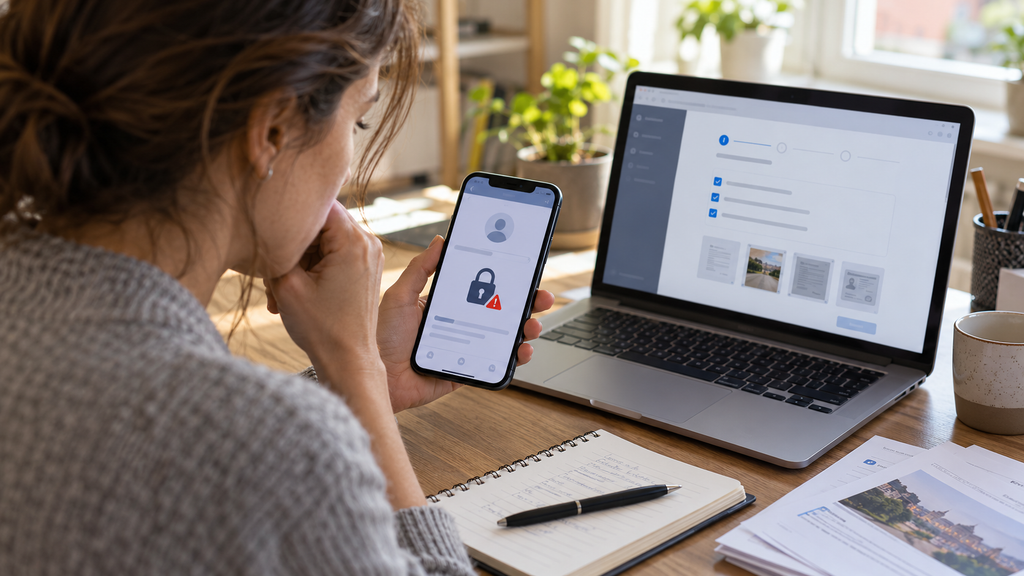
A business owner logs onto Instagram before breakfast and gets a “suspension notice.” Yesterday, customer enquiries were about products. Now, the account can’t be found; messages are inaccessible; and sales are down.
The explanation is brief and automated. It refers to a rule, but does not tell you much about what triggered the suspension or what is wrong with it. A suspension can feel like the end of an account that has been developed over a period of years. However, a notice doesn’t always constitute a final decision. There might still be options for review.
Publicly available data does not show whether most suspensions are overturned. The key thing is that some decisions can be challenged, and the way that the owner deals with subsequent steps could make a difference.
Platforms have automated systems in place and human reviewers to pinpoint potential compliance problems. These tools can take care of massive amounts of content but may fail to capture context or commit errors. Meta says it is using technology and review teams to enforce its regulations.
Common triggers include:
There are different ways to tackle different situations. Although both can prevent the owner from logging in, a security lock is not the same as a policy suspension.
Platforms offer review routes because decisions may want to be double-checked. If someone thinks their account was deactivated by mistake, they can get in touch with Instagram support and follow the ways and request a review.
But there are multiple different problems that can be described as “suspended”.
Posting, messaging, or other activity may be temporarily restricted. The notice can show when the restriction ends or what action is important. Depending on the circumstances and available options, an account may have been disabled for a policy breach, and that decision may be open to appeal.
A permanent ban is harder. The platform may have completed its review process, and no extra appeal options are left for the user. Restoration might not be possible.
Knowing the difference helps you avoid putting effort into the incorrect steps. A person asked to complete an identity check must do so. If a policy decision is being challenged, the reason for that decision should be addressed. Neither party profits from an unrelated support request.
The platform’s decision is far away from the account owner’s control. But avoidable mistakes can make the case tougher to explain.
Repeating the same wording over and over again will not help. It does not identifies the suspected error or give proof to justify a review. A clear appeal should address the problem raised in the notice. If it is a problem of impersonation, explain who owns the account and provide the platform with the required proof.
A password reset will not fix all the dismantled accounts. Similarly, a policy appeal can’t deal with an attacker who changed the account’s contact credentials. Begin with the instructions for the actual issue. Old forms shared in online discussions may no longer be valid or may serve other purposes.
Suppose that a business says in one appeal that it was hacked, and in another that the activity was the work of an employee. Those statements aren’t very helpful without an explanation of the discrepancy. If there is not required information, say so. Differentiate between known facts and suspicions, and acknowledge and correct past errors.
A platform might need additional information or give you a deadline. If you miss any of those, a review option may no longer be available. Review the notice, the linked email inbox, the spam folder, and any support messages that can be accessed. Meet the deadline for your case.
Use of a username does not give proof of ownership. Be ready to fill the requisite checks on the platform and give right account details. Please do not change your profile information in a hurry. Record the differences and the reasons for the changes; make changes are needed, especially following a hack.

The first step in a good process is to know the case. Online account recovery services such as Social Rescue give you professional support for account recovery and provide individual case reviews. Useful support involves organizing the facts and making a response for each situation, not a generic appeal template.
The process is divided into five stages with the help of Instagram.
Save screenshots before closing anything! Write down the username, date, reason, required buttons, and deadline.
If it is a disabled account, follow the instructions for review given when you log in to the account. If the issue is with unauthorised access, follow the account recovery instructions on the platform. Do not think another user’s instructions apply to your case. Available steps may be different.
Create a brief history. Record when you don’t have access, whether any unknown activity appeared, and any messages received. Gather ownership details and any documents that the platform asks for. Use an official channel for processing sensitive information.
Maintain a factual explanation. State the account, problem, need for review, and evidence needed.
An owner who reports a hack would, for instance, explain the unknown activity and the time when it occurred. An expert evaluation in Instagram account recovery services can assist in organizing a complicated case or even determine what details have not been entered.
The same structured approach can also apply when a Facebook account has been disabled or locked. For users dealing with this type of issue, Facebook account recovery support can help assess the situation, organise the relevant evidence, and identify the appropriate recovery route.
Ensure that dates of submission, reference numbers, responses, and outstanding requests are filed. Make sure the platform is updated and follow any instructions that are mentioned. Continue answering as required or if any new information is pertinent. A recovery strategy isn’t the same as just assuming the same thing again and again.
You can control the accuracy of your information, the proof you collect, and whether you follow the data. You cannot select the reviewer, set the response time, or make the platform restore access.
Social Rescue’s job is to help with the platform’s authorised recovery process. It won’t give access to anyone else’s account, override the platform’s security, or guarantee that every account can be recovered. The final decision is up to the platform. Results are entirely based on the history of the account, the reason for suspension, rules that apply, and the available proofs. Standard support can be limited. A good case makes the facts easier to evaluate but does not guarantee a nice outcome.
Be calm, keep the notice, and find out what the actual problem is before taking action. Get your proof documents in one place, take the right path, and don’t file multiple appeals with irrelevant or the same information. If the case isn’t moving forward, make sure you have a specialist look into your case and help you with the information you have submitted to identify what is still required.
A suspension should be taken seriously, without any problem. The best thing to do next is to follow a transparent process that gives the platform with relevant information for review.
Ans: Yes, many suspended social media accounts can be recovered. Users can usually appeal the decision if they believe the suspension was made by mistake or if they have fixed the issue that caused it.
Ans: Social media accounts may be suspended for breaking platform rules, posting harmful content, using fake details, sending spam, or showing unusual activity. Sometimes, automated systems also flag accounts by mistake.
Ans: Recovery time depends on the platform and the reason for suspension. Some appeals are reviewed within a few days, while others may take several weeks. Providing clear information and following the appeal process can help avoid delays.
Ans: Users should avoid submitting repeated appeals, providing false information, or creating multiple accounts to get around the suspension. It is better to follow the platform’s instructions, explain the issue clearly, and wait for the review process to finish.
