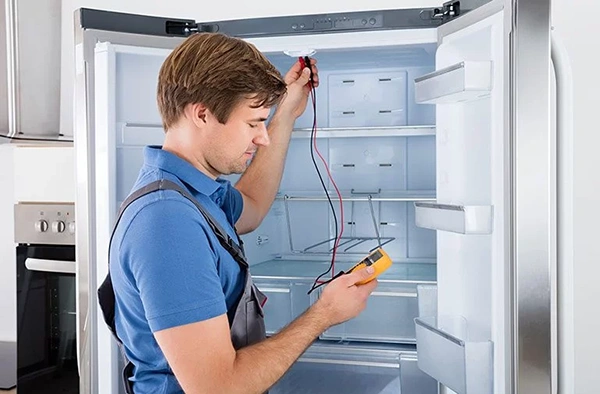
One morning, you discovered that your Delfield refrigerator, which has been running fine for years, is now not switching on. So you start panicking and finding your technician’s number. But there are a few things you should check. Most of the time, a dirty condenser coil or a thermostat setting that needs to be adjusted is what’s giving you trouble.
This blog will help you walks you through six common trouble spots, what to look for, and when it’s time to bring in a professional who’ll diagnose the problem and identify the Delfield parts you need.
If your Delfield refrigerator is not switching on, rule out the obvious stuff in the first place. You’d be surprised how frequently a Delfield refrigerator not cooling turns out to be a tripped breaker or a wrong temperature setting. Check this step by step:
A Delfield refrigerator not cooling properly doesn’t always have a severe mechanical problem. Sometimes, it simply can’t get rid of heat efficiently.
Condenser coils are what release heat out of the refrigeration system. If the layer of dust, grease, and kitchen debris they’ve gathered on their fins is too thick, heat transfer doesn’t happen properly
Delfield advises cleaning condenser coils monthly on its 400 and 4000 Series (check what the manual says about your model). More frequent cleaning is necessary when conditions create faster buildup.
Does your Delfield refrigerator run regularly, even when nobody is opening the door? Take a closer look at the door gaskets.
Check whether the rubber seal has cracks, tears, hardening, or sections pulling away from the door frame. All of these can create tiny openings that let warm air inside, making the system work harder to compensate for the increased temperature.
Do the dollar bill test. Close the door on a dollar bill so it’s held in place by the gasket. Try it out. You should feel real resistance. If it slides out easily, the seal isn’t making good contact at that spot. Test all the way around the door.
Also check the hinges and door alignment – these could also cause the door not to stay closed properly.
This step is very easy to ignore during busy prep periods, but it can really affect cooling performance: look at how heavily the refrigerator is loaded.
There has to be some space left for cold air to circulate throughout the cabinet properly. So food containers shouldn’t be too packed against air vents or stacked too tightly. The result is some areas remain cold while others are warm, or the whole unit reads warmer than the setpoint.
The evaporator coil gets heat from the cabinet. A thin dusting of frost on it can be normal, but thick ice coating the coil completely can be what prevents even cooling.
Check the thermostat setting first. A control set too cold may add to icing. If you’ve already done step 3 and found that your door gaskets are not sealing correctly, it could be the humid air from the outside that encourages frost formation.
If the coil is iced over, follow the approved shutdown and defrost procedure explained in your manual. Don’t chip ice away with a knife!
If your Delfield refrigerator is leaking water, check its drainage system. Spot where the water is collecting:
Sometimes, troubleshooting reveals a problem you can correct through cleaning or a simple adjustment. But if your checks have ruled out the simple possible reasons explained above, including power, settings, coils, gaskets, airflow, and drainage, it’s time to bring in a pro. Electrical diagnostics and replacing worn or broken parts need certifications and specialized equipment.
Once the technician identifies the issue, sourcing the correct Delfield part is the next step. Before you place an order, you need this information: the refrigerator’s model and serial number to confirm the replacement part’s compatibility.
Ans: E6 code on a Delfield refrigerator means that the unit’s control has a defective potentiometer.
Ans: The most common problem with a refrigerator is inadequate cooling.
Ans: The average lifespan of a fridge is 10 to 15 years.