
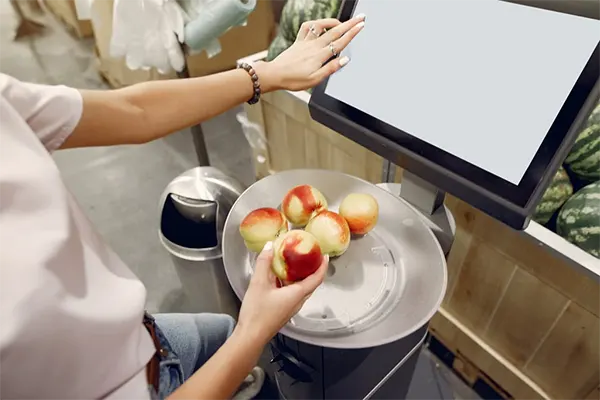
Self-service technology has become part of routine life without most customers thinking again about it. We check out groceries, order food, check in for flights, make payments and compare things online with almost no employee help.
The concept is simple: people want faster service and more control, with the freedom to complete their tasks on their own terms. For businesses, self-service can also help to avoid repetitive tasks while providing better experiences.
Keep reading to explore the rise of self-service technology in everyday customer experiences.
Self-service technology can be interpreted as any technology that enables customers to complete a service transaction without employee support.
Discuss kiosks, apps, chatbots and online tools.
Automation used to be viewed as penny-pinching. Not so much these days. Now strangers actively seek it out instead of human support. Want to know why? Three words:
Nor is this confined to physical locations. Customers expect this rapid response online as well. Consider an interactive pricing calculator. This allows site visitors to assess their options and instantly see a price. Many service businesses now deliver a quote calculator for websites that allows buyers to get a quote in seconds rather than wait days for an emailed reply.
Millennials are coordinating the charge. Another survey by NCR Voyix revealed that 63% of shoppers 18 to 29 were fond of self-checkout. Growing up with smartphones… Tapping at a screen comes more naturally than replying to a cashier.
Pretty clear, right?
Self-service has become widespread. Most people take it for granted. Until they pay attention… everywhere you glance.
Self-checkout lanes used to be a rarity. Now whole sections of the grocery store are devoted to them. Customers enjoy ignoring the line when they just have a small basket.
Self-order kiosks define quick-service brands. Tillster’s 2025 Phygital Index discovered that 61% of poll participants desire to see additional kiosks at restaurants they visit (up from 36% in 2023).
That’s a massive jump in two years.
Customers can casually look at the menu, adjust their order and pay in peace. Orders are often larger as well because the handy add-ons are right there.
Airport check-in kiosks. Mobile boarding passes. ATMs. Banking apps.
These were among the very first self-service technologies. And they are only expanding. Now travellers believe they can plan their entire journey on their mobile phone, from choosing their seat to printing their boarding pass.
This is where things get fascinating…
Self-service buying is important even in big business purchases. One new survey by Gartner revealed that 67% of B2B buyers would prefer a rep-free experience. Plus, 45% talked about using AI on their last purchase.
Buyers don’t want to schedule a sales call to find out how much something costs. They want answers instantly.
Also, learn what new founders should know about funding a technology startup.
An interactive pricing calculator makes it easy to find the total amount. Furthermore, it is actually interesting to make it happen.
Here’s the problem:
Most service businesses charge based on many characteristics. Their site simply reads “Click for estimate.”
And the visitor withdraws.
An online pricing calculator does this. The visitor picks out the options important to them (size, quantity, add-ons, timeline). The price is quickly updated as they click.
It works for plenty of industries:
How does it work so well? By serving buyers with exactly what they want most… An exact answer.
It helped your business too. Every calculator fill-out is a referral you gain. The visitor walks away with a number, and you walk away with a warm lead that already acknowledges how much they want to spend. No twists.
Let’s look at a quick example:
Imagine a small cleaning business. Previously, each enquiry involved a phone call, site visit and follow-up email. Now someone comes to your site and enters their room number, picks out a deep clean and asks for oven cleaning. Within seconds they see the screen price. If they like the price, they can book without delay.
That’s a victory for everyone.
Self-service only counts when it’s simple. A poorly designed kiosk or awkwardly constructed app will hurt more than help.
Here’s how to get it perfect.
Fewer steps = more cheerful customers.
Every bonus screen or form field is another opportunity for a user to give up. Only request necessary details.
Most customers will obtain your self-service tool through their phones. If it doesn’t work well on a small screen, regard it as broken.
This one is crucial…
Self-service should empower customers, not confuse them. Customers still want to resolve critical purchases with a human being. Make it easy for customers to chat with a human when necessary.
When you use a pricing tool, assure the numbers are correct. If your calculator displays one price and your invoice shows another, trust will be eroded quickly.
Track the drop-off points. Remediate them. Test again. Simple upgrades can dramatically increase conversions.
Also, learn how technology is changing the way we manage household chores.
In the end, Self-service technology is no longer limited to ATMs and checkout machines. Customers now demand to get the same quick access to information, pricing, bookings, payments, and other basic services without trouble and hindrance.
The best systems are the ones that make the process simple while still giving them the freedom to reach out to humans when required. The end goal is to focus on convenience without taking away the importance of humans to improve the overall customer experience.
Ans: It is a technology that helps customers to complete tasks or make payments without the direct help of employees.
Ans: Self-service seems more personalised and simply gives more control and privacy during routine practices and transactions.
Ans: No. Self-service works best when customers still have the freedom to reach out to humans when required.
