
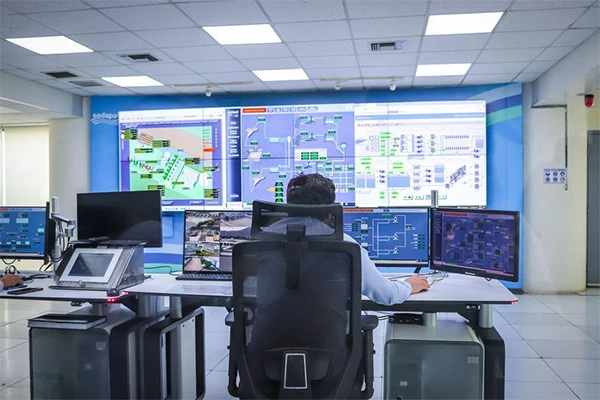
If you utilize electricity, buy packaged food, ride public transport, or rely on clean water, you already depend on operational technology a lot more than you may realize.
OT networks run the show behind the core systems located in factories, warehouses, and different infrastructures. They’re not glamorous, but they keep the physical world moving.
Once you get the idea of how they function, it gets a whole lot easier to see why businesses invest a lot of time and money into this.
Operational technology, or OT, covers the hardware and software that monitors and controls physical equipment. Think programmable logic modules, sensors, HMIs, SCADA systems, and industrial switches. While IT handles data, emails, and business apps, OT involves machines that cut, fill, heat, cool, package, and transport.
You’ll find OT networks in manufacturing plants, water treatment facilities, power stations, oil and gas operations, and smart buildings. If a conveyor belt takes off, a robotic arm pauses, or a pump changes pressure automatically, an OT network is probably involved.
A solid OT strategy begins with visibility, segmentation, resilience, and secure remote access. Those four pillars do a lot of heavy lifting.
Visibility means managing assets, communication paths, and dependencies across your industrial environment. Segmentation separates critical systems into zones, which may limit the blast radius if something goes wrong. Resilience consists of redundant architecture, backup pathways, and hardware designed for industrial conditions.
Secure remote access has significance because vendors, engineers, and support teams often need off-site access. That access should be tightly controlled, logged, and limited by role. The days of broad, permanent access are fading fast.
Many organizations hire companies that offer operational technology network solutions when they require an architecture that supports industrial uptime, security requirements, and legacy equipment realities at the same time. Good solutions don’t just connect devices. They align the network with the way your plant or facility actually operates.
A lot of people feel that networking is networking. Plug in cables, assign devices, move on. OT laughs politely at that idea and then hands you a 20-year-old controller that absolutely cannot go offline.
Industrial environments are stricter than office settings. You’re dealing with heat, vibration, dust, humidity, electrical noise, and equipment that may run nonstop for years. Many OT systems also rely on legacy devices that were built long before modern cybersecurity standards became normal.
You also can’t patch everything until you feel like it. In IT, a restart might annoy a few employees. In OT, downtime can halt an entire production line during a costly shift. Timing matters too. OT traffic often needs low latency and deterministic behavior, since delayed communication between systems can ruin machine performance.
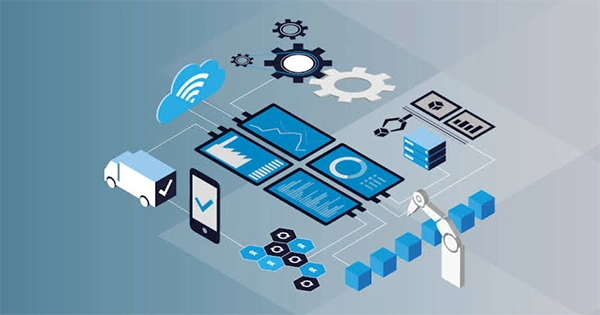
Old OT environments frequently work just well enough to avoid attention. That’s part of the problem. Systems can age into vulnerability while still appearing functional on the surface.
One major issue is poor visibility. If you don’t know every component connected to your environment, you can’t properly secure or manage it. Another is weak segmentation. When industrial systems sit very close to business networks, one compromised device can create a path to critical operations.
Cybersecurity threats have also changed. Ransomware groups and sophisticated attackers increasingly target industrial organizations because disruption creates pressure. A locked spreadsheet is annoying. A suspended production line is expensive by the minute.
Remote access is useful, but it’s also one of the easiest ways to create risk if you set it up casually. Plenty of industrial environments still depend on methods that are far too open for current threat levels.
A better approach includes multi-factor authentication, session logging, role-based permissions, time-limited access, and approval workflows. If a contractor only requests access to one machine for one task, your system should reflect that. Broad access for convenience tends to age badly.
You also want remote sessions routed through secure, monitored pathways rather than direct exposure to critical devices. That keeps control centralized and reduces opportunities for misuse or accidental changes.
This matters for operations teams just as much as security teams. A rushed remote fix can introduce downtime if someone connects to the missing asset or pushes an untested change. Guardrails aren’t bureaucracy for the sake of it. They protect uptime.
If you’re planning improvements, begin by mapping what you already have. Inventory devices, network paths, protocols, vendors, and dependencies. You need a real picture before making architecture changes.
Next, look at your business priorities. Are you trying to limit downtime, improve cyber resilience, support remote plants, or prepare for smarter automation? Your network design should support those goals, not exist as a separate technical project no one outside engineering understands.
Bring operations, IT, engineering, and security into the ongoing conversation early. OT upgrades often fail when one team designs in isolation and another team inherits the consequences.
Also, be realistic about legacy systems. Some older devices can’t be swapped immediately, so your design may need compensating controls around them. The best OT improvements are usually phased, practical, and process-aware. Flashy overhauls make nice slides. Stable production makes payroll.

OT environments are becoming more connected, not less. Industrial organizations request better analytics, predictive maintenance, AI-assisted monitoring, and more flexible operations. That requires stronger networking foundations.
Edge computing is gaining popularity because many industrial decisions need to happen close to the equipment, not after data travels halfway across the enterprise. Zero trust ideas are also moving into OT, though they need careful adaptation for environments where availability is critical.
You’ll also see more convergence between IT and OT teams. Not a full merger, more like a reluctant but necessary alliance. Each side holds something important. IT usually offers mature security and governance practices. OT brings process knowledge and an understanding of what can and cannot be interrupted.
If you work around industrial systems, OT networking is no longer a niche topic. It’s part of how modern infrastructure becomes productive, safe, and resilient under pressure.
Ans: Ransomware groups and sophisticated attackers increasingly target industrial organizations because disruption creates pressure. A locked spreadsheet is annoying. A suspended production line is expensive by the minute.
Ans: Many OT systems also rely on legacy devices that were built long before modern cybersecurity standards became normal.
Ans: Secure remote access has significance because vendors, engineers, and support teams often need off-site access. That access should be tightly controlled, logged, and limited by role.
