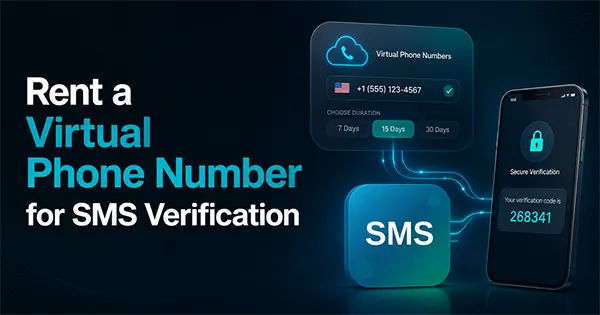
SMS verification is utilized by communication tools, SaaS products, payment platforms, and business applications to confirm control of a phone number. For a person, managing a single account may be enough, but for others, using the same number causes a lot of issues.
Renting a virtual phone number provides access to different numbers for a specific period, allowing individuals to receive supported verification messages without needing a new handset or long-term carrier contract.
This article outlines the step-by-step rental process, how it works, and its security and governance checklist.
A rental platform maintains listings organized by country, service, number type, price, and duration. After the user selects an available option, the rented number appears in an account dashboard. The user enters it on the forwarding platform, requests an OTP, and reads the incoming message online.
The destination platform generates the code. The number provider supplies the receiving endpoint and displays the SMS. Acceptance is controlled by the destination service, which may apply carrier checks, regional restrictions, fraud controls, and appeal limits.
One-time activation is ideal for a short registration flow. Rental is better when verification is part of an ongoing account lifecycle rather than a single event.
If the number is likely to be needed again, a rental can reduce the operational risk of losing access after your first verification. For critical, permanent business identities, however, a company-controlled telecom line may still be the correct long-term choice.
CodesSender lets users rent a virtual phone number for SMS verification across supported countries and services. The live site should be checked before registration because inventory and pricing can change.
The following is the process of selecting the correct number:
Do not select a number based only on country or price. Inventory is often mapped to specific destination services because SMS routes and acceptance patterns differ. A number assigned for one platform may not be suitable for another.
Virtual is a broad delivery model, not a universal carrier classification. Inventory may be mobile, non-VoIP, VoIP, or another supported type. Some platforms recognize several types; others are restrictive. Review the provider’s labeling and the destination service’s requirements.
A country code can dictate account eligibility, available features, pricing, and security review. Businesses should avoid creating inconsistent records across phone country, billing address, company registration, and actual operating region.
Estimate when the last verification event could occur, then add a reasonable buffer. A rental that expires immediately after registration may fail its main purpose if the platform requests another OTP during setup, team invitation, or security configuration.
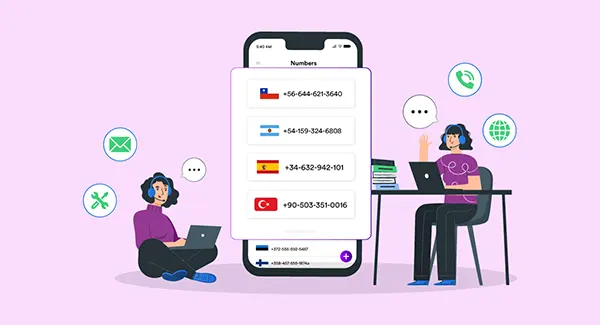
The following are practical cases wherein this functionality can be utilized:
QA teams may need to validate registration, login, password recovery, and notification workflows across different environments. A rented number can provide a controlled SMS connection for a test window. Test data should remain separate from production identities, and automation must respect the destination service’s policies.
Agencies and consultants often use equipment for the duration of a client project. A rented number can keep project verification separate from an employee’s personal phone. Ownership, authorized users, and offboarding methods should be documented from the start.
A team working short-term in another country may need a number for a supported regional service. The account must still comply with local rules and the platform’s geographic requirements. A virtual number does not guarantee residency or replace identity verification.
Using an employee’s private number creates a sense of dependence on that individual. If the employee changes roles or leaves, recovery can become difficult. A separately managed number reduces that commitment during its rental period, though permanent business accounts deserve a durable ownership model.
Here is the security and governance checklist you should know:
A missing OTP does not always imply that the number is faulty. The sender may delay delivery, the platform may reject the carrier type, or repeated requests may invoke a cooldown. First, verify the international format and selected service. Then wait for the stated delivery period without generating several overlapping codes.
If multiple messages arrive, use the newest code. If the service rejects the number before sending, switching countries several times may increase risk signals; check eligibility and provider guidance instead. When the rental platform offers a defined cancellation or support process, follow it rather than improvising.
The following are the limitations to understand:

A virtual number rental is most useful when a user requests both separation and continuity. Successful use depends on choosing the correct service, number type, country, and duration—not simply the cheapest listing. For business workflows, compound the rental with clear ownership, documented expiration dates, and stronger recovery methods so verification does not become a recurring access problem.