
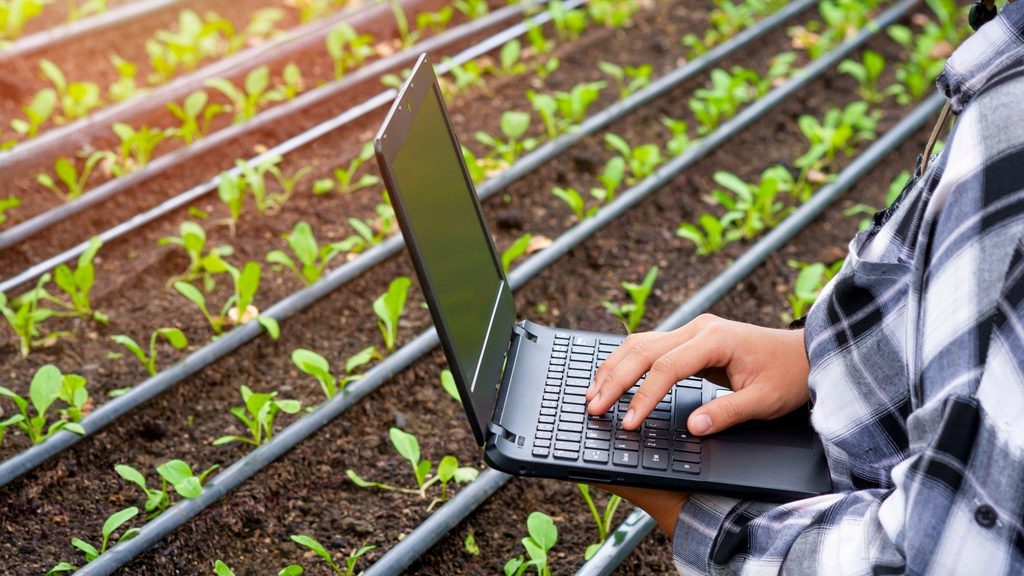
One farm can be significantly different from another, but might be running on the same software. A dairy cow farm and a grain producer keep different records and have different regulators, so how can a single platform fit both of them?
Here’s a practical guide to custom software development for agriculture industry operations.
Digital solutions are empowering farmers and agribusinesses. But custom agriculture software is slightly different. It’s built around how the operation works and the results. A typical scope starts with field records and machinery data, then extends to the reporting the farm owes its buyers.
The build is usually delivered by an agritech software development company with prior projects in the sector.
Ready-made farm management software covers common processes at a low entry price and suits operations whose workflow already matches the product. A custom build requires a larger upfront budget and removes the manual workarounds that accumulate around a standard tool.
The decision comes down to how much time goes into moving data between a platform and a spreadsheet.
| Criterion | Off-the-shelf platform | Custom agriculture software |
|---|---|---|
| Upfront cost | Low monthly fee | Higher upfront budget |
| Process fit | Farm adapts to the tool | Tool follows the workflow |
| Integrations | Fixed connector list | Any machinery or ERP |
| Data ownership | Vendor | Client |
| Changes | Vendor roadmap | Your backlog |
Custom agriculture solutions are perfect for:
A single-crop farm with just a few pieces of equipment is well served by a subscription product.
There are mainly four benefits:
Agronomy and finance records reach the same database, which ends the weekly reconciliation between departments. Every report extracts data from there, and comparing seasons no longer requires a manual merge.
Work orders and machine hours are determined by field data, with no separate entry step. The effect is largest where records are still written down and typed up later. Approval routes follow rules that the farm manager sets once.
Historical field data determines input and labor budgets, which narrows the gap between the plan and the actual spend. With planned and actual figures side by side per field, the next estimate holds up in front of a lender.
Using telemetry from machinery and soil probes, smart farming software returns its cost fastest in operations with a large fleet. Most projects connect the machine terminals and the accounting system in the first release.
Custom software fits six agriculture categories perfectly. Many operations start with one and add the rest over two or three seasons.
These are the data records. Farm management software development usually starts here, because no two operations track the same set of fields.
Precision agriculture concerns soil and imagery data. The return shows once input costs are tracked at zone level, since a field average hides the weak zones.
Satellite and drone imagery combined with ground readings shows stress before it’s directly visible, which buys about a week of reaction time.
Sensor networks report on a schedule, and smart farming software turns those readings into something a manager can act on.
Telematics supports maintenance planning across the equipment fleet. The same records settle contractor billing where machines work across several farms.
Tracking of harvest and deliveries from field to buyer. Traceability requirements from processors are the usual trigger for this build.
The features listed below are a must.
A farm manager can review the state of a farm block and the associated budget in one place.
Phone records work in areas without coverage, and entries synchronize on reconnection.
Field geometry is read faster on a map than in a table, and most agronomic decisions are spatial. Precision agriculture is dependent on this.
You get to know when a threshold breach happens, and recurring reports go out automatically.
Accounting and marketplace systems exchange data with the platform without manual files.
Agritech software development has four stages:
| Stage | Typical duration | Main output |
|---|---|---|
| Discovery and planning | 2-4 weeks | Data audit, scope, estimate |
| Design and development | 3-6 months | Working prototype |
| Integration and testing | 4-8 weeks | Verified data flows |
| Deployment and support | Ongoing | Launch and maintenance |
The team maps every existing data source before the scope is agreed.
Interfaces are drawn for a similar sample, then built in two-week iterations with a demo at the end. Farm management software development follows the same rhythm. Custom agtech development always keeps the backlog with the client.
Every connection is verified with real data, since test data hides the gaps that matter. Field testing is done during an active season.
The release is followed by training and monitoring, plus model retraining where forecasts are part of the product. Most agtech solution developers price this stage as a separate retainer.
Check these four aspects before choosing an agritech software development company:
Ask for projects built on real field data. Sector experience shows in the questions a team asks on the first call. Look for a vendor that has handled seasonal data gaps.
Custom agtech development depends on pipelines that survive missing readings and long offline periods, which generalist teams tend to underestimate.
Request the list of equipment and ERP systems the team has already connected.
Yield and price data is commercially sensitive. Agree on the access model and the support terms before signing, along with who owns the code after the final invoice.
Ans: Simple builds start near $30,000. Platforms with machinery integration and analytics usually run between $80,000 and $250,000, and the integration count moves that figure more than the feature list.
Ans: Most agtech software development projects deliver a first working version in three to five months. Full platforms with hardware integration need nine months or more.
Ans: Yes. Field applications store records on the device and synchronize when the connection returns, which matters on farms with partial coverage.
Ans: In most cases, major machinery brands and sensor vendors publish APIs or standard export formats; older terminals may need a file-based import.
