
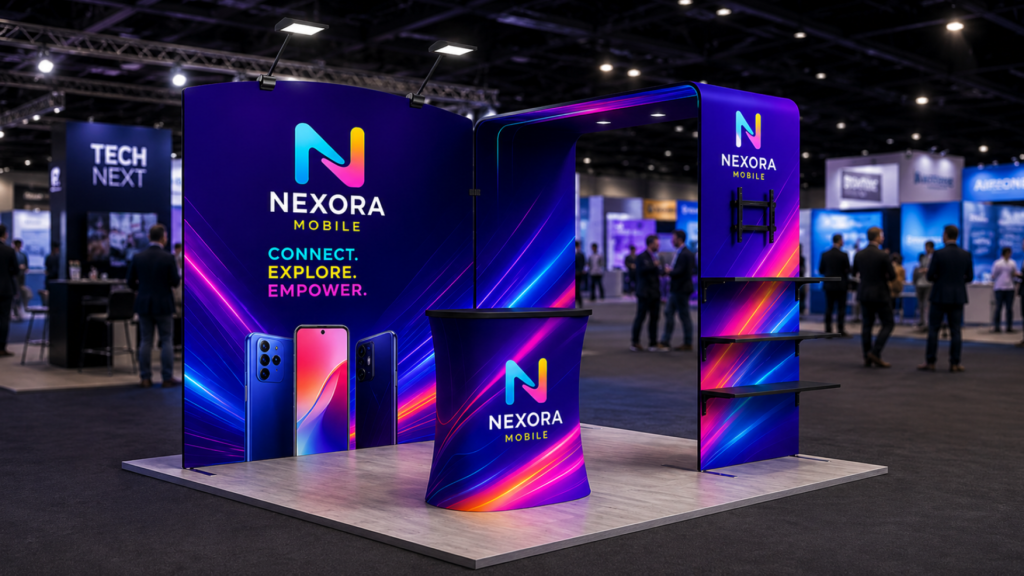
Every company faces a tough question in their lifescycle. Although the growth path looks very similar: a founder starts in a small garage, lands a few customers, and hits a stop. How do we look bigger than we are?
For many businesses, the answer runs through exhibitions. This is where companies and brands showcase what they truly provide, and appeal to the masses, or international audiences, thereby breaking out of the chokehold of local restrictions.
Here’s how exhibitions display how a growing company actually functions and why credibility is the real growth bottleneck.
A growing business usually has a better product than its size suggests. The problem is that buyers cannot see your product quality from across a hall. They see your presentation and use it as a proxy.
This is where displays punch above their cost. A five-person firm with a clean backdrop, branded counter, and professional signage occupies the same visual tier as a fifty-person competitor. The buyer walking the floor at an Edmonton industry show cannot tell your headcount from your booth, and that ambiguity works entirely in your favor. For a business trying to win its first contracts with larger buyers, oil and gas operators, municipalities, and grocery chains, that credibility leap is often the whole ballgame.
The province’s other growth challenge is geography. Your customers are scattered across Calgary, Edmonton, Red Deer, Lethbridge, Grande Prairie, and a few hundred small towns in between. Visiting them one by one burns months.
Exhibitions reverse the travel. An agricultural supplier can meet 200 producers in two days at Agri-Trade instead of driving 20,000 kilometres to find them. A safety services firm can meet a year’s worth of energy-sector buyers in one week in Calgary. The display is what makes those compressed meetings count: it works as your office, your product shelf, and your first impression, all set up in a morning.
Outdoor selling seasons stretch the same investment further. A custom canopy printed with your brand covers the summer circuit of markets, rodeos, and community festivals where Albertans actually spend their weekends, then the frame and graphics come indoors for winter shows. One kit, twelve months of selling.
For a scaling business, the same display investment feeds several channels at once:
Quality custom tents are built for this multi-duty life: modular enough to fit a 10-foot booth in Red Deer and a 20-foot space in Calgary, and tough enough to survive a winter of loading in and out of trucks on cold mornings.
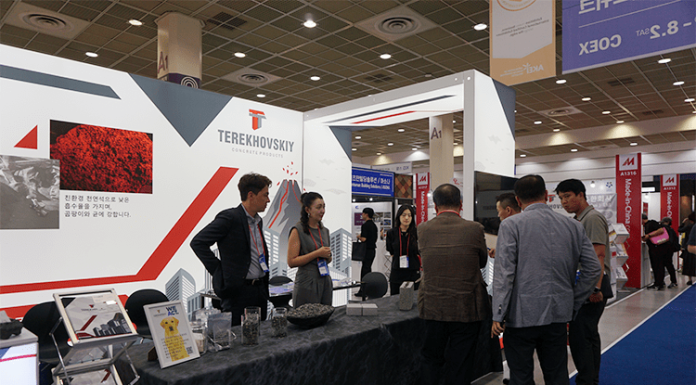
The mistake growing businesses make is waiting for the “big booth budget.” The better play is starting with a core kit, a backdrop or canopy, a counter, and clean signage, and attending relentlessly. In Alberta’s tight industry circles, buyers remember who keeps showing up. Consistency at ten regional events beats one expensive appearance at a national show, and the core kit scales up with added pieces as revenue grows.
Growth in Alberta means winning trust from buyers who have never heard of you, across distances that make door-knocking impossible. Exhibition displays solve both problems at once: they compress your market into a weekend and make your business look ready for the contracts it is chasing. For a growing company, that is not a marketing expense. That is infrastructure.
Ans: The following are the four channels:
Ans: Many businesses wait for the perfect opportunity or that huge investment to really push for an exhibition, whereas the better play is to begin with a core kit, background, clean signage, and attending regularly.
Ans: It enhances visibility as many international clients arrive at the exhibitions to monitor investment opportunities. A great showcase means those people would arrive at your place first, thus influencing growth.
