

The way technology vendors identify and engage potential buyers has changed drastically over the last decade, with B2B technology transactions being shaped by cloud migrations, cybersecurity, AI adoption, and more.
The traditional methods of targeting companies solely based on industry or employee size no longer work. This is why technographic and contact intelligence are being used to improve targeting, indicating the transition towards technology users lists to identify organizations with higher conversion potential.
This article explains how new technology providers can adopt these modern techniques to reach their ideal customers with examples. Let’s get started!
Key Takeaways
- Two companies operating in the same industry may have entirely different infrastructure environments, cybersecurity maturity levels, and software ecosystems
- B2B technology vendors are moving beyond traditional firmographic targeting toward technographic intelligence
- Without accurate contact intelligence, even strong technographic targeting can fall flat because outreach may not reach the right people
- Instead of targeting large volumes of loosely relevant accounts, vendors can prioritize organizations where operational alignment and business timing already exist
Firmographic data still plays an important role in B2B segmentation. Information such as company size, revenue, geography, and industry classification helps organizations define broad target markets and prioritize verticals.
However, firmographics alone rarely explain how technologically mature an organization actually is.
Two companies operating in the same industry may have entirely different infrastructure environments, digital transformation priorities, cybersecurity maturity levels, and software ecosystems.
One organization may still operate on traditional systems while another might have already moved to a cloud-native architecture with modern analytics and automation platforms.
Without visibility into a company’s technology environment, vendors struggle to understand modernization readiness, current platforms, relevant integrations, replacement opportunities, and overall tech maturity. This creates major blind spots for sales and marketing teams.
For example, a cybersecurity provider pushing advanced cloud security to companies still running legacy systems may see weak engagement, while a cloud migration vendor targeting recently migrated businesses may waste outreach efforts.
Modern B2B prospecting now depends on contextual intelligence that goes beyond basic firmographic data.
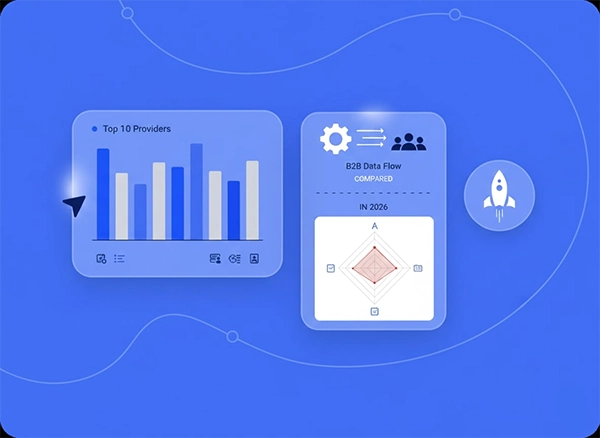
B2B technology vendors are moving beyond traditional firmographic targeting toward technographic intelligence, allowing them to gain deeper visibility into how organizations actually operate.
While firmographic data provides basic company attributes such as industry, size, or revenue, technographic intelligence reveals the software stacks, cloud ecosystems, enterprise applications, cybersecurity environments, analytics platforms, collaboration tools, and infrastructure technologies already in use.
This shift allows vendors to align outreach with actual technology environments rather than relying solely on broad industry-level targeting.
For example:
As enterprise buying decisions increasingly depend on compatibility, scalability, automation, compliance, and modernization requirements, technology-level visibility has become essential for effective segmentation, personalization, and account prioritization.
This is why technology users’ databases and installed technology intelligence are becoming increasingly important across modern B2B demand generation strategies.
Fun Fact
While firmographics reveal what a company looks like, contact intelligence finds the who, providing verified, direct dial numbers and emails to an organization.
Technology users’ lists are a practical application of technographic intelligence. They help vendors identify organizations already using specific platforms, applications, infrastructure systems, or cloud ecosystems.
Instead of targeting the market broadly, businesses can focus on accounts where there is already clear technology alignment, making outreach more relevant and focused.
This straightforward approach supports better planning across account-based marketing, sales prioritization, territory planning, partner targeting, and competitive displacement efforts.
For example:
- A Salesforce consulting partner may target organizations using Microsoft Dynamics or HubSpot.
- A cloud migration firm may prioritize businesses operating legacy infrastructure.
- A cybersecurity provider may identify Microsoft 365 users expanding remote access environments.
- A data platform vendor may target enterprises already investing in cloud analytics ecosystems.
Technology users’ databases help tech vendors move beyond assumptions and engage organizations with stronger contextual relevance. So, instead of generic outreach, messaging can become aligned with actual operational environments.
Technographic intelligence shows the technology environment. Contact intelligence shows who drives the decision.
In enterprise buying, decisions usually involve multiple stakeholders, including CIOs, infrastructure leaders, procurement teams, security architects, IT operations, finance teams, and other department heads.
Without accurate contact intelligence, even strong technographic targeting can fall flat because outreach may not reach the right people.
For example, knowing a company uses a specific cloud platform is useful, but engagement improves significantly when vendors can reach the infrastructure leaders, cloud architects, or procurement teams responsible for evaluating upgrades or modernization efforts.
This is exactly why verified contact intelligence is essential in B2B sales execution. When combined with technographic data, it helps improve personalization, lead qualification, and account management by providing a clearer understanding of both the account and decision-makers inside it.
One of the biggest advantages of technographic intelligence is its ability to help vendors identify higher-intent opportunities.
Organizations investing in digital transformation, infrastructure modernization, cloud expansion, or security upgrades often leave measurable signals within their technology environments.
Installed technology intelligence helps vendors identify signals such as:
For example, companies operating outdated ERP environments may become strong candidates for modernization consulting services. Businesses rapidly adopting cloud collaboration platforms may require additional identity management, cybersecurity, or compliance support.
This creates a more intent-driven approach to prospecting.
Instead of targeting large volumes of loosely relevant accounts, vendors can prioritize organizations where operational alignment and business timing already exist. This precision improves campaign efficiency and supports stronger sales conversations.
Account-based marketing is another practical application of technographic intelligence.
Instead of treating ABM as broad segmentation by industry or company size, technographic data helps identify accounts based on their actual technology environments. This makes it easier to focus on organizations that already show a clear operational fit.
In ABM execution, this improves:
In this sense, ABM becomes a direct extension of technographic targeting, where account selection and engagement are driven by real infrastructure context instead of relying on surface-level firmographics.

Despite its advantages, technographic targeting faces an ongoing challenge: data accuracy.
Technology environments change quickly as organizations adopt new tools, retire systems, and restructure teams. This makes it difficult to keep technology users’ data consistently up to date.
B2B contact intelligence also decays over time due to role changes and various other reasons.
As a result, technology vendors now prioritize data validation, consistent enrichment, compliance-aligned outreach, and multi-source verification to ensure reliability.
The effectiveness of a technology users database depends not just on scale, but on accuracy, relevance, and ongoing maintenance.
This is where providers like LakeB2B play a role, supporting vendors with more reliable, regularly updated data to improve targeting precision and reduce inefficiencies in enterprise prospecting.
B2B prospecting is becoming more intelligence-driven.
As enterprise buying cycles grow more complex, technology vendors are combining technographic intelligence, contact intelligence, intent data, and predictive analytics to improve targeting and go-to-market execution.
Organizations that combine technology stack visibility with accurate decision-maker data will be better positioned to improve efficiency, strengthen engagement, and drive pipeline growth.
In modern B2B sales, data-driven prospecting is no longer optional. It is the foundation of sustainable growth.
Technology vendors operate in increasingly complex buying environments where generic, firmographic segmentation alone no longer delivers meaningful targeting precision.
Technographic intelligence helps businesses better understand the technologies being used by organizations, while contact intelligence helps identify the stakeholders that influence purchasing decisions.
Together, they create a more strategic method for account prioritization, customization, and high-intent prospecting.
From technology users’ lists and installed technology intelligence to account-based marketing and modernization targeting, data-driven GTM strategies are reshaping how vendors identify and engage potential buyers.
As B2B technology markets continue evolving, organizations with combined data intelligence will be better equipped to build scalable, context-driven, and performance-focused growth strategies.
