
A few years ago, making a cinematic video meant renting professional gear, hiring a crew, booking a location, and spending countless hours in post-production. That scenario kept high-quality video production out of reach for most creators.
But in 2026, that barrier has almost completely been erased, with creators producing stunning, cinematic-quality videos just from their laptop, an idea, and the right tools. How do they do it?
This comprehensive guide explains how creators make it possible and why equipment is no longer a limiting factor.
Key Takeaways
- Creating cinematic videos no longer requires the use of expensive gear and multiple members; it only requires a device, an idea, and the creativity to visualize that scene
- Experimenting with different AI models lets the user understand the strengths of each, allowing them to use what they think is the best for their creation
- The workflow to generate a cinematic video clip is relatively easy and requires a basic understanding of the function of the tool
- Skills like prompt engineering, understanding of creative concepts, and unique ideas are the top-most profitable qualities one can have in 2026
Before diving into the how, it helps to understand what makes a video look cinematic in the first place. Cinematic does not simply mean expensive.
It refers to a specific visual quality that combines deliberate composition, controlled lighting, smooth motion, color grading, and a sense of visual storytelling that pulls the viewer in.
The reason cinematic quality matters the most for content creators is simple. Viewers have watched decades of film and high-production streaming content to react emotionally to certain visual cues.
A video that feels cinematic often holds attention longer and builds trust with the audience quicker, thus performing better across every platform.
The good news is that most of what makes a video look cinematic can now be replicated or generated digitally, without a single piece of physical equipment.
Creators are making use of the latest technological software to assist them in creating content that actually appeals to viewers. This method doesn’t require expensive professional gear to access and can be easily done from a regular device.
The most significant shift in content creation over the past two years has been the rise of AI-powered video generation. Creators can now input a prompt containing a description of a scene, mood, or a visual concept and receive a fully rendered video clip within minutes.
This technology has advanced at a rapid pace. Modern AI video generators produce footage with realistic motion, stable lighting, proper depth of field, and cinematic color profiles that earlier would have required costly post-production to achieve manually.
Tools like the Imagineart AI video generator have made this accessible to anyone with a creative vision. Rather than needing camera operators, lighting rigs, or location permits, creators can describe a scene and generate professional-quality footage directly from their browser.
ImagineArt is a full AI creative suite, which means it is not just a video tool. It is an all-in-one platform where you can generate images, create videos, edit visuals, build creative workflows, and produce complete content campaigns from a single workspace.
Creators who have switched to ImagineArt report dramatically shorter production timelines and significantly lower costs without any visible drop in quality.
One of the skills modern creators are developing is understanding which AI model produces which visual style. Different models have different strengths when it comes to realism, motion quality, artistic style, and lighting behavior.
Key considerations when choosing a model:
Experimenting with different models on the same prompt allows you to understand their individual strengths.
Successful creators have developed a repeatable workflow that produces consistent cinematic results without expensive equipment. Here is how most of them approach it.
Every cinematic clip starts with a clear idea of the understanding of what the viewer should see and feel. Before generating anything, the best creators spend time defining the mood, setting, color palette, and emotional tone of the desired scene.
The clearer the foundation, the better the output will be.
Strong prompts include details like:
The first output is rarely the final output. Cinematic creators treat AI generation as an iterative process. They generate a clip, evaluate it against their vision, refine the prompt, adjust model settings, and generate again. This process is significantly faster than traditional filming but still requires creative judgment at each step.
Fun Fact
Advanced AI models can now simulate 3D environments, allowing for consistent camera motion where people and objects move realistically in three-dimensional space.
Modern AI tools allow creators to extend generated clips, add a transition between scenes, and build continuous sequences from individual moments.
Features like video extension and image-to-video conversion let creators build longer narratives from a series of carefully crafted prompts, rather than needing to shoot continuous footage.
Even AI-generated footage benefits from post-processing. Color grading, contrast adjustments, and subtle sharpening can push a good clip into genuinely cinematic territory. Many creators use lightweight editing software for this final step, applying LUTs (Look Up Tables) that mimic the color profiles of professional film stocks.
The shift to AI has not eliminated the need for skill, but has altered which skills matter most. Here is what separates creators who produce consistently cinematic work from those who generate average results.
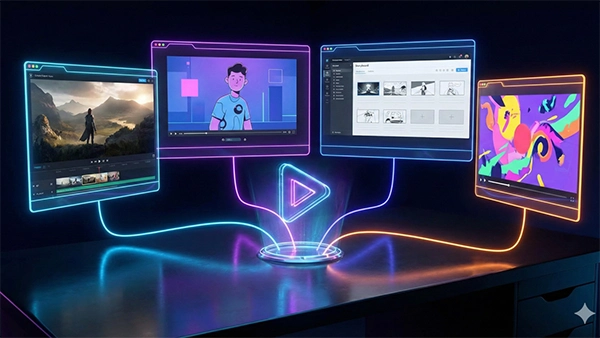
The democratization of cinematic video productions has completely changed who can create professional-quality content.
A teenager with a clear idea and a story to tell has access to the same tools as a funded production studio. A solo entrepreneur can produce brand videos that compete visually with content from other agencies, charging tens of thousands of dollars.
The limiting factor is no longer equipment or budget. It is creative vision, prompt skill, and the willingness to iterate until the output matches the idea.
Making cinematic videos without expensive equipment is not a future possibility. It is what thousands of creators are doing right now. The tools exist, they are accessible, and the quality ceiling is rising every few months as new models are released and refined.
For any creator who has wanted to produce high-quality video content but felt blocked by budget or technical barriers, 2026 is the year those barriers no longer apply.
