
Campaign teams are under pressure to make every touchpoint count, with the stakeholders expecting campaigns to generate attention, expect responses, and drive measurable movement even when things become increasingly competitive.
This is why creative direct mail marketing is reappearing in serious campaign conversations. It doesn’t act as a complete replacement for digital outreach, or mark a return to old marketing habits, but its value comes from making a campaign feel intentional, memorable, and worth acting on.
This article outlines the strategic value of the same, where it works best, and the trade-offs marketers should weigh before using it.
Key Takeaways
- Creative direct mail gives marketers another kind of moment. It arrives in the recipient’s physical space. It can be opened, handled, displayed, shared, or revisited
- Physical formats provide people with something to associate the message with. Shape, movement, packaging, texture, and interactivity can benefit a campaign
- For customer retention, physical touchpoints can support onboarding, appreciation, renewal reminders, loyalty campaigns, and reactivation
- Creative direct mail is making a massive comeback as campaign teams require more memorable ways to earn attention and response
Modern audiences are not short on messages. They are short on reasons to care.
A prospect might see a display ad, receive a nurture email, scroll past a social post, and get a sales message before lunch. None of those channels is weak by default. The challenge is that many campaigns now compete in environments where attention disappears quickly.
Creative direct mail gives marketers another kind of moment. It arrives in the recipient’s physical space. It can be opened, handled, displayed, shared, or revisited. That presence can make the outreach feel less disposable when the audience is carefully chosen.
This is also why the comeback shouldn’t be framed as direct mail versus digital. B2B growth leaders continue to invest in omnichannel sales, displaying a broader reality, as stronger campaigns often use multiple interconnected factors rather than depending on a single channel to serve everything for them.
Creative direct mail works best when the format has a clear job to do.
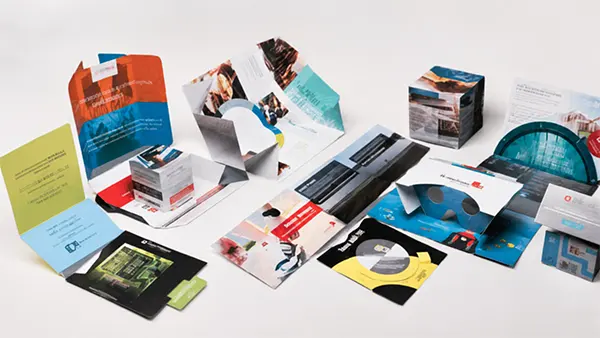
A dimensional mailer, pop-up piece, video brochure, sample kit, or interactive card should not exist just to surprise someone. Surprise fades quickly if the recipient does not understand why the message matters. The stronger use is to turn attention to the next step.
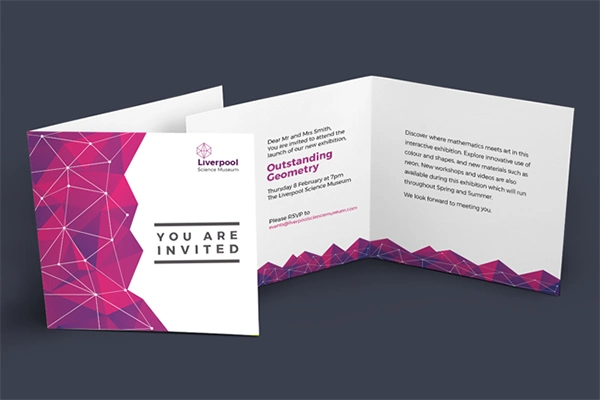
A physical piece can signal effort. In account-based marketing, for example, sending something tailored to a high-value account can make the outreach feel more intentional than another generic email sequence. For event promotion, a creative invitation can make the event feel more important before the recipient ever registers.
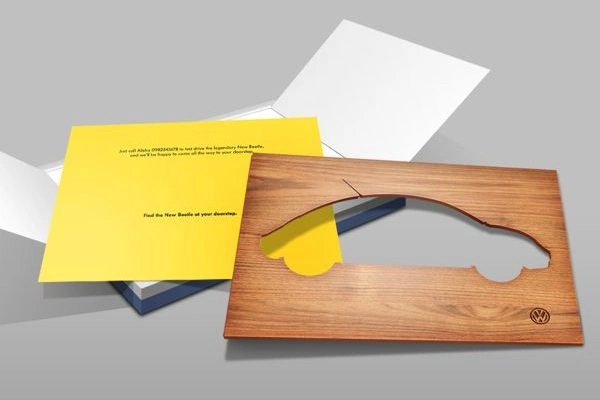
It can also support recall. Physical formats provide people with something to associate the message with. Shape, movement, packaging, texture, and interactivity can benefit a campaign, making it easier to remember, especially when the message and format complement each other.
The key is discipline. A creative mailer should answer the question, “What do we want the recipient to think, feel, or do next?”
Creative direct mail tends to make the most sense when the audience is specific, and the campaign action is valuable.
For lead generation, it can help warm up a targeted list before the sales department follows up. A mailer that introduces a problem, provides a solution, or invites a scan to a landing page can give the next call or email more context.
Account-based marketing can help a campaign feel more personal. When the account value is high enough, a physical piece can signal that the recipient was deliberately selected, rather than dropped into a generic funnel.
For event promotion, creative mail can build anticipation before the event or extend engagement afterwards. Invitations, save-the-date formats, speaker previews, product launch kits, and post-event follow-ups can all extend the campaign’s lifespan.
For customer retention, physical touchpoints can support onboarding, appreciation, renewal reminders, loyalty campaigns, and reactivation. The goal is not to send something flashy. It is to remind customers that the relationship matters.
For higher education recruitment, tactile mailings can assist schools in standing out to prospective students, families, alumni, or donors.
A physical piece can include a sense of place, story, and identity that supports larger admissions or advancement paths.
Across these examples, the pattern remains the same. Creative direct mail proves to be the strongest when the target audience is defined, the message is specific, and the response path is clear.
Fun Fact
The global furniture giant Ikea famously sent out flat-packed paper mailers that recipients could physically fold and pop up into a 3D mini side table.
Creative direct mail can be powerful, but it is not the right answer for every campaign.
It usually requires better planning than a basic email or digital ad. Teams have to consider design, copy, printing, assembly, mailing lists, postage, approvals, and timing.
More ambitious formats require higher budgets, especially when the campaign involves things like dimensional packaging, video, sound, custom structures, or personalisation.
That does not make the channel impractical. It simply means the campaign needs a clear reason for using it.
The decision becomes easier when the audience is high-value, the campaign goal is specific, and the team knows which action to take. A creative mailer sent to thousands of poorly qualified contacts can become wasteful. A thoughtful piece sent to a smaller, well-selected audience can be easier to justify.
One reason direct mail is being reconsidered is that it can now connect more cleanly to digital measurement.
QR codes and PURLs can help track direct mail engagement by giving recipients a simple way to move from the physical piece to a measurable digital action. Custom landing pages, campaign-specific offers, and promo codes can also help marketers see what recipients do after receiving a piece.
Measurement must be planned before the campaign goes live. The CTA should be simple, trackable, and aligned with the campaign’s targets. This might involve scanning a QR code to schedule a meeting, visiting a landing page to register for an event, entering a promo code, requesting a sample, or downloading a specific resource.
Direct mail can also support CRM attribution. Teams can tag the recipient list, track responses, trigger follow-up sequences, and compare engagement across audience segments. A sales team can see who received the piece, who responded, and who needs a next touch.
Retargeting can extend the campaign further. Someone who scans a code or visits a landing page can be guided into a digital follow-up path via email, paid media, or sales outreach.Informed Delivery can connect physical mail with digital previews, giving marketers another way to bridge the mailbox and the screen.
This is where creative direct mail becomes more than a physical object. It becomes part of a measurable campaign sequence.
Creative direct mail is making a massive comeback as campaign teams require more memorable ways to earn attention and response. But its value does not originate from nostalgia, decoration, or novelty.
It serves its purpose best when it is aligned with audience intent, timing, message fit, follow-up, and measurement. The physical format should have a job, making a recipient pause, understand why the outreach holds importance, and know what to do next.
For marketers, the real opportunity is not to choose direct mail instead of digital. It is to design campaigns where each touchpoint has a purpose. When a physical campaign moment supports that purpose, creative direct mail can become a practical way to create attention, confidence, and momentum.
Ans: It serves its purpose best when it is aligned with audience intent, timing, message fit, follow-up, and measurement.
Ans: It is capable of connecting with QR codes, integrating with CRM attribution, and digital previews. This is where creative direct mail becomes more than a physical object. It becomes part of a measurable campaign sequence.
Ans: In account-based marketing, for example, sending something tailored to a high-value account can make the outreach feel more intentional than another generic email sequence.
Ans: Retargeting can extend the campaign further. Someone who scans a code or visits a landing page can be guided into a digital follow-up path via email, paid media, or sales outreach.
