
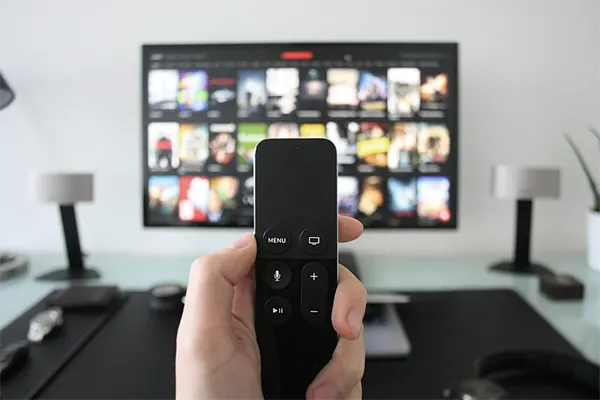
Streaming TV advertising is realistic for a local business because connected TV and OTT platforms have removed the massive upfront commitments and broad wasted broadcast of traditional linear TV. Many households now stream through smart TVs, streaming sticks, and game consoles instead of traditional cable boxes. As those viewers moved, advertising followed them, and the old rules went away along the way. Most of them get through DSP advertising, using software that bids on a single stream. Impression by zip code, device, and time of day.
Why did TV stay restricted to small businesses for so long? Because transmit ads were all or nothing. A spot reached the whole metro, which meant a neighborhood bakery paid to arrive people across town who’d never set foot inside. Streaming broke that pattern, and viewers have moved over in crowds.
A 2025 interview found that 83% of U.S. adults watch streaming services, while only 36% still subscribe to cable or satellite. This isn’t a trend limited to younger audiences. About two-thirds of adults 65 and older creek too.
National advertisers didn’t waste any time. U.S. expenditure on connected TV advertising was anticipated to climb to about $24.6 billion in 2023, mostly from brands with agencies and research sections doing the legwork. The good news for local enterprises is that they don’t have to keep pace. They only need a small corner of the same screen. The less consoling news is that, at that scale, every dollar has to pull its burden.
On a small budget, a guesstimate calculation tells an owner more than any sales terrace will.
One airing from a brand nobody knows rarely sticks. Viewers usually need to see a name various times before it rings a bell, so a budget spread too thin ends up buying lots of first opinions and hardly any second ones. That’s why there’s no magic dollar figure for a minimum. A rational floor is whatever it takes to reach the right family often enough, for at least four to six weeks. In a small town, that might not price much at all. In a big metro, a few thousand dollars may only cover a neighborhood or two.
Airtime isn’t the only outlay. The spot itself often turns out to be the sleeper cost, since streaming apps tend to command broadcast-quality video. A phone recording edited on a laptop may not pass assemble, and even if it does, it can look tattered beside national brands. Owners typically pick from three tiers:
For a first test, innovative spending belongs below the media budget. A beautiful spot that stretches only 4,000 homes proves very little.
There are three common routes for a local advertiser. The first is buying straight from a streaming service through its own ad tools. The second is going through a local station or cable company that tucks broadcasting inventory into its linear packages. The third is a systematic platform that buys across many apps at the same time. Direct buys are easy but tied to one service. Packages are handy, yet what’s inside them is often hard to pin down.
A demand-side platform is a systematic tool, and it flips the usual arrangement. The marketer sets the geography, budget, frequency cap, and bid, and the software handles the buying across many press in real time. There’s a helpful guide on automated ad buying for anyone who wants to understand the command in more detail. For a small business, the main attraction is seeing accurately where its money went instead of taking a seller’s word for it.
Of course, there’s no free lunch. Directing a DSP platform properly means watching delivery, pruning apps that eat perception without results, and adapting bids along the way. That’s close to a part-time job for an owner who’s already stretched thin. Someone who enjoys mining into data may do just fine. Someone who doesn’t will watch the initiative drift off course, and at these budget levels, that drift costs real money.
A growing number of providers now meet advertisers centrally. SuiteDSP is one example, offering self-service, fully supported management, or a hybrid, with CTV buying built around control over supply tracks and frequency. A regional business trying broadcasting for the first time can start with a helping hand and take over once the relating clicks.
Broadcasting TV isn’t out of reach for local businesses, but it only pays off when the allowance calls the shots. A plumber with $3,000 can’t be everywhere at once, and it shouldn’t try. Rather, it should home in on its best ZIP codes, set a frequency it can keep up, spend more on exposure than on production, and write down its success numbers before launch. After eight weeks, the decision practically makes itself. The owner can scale up, reduce the map, or move the money back to radio. Either way, it’s an informed call instead of a shot in the dark.
Ans: Most platforms allow you to target down to specific zip codes, cities, or a tight radius around the physical storefront.
Ans: TV ads are a form of traditional advertising and serve as a core channel for brand awareness, mass research, and multi-sensory storytelling.
Ans: Advertising on streaming services is most commonly called streaming TV advertising, streaming advertising, or OTT advertising.
