Ordering a custom canopy tent feels quite simple until you actually start doing it. Suddenly there are frame types, fabric weights, print methods, and a design proof in your inbox with only a 24-hour approval timeframe.
If you haven’t prepared for any of that, the process slows down fast, and so does your timeline. This is why it’s necessary to actually know about the details and requirements of what you need before you search for them.
Keep reading to learn where to order one, and what to have ready before you click “buy.”
This is the initial decision, and it matters more than people think.
A general print shop can technically produce a tent. A company that specializes in custom canopy tents understands how fabric behaves outdoors, which frame holds up under frequent use, and how to keep colors accurate once the canopy is stretched over a frame instead of sitting flat on a screen.
That difference shows up the first time your tent gets rained on.
Most delays don’t happen during production. They happen before it, while everyone’s expecting a logo file or a color code.
Before you reach out to order, have your logo ready in vector format if possible, your brand colors as hex or Pantone codes, and a rough idea of what you require on each panel. Suppliers can help polish a design. They can’t invent your branding for you.
Steel or aluminum. Occasional use or frequent travel. This decision impacts price, weight, and how long the tent actually lasts.
If you’re ordering for a single event a year, a standard frame is usually fine. If you’re setting up weekly, spend the extra money on aluminum. The lighter weight and better rust resistance pay for themselves within a season.
Custom printing requires real production time, usually a week or two at minimum, plus shipping. Add design revisions and approval delays on top of that.
If your event is six weeks away, order now. If it’s two weeks out, call the supplier directly and ask what’s actually possible in that timeframe, rather than assuming rush production will save you.
This trips people up constantly. Some tent orders include the frame, canopy, and a carrying bag. Others charge separately for the bag, stakes, or weight bags.
Request a full breakdown before you order, not a total price that turns out to be missing half the accessories you actually need.
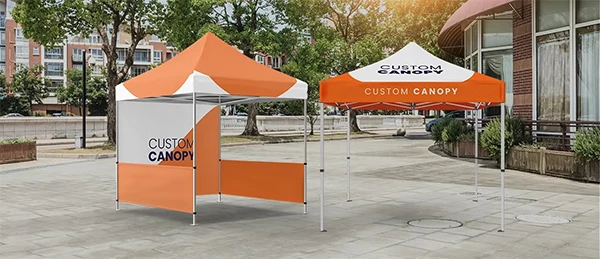
If your team is small, or you’re setting up solo, a Pop Up Canopy Tent is usually the best option to order. These are designed around fast, tool-free assembly, which matters a lot more than people expect once you’re standing in a parking lot fifteen minutes before doors open.
You should verify and approve your design before it’s printed. Not after.
Confirm how proofs are delivered, how many revisions are included, and how long you have to make changes to it. A supplier that skips this step, or rushes you through it, is a supplier you should be cautious about.
Mistakes happen even with good suppliers. What matters is what they do after it.
Ask directly: if the color’s off, or the print has an error, what’s the process to fix it? A company with a clear answer has probably handled this situation before. A company that hesitates hasn’t thought it through.
Ordering a custom canopy tent isn’t complex, but it does reward preparation. Know your frame requirements, have your artwork ready, order with real lead time, and confirm exactly what’s included before you pay.
Do that, and the order itself becomes the easy part. It’s everything you didn’t prepare for that turns into a problem later.
Ans: If your team is small, or you’re setting up solo, a Pop Up Canopy Tent is usually the best option to order. These are designed around fast, tool-free assembly, which matters a lot.
Ans: To confirm what’s included, request a full breakdown before you order, not a total price that turns out to be missing half the accessories you actually need.
Ans: Confirm how proofs are delivered, how many revisions are included, and how long you have to make changes to them.