In a world of smartphones, it is the custom cases that reflect our personalities, creativity and individuality.
From ancient protective shells to changing patterns over time, phone cases tell a story of identity, evolution and tech transformation.
But as the number of choices increases, the primary question that is raised is what truly distinguishes a custom phone case from everything else on the shelf?
The answer goes deeper than aesthetics alone, touching on quality, functionality, self-expression, and even environmental consciousness.
Read this article to know how that happens!
Mass-produced phone cases provide a purpose, certainly. They offer basic protection at affordable price points, and some even manage decent aesthetics. However, they fundamentally miss something that matters to a growing segment of consumers: uniqueness. When you walk into a room and see three other people with the same case design, the accessory loses its power as a personal statement.
This is where custom phone cases join the conversation with undeniable force. The ability to choose materials, colors, textures, printed imagery, and even structural elements turns a phone case from a commodity into a personal artefact. You are no longer selecting from a preselected menu of options that a designer in a distant office thought might appeal to the broadest possible audience. Instead, you act as the creative director of your own accessory.
The psychological impact of carrying something uniquely yours should not be overlooked either. Research in consumer behavior consistently shows that personalized products build stronger emotional bonds between owner and object, leading to greater satisfaction and longer product retention. In practical terms, you are less likely to replace a custom case on a whim, which means better value over time and reduced waste.
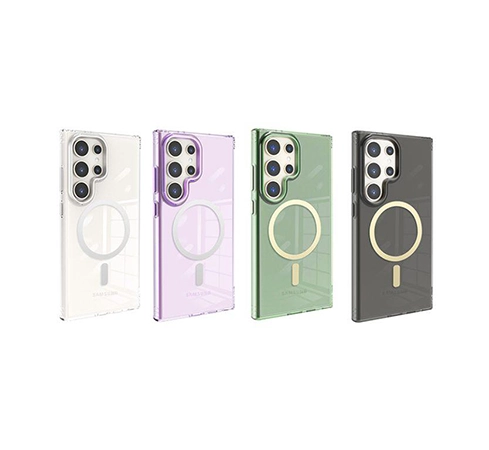
One of the most ignored aspects of custom phone cases is the relationship between customization and quality. When manufacturers produce millions of identical units, cost optimization shapes every decision. Materials get cheaper, tolerances get looser, and the end product reveals these compromises in ways that become apparent within weeks of daily use.
Custom manufacturers, by contrast, often work with different incentives. Because their value proposition rests on delivering something special, they tend to focus more heavily in material selection and production precision. Premium polycarbonate, genuine leather, sustainable bamboo, military-grade TPU — the palette of available materials grows dramatically when you step outside the mass-market pipeline. Each material brings its own protective characteristics, tactile qualities, and aging patterns that add to the overall experience of ownership.
Furthermore, the fit and finish of a custom case frequently exceeds what you find in generic alternatives. Precise cutouts for ports and buttons, prope ly aligned camera openings, and consistent edge finishing all show the attention to detail that custom production enables. These might appear like minor points until you have lived with a case where the charging port cutout is slightly off-center or the button covers feel mushy and unresponsive.
The custom phone case market is not restricted to individual consumers seeking personal expression. Businesses across virtually every industry have identified the potential of customized cases as marketing tools, corporate gifts, and revenue streams. A well-designed branded phone case becomes a mobile billboard that the recipient actually wants to carry, creating impressions without the recurring cost of traditional advertising.
Consider the mathematics: a single branded phone case might be viewed by dozens of people daily over a lifespan of one to two years. Compare that cost-per-impression to digital advertising or print media, and the economics appear remarkably favorable. Companies like Runsuncase have developed their operations around understanding these business applications, offering bulk customization capabilities that maintain quality even at scale.
Promotional campaigns, employee welcome kits, event giveaways, and retail merchandise all reflect contexts where custom phone cases provide outsized value relative to their cost. The key is partnering with a manufacturer that recognizes both the creative and logistical dimensions of these projects, ensuring that deadlines are met without sacrificing the design integrity that makes custom cases appealing in the first place.
Creating a custom phone case requires more steps than most people initially realize, and understanding this process helps clarify both the value and the lead times involved. It begins with concept development — determining the purpose of the case, the target audience, and the aesthetic direction. This phase might take minutes for someone selecting a personal case or weeks for a brand developing a product line.
Next comes the technical design phase, where creative concepts must be balanced with manufacturing realities. Print resolution requirements, color gamut limitations, material compatibility, and structural engineering all create constraints that skilled designers learn to work within rather than against. The best custom cases result from this creative tension between imagination and engineering.
Prototyping follows, allowing stakeholders to assess the physical result before committing to full production. This step catches issues that screen-based mockups simply cannot show— how a texture feels in hand, whether a color shifts under different lighting, how the case weight affects pocket carry. Reputable manufacturers include prototyping into their workflow as standard practice rather than treating it as an optional luxury.
Finally, production and quality control guarantee that the approved design translates faithfully across every unit. Consistency is perhaps the biggest challenge in custom manufacturing, and it separates professional operations from hobbyist ventures. Every case should match the prototype that received approval, regardless of whether the order is for ten units or ten thousand.
The eternal tension in phone case design has always been the apparent trade-off between protection and aesthetics. Rugged cases lean toward bulky utilitarianism, while slim, attractive cases often sacrifice meaningful drop protection. Custom phone cases have the potential to solve this tension because the design process starts fresh rather than inheriting the compromises embedded in existing product lines.
Modern materials science has increased what is possible within slim form factors. Impact-absorbing polymers, reinforced corner structures, and raised bezels for screen and camera protection can all be designed into a case that remains sleek and visually appealing. When you control the design parameters, you can prioritize the specific types of protection that matter most to your usage patterns rather than adopting a one-size-fits-all approach.
Drop protection, scratch resistance, water resistance, dust exclusion, and grip enhancement present distinct engineering challenges, each with its own set of solutions. A custom approach lets you balance these factors according to your actual needs. An outdoor enthusiast might prioritize drop protection and grip, while a professional in a corporate environment might emphasize scratch resistance and slim aesthetics. Neither is wrong — they simply show different use cases that generic products cannot simultaneously optimize for.
The environmental dimension of phone case choices requires more attention than it typically receives. The phone case industry creates enormous volumes of plastic waste, much of it from cheap cases that crack or yellow within months, prompting replacement purchases that perpetuate the cycle. Custom cases break this pattern in several meaningful ways.
First, the emotional attachment created by personalization means longer retention periods. People keep custom cases longer because they feel connected to them, which directly lowers waste. Second, custom manufacturers are more likely to offer sustainable material options because their customers are already making intentional, deliberate choices rather than impulse purchases. Biodegradable materials, recycled plastics, and plant-based composites are increasingly accessible through custom channels.
Third, the made-to-order nature of custom production decreases inventory waste. Mass manufacturers must forecast demand and inevitably overproduce, with unsold inventory often ending up in landfills. Custom production aligns supply precisely with demand, removing this source of waste entirely. For environmentally conscious consumers, this connection between personal expression and ecological responsibility makes custom cases doubly appealing.
The feasibility and affordability of custom phone cases have advanced dramatically thanks to advances in manufacturing technology. UV printing allows photographic-quality imagery to be printed directly to case surfaces with exceptional durability and color accuracy. Laser engraving produces permanent, tactile designs in materials like wood, leather, and metal. Sublimation printing allows edge-to-edge coverage with vibrant colors that resist fading over time.
Digital design tools have simultaneously reduced the barrier to entry for creating custom artwork. What once required professional graphic design skills can now be achieved through intuitive online platforms that assist users through the creative process. Templates, font libraries, image editing capabilities, and real-time previews put meaningful creative control within reach of anyone willing to spend a few minutes considering options.
On the manufacturing floor, computer-controlled cutting machines guarantee precise dimensions regardless of batch size. Automated quality inspection systems detect defects that human eyes might miss during high-volume production runs. These technological capabilities mean that custom no longer suggests compromise on any dimension that matters — not speed, not consistency, not cost-effectiveness.
Not all custom phone case providers provide equivalent results, and understanding what distinguishes excellent partners from mediocre ones can save considerable frustration. The most important factors involve material range, printing technology, minimum order quantities, turnaround times, design support services, and communication responsiveness.
Material range matters because it defines the ceiling on what you can achieve. A provider limited to a single plastic formulation cannot provide the variety of textures, finishes, and protective capabilities that a well-equipped manufacturer like Runsuncase can offer. Similarly, printing technology determines the visual quality ceiling — providers investing in current-generation equipment create noticeably superior results compared to those running older machinery.
Minimum order quantities impact accessibility for different customer types. Individual consumers need providers willing to create single units economically, while businesses need partners capable of scaling to thousands without quality degradation. The best manufacturers support both ends of this spectrum through flexible production systems that maintain standards regardless of volume.
Design support can determine or break a project, particularly for customers without graphic design experience. Providers providing consultation, file preparation assistance, and mockup services add genuine value that justifies modest premium pricing. The alternative — uploading a low-resolution image and hoping for the best — rarely creates satisfying results.
Price comparisons between custom and generic phone cases often confuse because they ignore total cost of ownership. A generic case might cost less upfront but need replacement every few months due to yellowing, cracking, or simple boredom. A well-made custom case, by contrast, preserves its appearance and structural integrity significantly longer, spreading its higher initial cost across a much longer useful life.
For businesses, the economics are even more clearly beneficial. The marketing value created by a branded custom case far exceeds its production cost when measured against equivalent advertising expenditure. A single case delivering daily impressions for a year or more offers extraordinary return on investment by any marketing metric.
There is also the intangible value of satisfaction and confidence that a custom case offers. Carrying an accessory that perfectly represents your taste, supports your brand, or commemorates something meaningful generates daily micro-moments of pleasure that generic products simply cannot match. Quantifying this value is challenging, but dismissing it as irrelevant ignores a fundamental truth about why humans personalize their possessions in the first place.
The question we began with — what really sets custom phone cases apart — has many answers, but they all point in the same direction. Customization reflects a fundamentally different relationship between consumer and product, one built on intentionality rather than convenience, quality rather than cost minimization, and personal meaning rather than mass-market compromise. Whether your motivation is self-expression, brand building, environmental responsibility, or simply wanting the best possible protection for your device, the custom path succeeds in ways that off-the-shelf alternatives cannot match.
The barriers that once rendered customization impractical for most people have largely disappeared. Modern manufacturing technology, accessible design tools, and competitive pricing have expanded what was once a luxury. The remaining question is not whether custom phone cases are worth considering, but rather why anyone would accept for less when something better is so readily available. Your phone is with you every day — it deserves an accessory chosen with the same care you give to everything else that matters in your life.
Ans: Visuals are great, but texture is the real game changer right now. Embossed phone cases give you that three dimensional feel that makes you want to reach out and touch it.
Ans: With constant charging, standard operating heat, and rising temperatures, battery cases may impact the overall battery quality of a phone if it gets too hot.
Ans: A phone case that can withstand over 156 drops on all angles and falls from up to 21.3 feet, the 6x Military Grade Standard Bounce Case is the most protective phone case ever.
Ans: Non-porous materials like thick silicone, heavy rubber, and cheap synthetic PU leather trap the most heat, whereas slim, natural genuine leather features organic micro-pores that allow the device to breathe.