
A CSCS card is an item that most construction site managers come across daily, although its verification involves more than just checking the color and admitting the employee into the site.
Each card contains essential information regarding the employee’s qualifications, occupation, and the expiry date. Failure to check for such information may result in errors, particularly when an unqualified employee is assigned tasks that he/she cannot carry out.
The Construction Skills Certification Scheme (CSCS) is an organization that enables employers to verify if their employees have the necessary skills for their respective positions. Despite being non-statutory, most construction sites use CSCS cards.
Question number one is easy: does the card belong to the person who presented it?
Ask the worker to show the card in person and compare the photograph and name with a recognised form of identification where your site procedures require it. This matters particularly on larger projects, where security staff may be checking dozens of workers during a busy morning arrival period.
A card should never be treated as transferable. Even when the photo appears broadly similar, take a moment to look for obvious inconsistencies in names, dates, or spelling. If the card has been damaged, altered, or appears to have been tampered with, it should not be accepted without further verification.
This is another good chance to verify the employer, trade, and expected tasks of the employee. The card may be genuine, but it still needs to match the work the individual has been assigned to undertake.
CSCS cards have expiry dates. Cards that have expired must not be accepted as proof of active CSCS membership. It is easy to overlook this during a rushed induction or when a worker has previously been granted access, so expiry checks need to be part of the routine rather than an occasional audit.
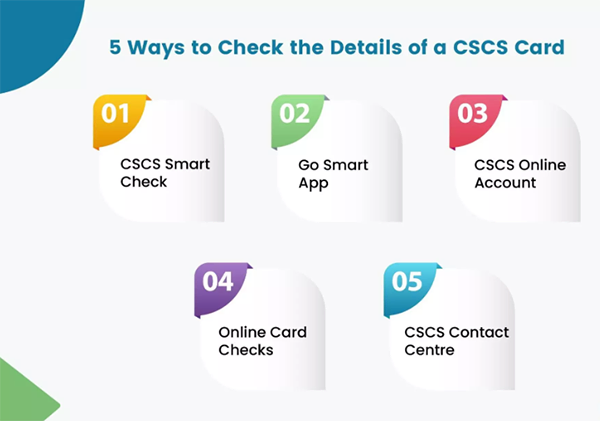
Physical cards can also be lost, cancelled, or replaced. For that reason, relying solely on what is printed on the card is not always enough. Digital verification gives site teams a more reliable view of whether a card remains valid and what it represents. Supervisors and administrators can learn more about checking card details online, including the cardholder’s status, occupation, qualifications, and expiry information.
A present card not only establishes a date. It helps establish that the credential being used is still recognised and has not been superseded by a newer qualification route or card type.
Perhaps the most critical step in the entire process is ensuring relevance. A valid CSCS card does not automatically mean a worker is competent for every task on site.
Each card corresponds to various professions, levels of qualifications, and degrees of maturity. A labourer working under supervision, for example, should not be treated as qualified to carry out skilled electrical, plumbing, plant, or supervisory work simply because they hold a valid card. Likewise, a trainee or apprentice card indicates that the holder is progressing through training; it should prompt the site team to confirm suitable supervision arrangements.
Look beyond the card colour. Examine the job title or occupation on the card and assess whether it matches what the employee is supposed to do. A carpenter’s card does not evidence competence as a rigger. A site manager’s card does not replace trade-specific authorisation for specialist work.
Where the role involves safety-critical activity, qualifications may need further scrutiny. Examples include lifting operations, temporary works, asbestos-related tasks, electrical installation, plant operation, and work at height. CSCS forms just a small part of the overall competency picture.
Construction sites usually have many card systems. CPCS and NPORS, for instance, may be relevant for plant operators, while ECS cards are commonly used in electrical work. These schemes are not interchangeable, even if the worker also holds a CSCS card.
The key thing is that you verify the credential for that particular job. If someone is due to operate machinery, confirm their plant category, endorsement requirements, and site-specific authorisation. If they are carrying out electrical work, check the relevant electrical certification as well as the site’s permit and supervision arrangements.
The card check must be part of an overall onboarding and supervision process. Even a fully valid and relevant CSCS card does not tell you whether someone has completed the project induction, understands the site rules, or is familiar with the specific risks of the work area.
Before assigning work, site teams should consider whether the worker has:
This method helps to prevent a common error of seeing the card as a universal pass rather than one piece of evidence among others.
Sometimes, a worker will come without any card, with an expired card, or even with a card that does not seem to suit the position. The best response is not improvisation at the gate. Establish a clear escalation route so security staff, supervisors, and project managers know who can make a decision and what evidence is required.
In some instances, the worker will be able to give digital proof that a replacement is taking place. In others, the appropriate decision may be to restrict access or assign only work that can be safely supervised. What matters is that exceptions are documented and managed consistently.
Checking CSCS cards is generally considered an administrative job, but in fact, it is actually an initial test of site control. Done well, it confirms identity, supports competence management, and gives supervisors a clearer understanding of who is working where and under what level of oversight.
The strongest sites make card verification routine, proportionate, and connected to the actual work being undertaken. That way, the check at the gate becomes more than a box-ticking exercise—it becomes the first step in making sure every worker is properly prepared for the job ahead.
Ans: Look at the worker’s identity, photograph, expiry date of the card, occupation, and qualification information. You should also validate the CSCS card online to ensure that it corresponds to the type of work the individual will do.
Ans: The CSCS card checking service can be used to validate the cardholder’s information, including occupation, qualifications, and expiry date. This ensures that the card is neither expired, cancelled, nor fake.
Ans: CSCS stands for occupations and competence levels in construction, while the cards from CPCS and NPORS are typically used in order to demonstrate competence in plant operation.
Ans: No. A CSCS card does not mean full competence verification. Other factors need to be taken into account.
