
The top AI sales prospecting tools in 2026 rely on where your pipeline has leaked. Central AI is the choice if inbound calls go unanswered, Apollo.io if you want your information and outreach in one seat, Clay if you are building custom enrichment workflows, and Cognism or ZoomInfo if you require enterprise-grade intent and compliance. Lemlist and instantly own the send side.
Most roundups take prospecting as a single job, but it’s not. Finding accounts, enriching them, timing the approach, and contacting the buyers who call you first are four different issues, and no tool below can solve all of them well.
A prospecting tool now has to do more than hold a static contact list. The platforms worth paying for continuously refresh records, read buying signals, and act on them without a rep pasting information between tabs.
Three capabilities separate the current generation from the last: real-time verification instead of a stale database dump, signal detection such as job changes or website visits, and an agent layer that drafts or executes the next step. If you want the plain version of how that layer works, this primer on what AI actually is is a good place to start.
Everything below sits at the top of the funnel and feeds a clean database into your CRM and sequencing stack.
Every figure in this article was taken from the vendor’s own live website. Where a number could only be found on a review aggregator or a competitor’s comparison page, it was left out rather than repeated.
That standard removed several well-known names from the list. Prices, database counts, and customer numbers all move, and secondhand figures go stale quicker than first-party ones.
We also excluded pure CRM, marketing automation, and enablement platforms unless prospecting is a core use case instead of a bolt-on. Inbound qualification is in scope because a caller who reaches you and gets a voicemail is a lost prospect in exactly the same way a bad email address is.
| Tool | Best for | Core job | Published starting price |
| Central AI | Teams are losing inbound calls | Answer and qualify inbound | From $89 per month |
| Apollo.io | Small teams wanting one seat | Data plus outreach | Free plan, paid tiers on request |
| ZoomInfo | Enterprise GTM teams | Intent and account intelligence | Quote only |
| Cognism | UK and EU outbound | Phone verified mobile data | Quote only |
| Clay | GTM engineers | Custom enrichment workflows | Free plan, Growth from $495 per month |
| Instantly | High-volume cold email | Sending and deliverability | Not published on site |
| lemlist | Multichannel outbound | Sequences across channels | Free plan, 14-day trial |
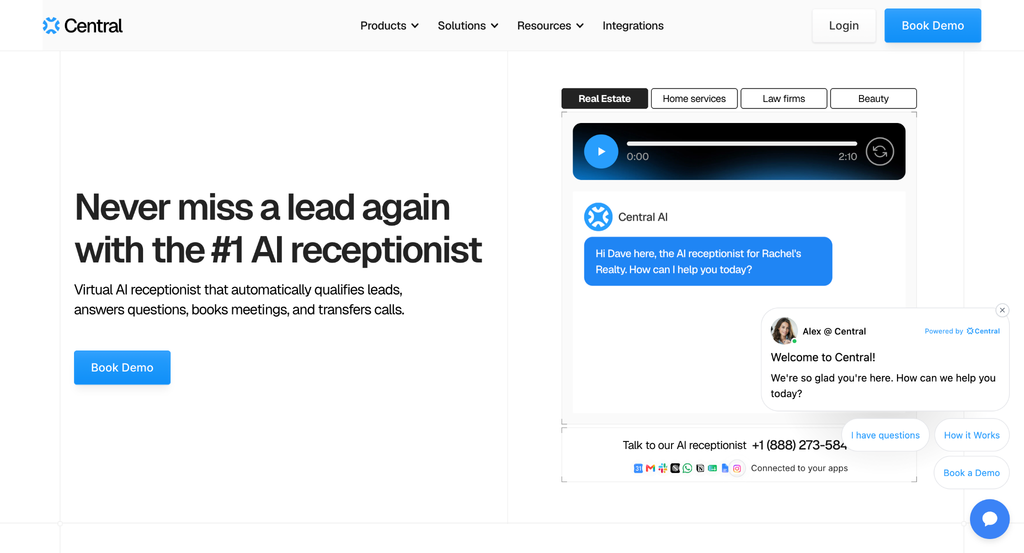
Every list of prospecting tools begins with finding strangers. Central AI starts with the prospect who has already found you, which is why it sits at number one here. Its AI voice receptionist answers inbound calls 24/7, qualifies the caller, books the meeting during the call, and transfers to a live receptionist when it cannot resolve a question or the caller asks for a person, provided one is available.
Setup takes minutes rather than a quarter. You give Central AI your website URL, and it crawls the site to build its knowledge base, and it also ingests PDFs, Word files, TXT, HTML, and Markdown. It captures the name and number of every caller, writes a summary after every single call, and tags conversations so you can see what customers keep asking about.
Pricing starts at $89 per month for 90 calls, with appointment booking, lead capture, call summaries, and 24/7 coverage on every plan. There is a 10-day free trial, a free built-in CRM, and support for over 30 languages.
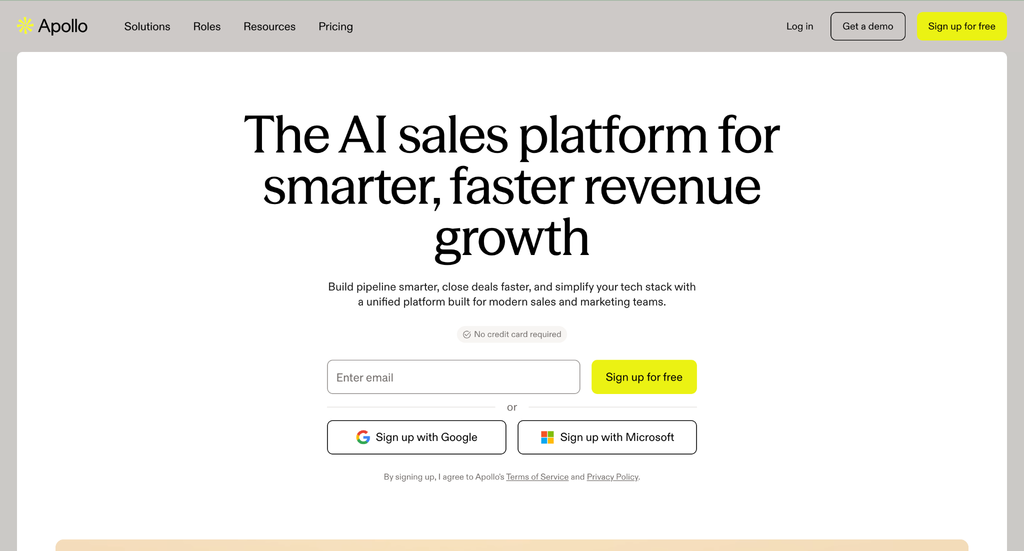
Apollo.io is the default first purchase for small teams because it collapses several line items into one. Its own site describes it as replacing your data provider, outreach platform, dialer, enrichment, and CRM, and it states that more than 600,000 companies use it.
The data layer covers 240M+ contacts and 30M+ companies with verified emails and phone numbers. Alongside outbound, it handles inbound too, with anonymous visitor identification, real-time form enrichment and instant routing into a built-in scheduler.
There is a free plan with no card required, plus GDPR, SOC 2, and ISO 27001 coverage. Note that paid usage runs on credits, so the seat price is not the full cost.
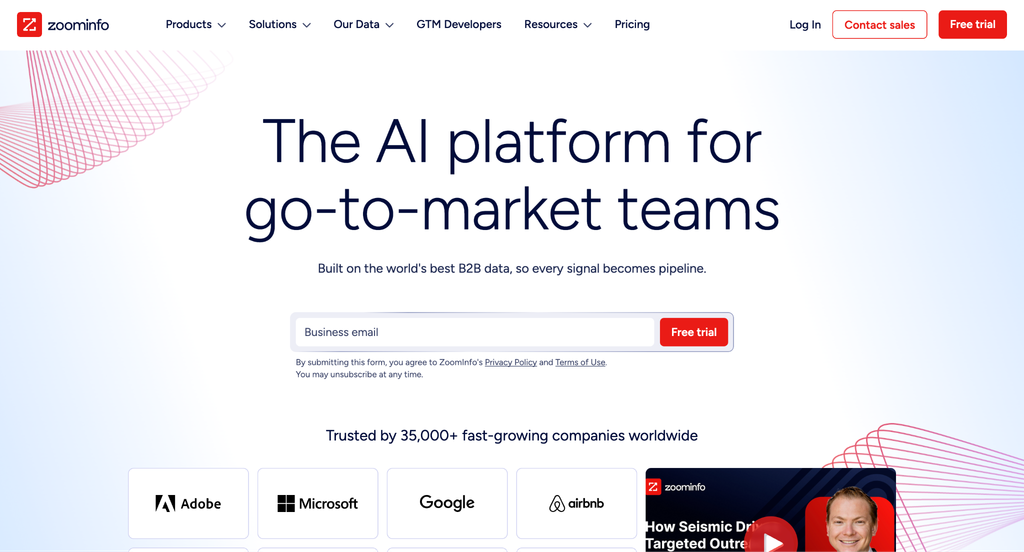
ZoomInfo is the enterprise option and prices accordingly. Its GTM Context Graph covers more than 100 million companies and 500 million contacts, all identity-resolved, and the company reports 35,000+ customers.
The AI layer is now the product. Copilot prioritises accounts and drafts outreach, GTM Workspace blends CRM, contact and intent data in one view, and GTM Studio builds campaigns triggered by buying signals. ZoomInfo data is also exposed through MCP and inside ChatGPT.
It carries GDPR, CCPA, and SOC 2 Type II compliance, which is usually what decides an enterprise deal.
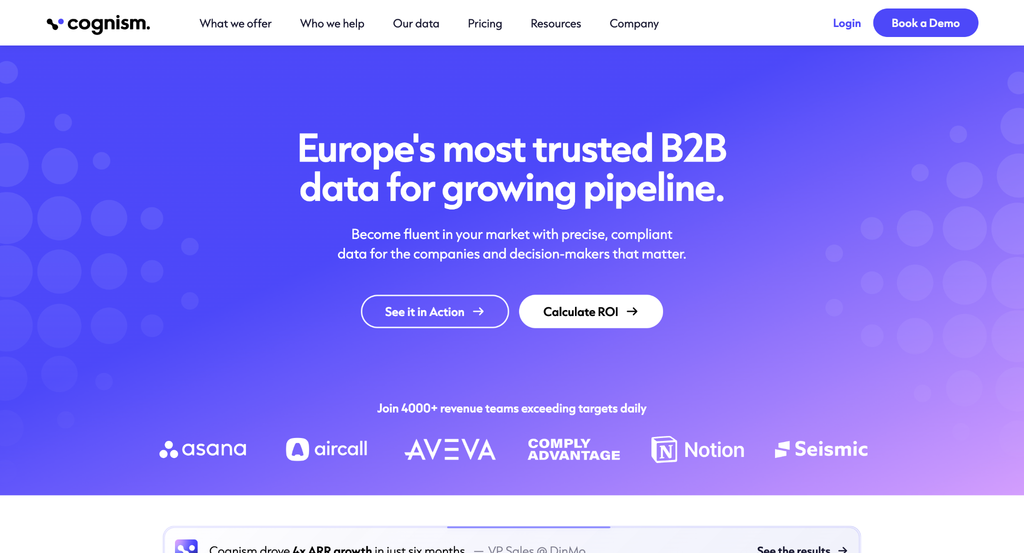
Cognism is the answer when your market is not the US. Its pitch is phone-verified mobile numbers and a European dataset built for outbound calling, with GDPR and CCPA compliance plus DNC screening.
Data freshness is the specific claim worth checking: Cognism states 95 percent of VP and above contacts are refreshed on a 60- or 30-day cycle. The product splits into Sales Intelligence, Data-as-a-Service, and CRM Enrichment, so you can buy the data without the interface.
Pricing is quote-based, though the company offers a free data sample of 25 leads matched to your ICP before you commit.
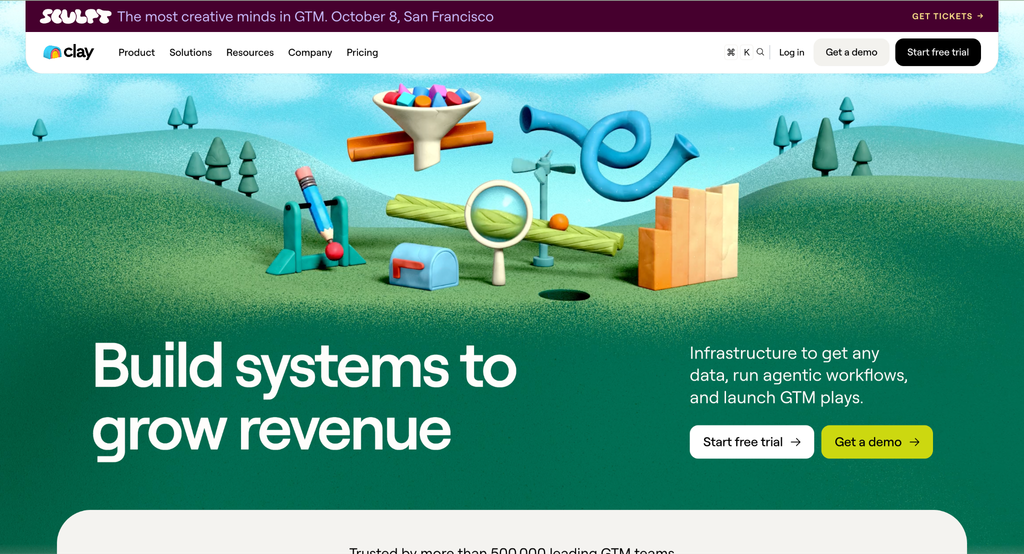
Clay is not a database. It is a spreadsheet-shaped workflow builder that queries a marketplace of data providers in sequence until one returns a result, which is why teams use it to raise coverage rather than replace a vendor.
Billing runs on two meters: Data Credits buy data and AI from marketplace vendors, and Actions cover the platform work of routing requests and running workflows. Clay states that if an enrichment returns no result, you are charged nothing, which is the fix to the loudest complaint about credit models.
There is a free plan, and the Growth tier starts at $495 per month with CRM auto-sync, HTTP API integrations, webhook automation, and web intent signals. Clay is SOC 2 Type II compliant.
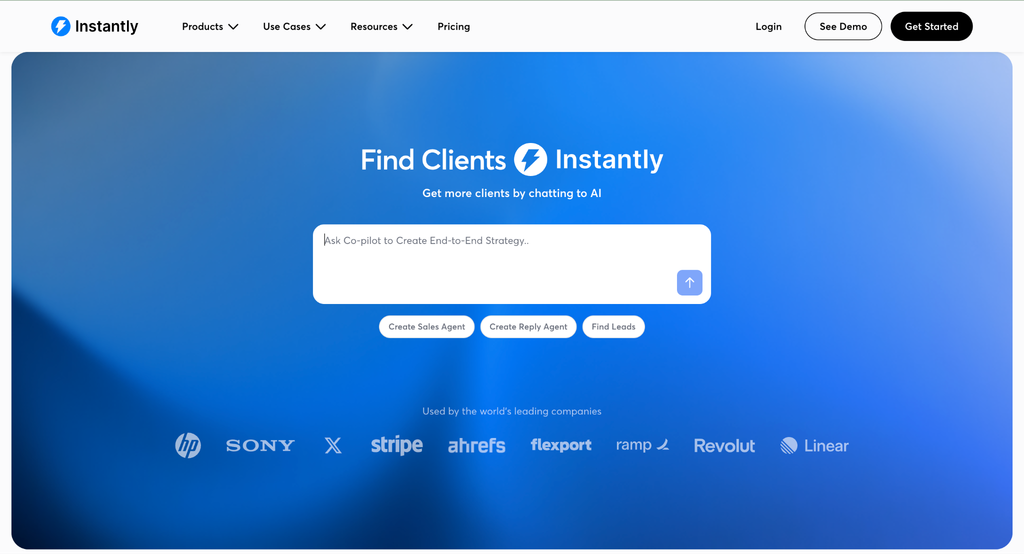
Instantly is built for volume sending rather than research. Its own material describes a 450M+ B2B lead database paired with unlimited email accounts, built in warmup and a private deliverability network of more than 4.2 million accounts.
The pitch is a flat-fee sending infrastructure that scales for agencies, with lead data, outreach, inbox management, and AI agents in one workflow rather than four tools. That makes it a fit for teams whose bottleneck is inbox placement, not list building.
Pricing is split across modules, so cost depends on which parts you turn on.
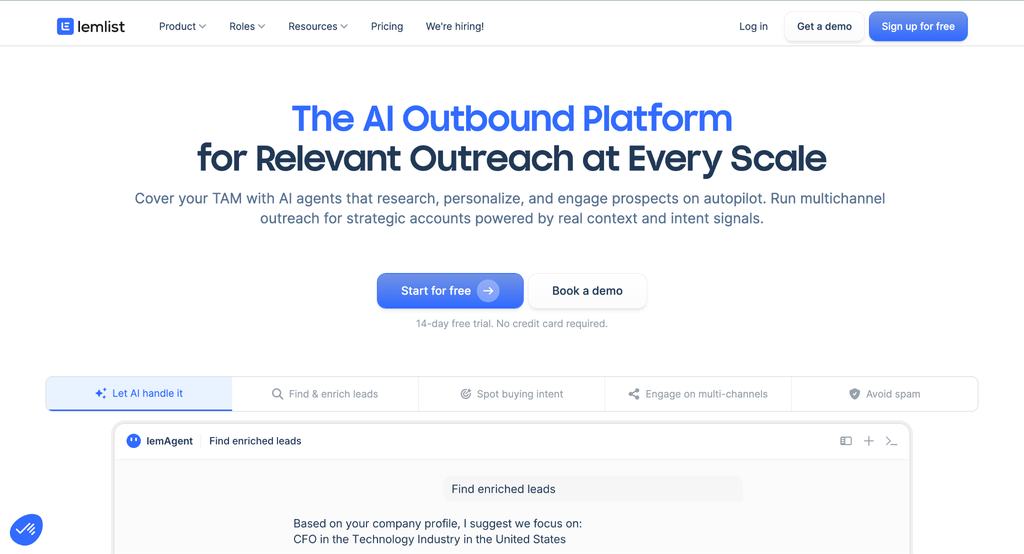
Lemlist covers the same send-side job but across more channels. One sequence can run email follow-ups, LinkedIn actions, WhatsApp messages and calls, with every interaction tracked in a single inbox thread.
Its lead database holds 450M+ contacts, and built-in waterfall enrichment pulls verified emails and phone numbers from multiple providers in one click. Personalisation goes further than a first name token, with dynamic landing pages, custom images and LinkedIn voice notes.
There is a free plan that lets you pull 100 leads with the Chrome extension, and paid plans come with a 14-day trial that does not ask for a card.
Almost no team runs one of these alone. A common stack is a data source, an enrichment layer on top, and a sending tool underneath, with an inbound catcher sitting beside all three.
The mistake is buying two tools that do the same job. If you already pay for Apollo, you probably do not need Instantly as well until deliverability becomes the constraint.
Start by naming your actual bottleneck. Then buy the one tool that removes it, and recheck after a quarter rather than adding another seat.
What is the best AI sales prospecting tool for a small team?
Apollo.io is the usual answer because one seat covers data, sequencing, and a dialer, and there is a free plan to test the data first. If your problem is missed inbound calls rather than outbound volume, Central AI solves that from $89 per month.
How much do AI prospecting tools cost?
Published entry points range from $89 per month for inbound call handling to $495 per month for Clay’s Growth tier. ZoomInfo and Cognism quote rather than publish, and credit-based tools cost more than the seat price suggests.
Do I need a separate tool for cold email?
Only if deliverability is your constraint. Apollo and Lemlist both include sequencing, while Instantly exists specifically for teams sending at volumes that break normal inboxes.
Which prospecting tool is best for the UK and Europe?
Cognism, on the strength of phone-verified mobile numbers, European coverage, and DNC screening alongside GDPR and CCPA compliance.
