
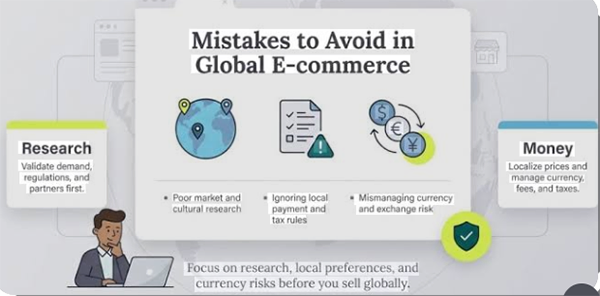
An online store can be translated perfectly and still be hard to shop from. The product details may be easy to understand, but the price is shown in a foreign currency. Delivery details are hard to find, the size chart uses unfamiliar measurements, and the payment options people usually use are not available. These small problems can make shopping confusing and leave customers unsure about placing an order.
If you want, I can also make it sound more natural and conversational for a blog article.
A 2020 CSA Research survey of 8,709 consumers across 29 countries found that 76% preferred product information in their own language. Another 40% said they would not buy from websites in other languages. Those figures make a strong case for translation. They also explain only the first part of the purchase.
E-commerce localization adapts a store to one language and market. Product pages, menu, and checkout text are part of it. So are currencies, delivery time, payment options, returns, measurements, and customer emails.
A Spanish version designed for Madrid will likely need different shipping rules and product availability than one targeting Spanish-speaking customers in the United States.
Marketing content often needs rewriting rather than a direct translation. An English slogan based on a pun may have no suitable French equivalent. Product details require a different approach. Dimensions, materials, ingredients, and safety warnings should remain accurate even when the surrounding tone changes.
Start with proofs already inside the business. Data may show visitors arriving from a particular country, viewing different products, and leaving at the shipping or checkout step. Search Console can reveal impressions for foreign-language problems. Customer support may already be answering questions about delivery to the same place.
Imagine a Lithuanian homeware store receiving steady traffic from Germany. The conversion rate is weak, so translating every page feels like the obvious next move. A closer look shows that German visitors reach the cart and then discover a long delivery window, prices shown only in euros without tax details, and a returns address in Lithuania. Translation would improve the visit without resolving the hesitation.
Check product suitability, margins, delivery costs, and legal requirements first. Then localize a small group of products that already attract interest. Twenty well-prepared bestsellers can indicate whether the market warrants a larger investment.
Product names should reflect the terms local customers actually search. Local keyword research belongs near the beginning, before category names and filters spread across the site.
Measurements need the same attention. A US clothing store entering France should offer centimeters and familiar size guidance.
Pricing involves more than switching a currency symbol. Stores can convert prices instantly or set them manually for each market. Whichever approach is chosen, the same currency should remain visible from the product page through payment.
Show taxes, duties, and delivery costs early enough for the customer to make a real decision. A low product price followed by an unanticipated import charge at checkout makes the entire store feel less trustworthy.
Payment choices vary as well. A card-only checkout may be normal in one country and limiting in another. Stripe documents how its checkout can prioritize payment methods based on customer location, which provides a useful model for presenting relevant options without maintaining a single global list for everyone.
Returns deserve local treatment too. The policy should explain the return window, cost, address, and refund process in plain language. EU customers buying online generally have a 14-day right of withdrawal, with exceptions for certain goods and services. A local legal review is worthwhile before that text goes live.
Finally, follow the order beyond checkout. Confirmation emails, carrier updates, failed-payment notices, and return instructions often fall back into the original language. That is where an otherwise convincing local experience suddenly comes apart.

Each language or regional version needs a stable URL. Google recommends using hreflang to identify alternative pages so it can send searchers to the appropriate version. Its guidance on multilingual and multi-regional websites also separates language targeting from country targeting, which matters when one language serves several countries.
Internal links should keep visitors inside the version they selected. A French product page should not send them to an English size guide or returns policy.
Avoid trapping customers in an automatic country redirect. Travelers, expatriates and people on corporate networks may want another store version. Keep the country and language selector easy to find.
A staging review from head office will overlook part of the experience. Ask someone in the target country to finalize a purchase on mobile. Have them record the first currency shown, available products, delivery commitment, payment methods, and every email that follows.
The technical team should also examine how the store responds to IP location. A tester in the UK can connect through France and see whether the French catalogue opens, prices switch to euros, and checkout keeps the chosen region. Repeat the check after changes to pricing, promotions, shipping rules, or the commerce platform itself; IP-based behaviour can break long after the first launch.
Because this QA cycle recurs for new promotions and market launches, a VPN may stay in the testing stack after the early launch. NordVPN’s discounted long-term plan has a $3.49 monthly equivalent across 27 months, including three free months, and supports up to ten devices at once, so the team can inspect desktop and mobile versions from the same target location.
A VPN supplies one location signal: the public IP address. Browser language, cookies, account history, and device permissions may still change what appears. Run clean-browser tests and compare them with results from an actual customer in the country.
Layout needs its own review. German text often occupies more space than English. Buttons wrap, product cards stretch, and checkout labels disappear on smaller screens.
A translation management system becomes beneficial when a large catalogue changes frequently. A smaller store entering one market may manage perfectly well with its current platform and an organized glossary, provided the platform can already sell in more than one currency and handle a growing catalog.
Use machine translation for drafts, followed by human review of prominent product claims, legal pages, and advertising copy.
Release the first localized store to a limited audience and watch where people hesitate. Support questions are especially revealing because customers describe problems that dashboards flatten into an exit rate. Fix those problems before adding another country.
A localized store is ready when customers can complete an order without stopping to interpret how the store works.
Ans: E-commerce localization is the process of adapting an online store to a specific country or market. It includes translating content, displaying local currencies, offering preferred payment methods, adjusting delivery options, and meeting local customer expectations.
Ans: Localization makes shopping easier and more familiar for international customers. Clear pricing, local payment options, accurate product information, and reliable delivery details can build trust and encourage more visitors to complete their purchases.
Ans:Businesses should start with high-demand products, product descriptions, prices, shipping information, payment options, return policies, and checkout pages. They should also check local laws, taxes, and customer preferences before expanding further.
Ans: Businesses can track conversion rates, cart abandonment, average order value, sales revenue, and customer feedback in each target market. These metrics help identify what is working and where further improvements are needed.
