
A lost dog can make you really tense and turn your ordinary day into a stressful experience. Even the dogs that are trained well can try to escape through an open gate, get lost during a walk, or get away from their owners when roaming around in an unfamiliar place. When someone finds a lost pet, having all the contact and information about the owners can really help the dog get back to its home.
The traditional engraved dog tags were good, but they only provided a simple way to share essential details, such as a pet’s name and an owner’s phone number. QR code dog tags have a lot of other options. They can easily connect a physical identification tag to a digital pet profile that can contain additional contact information.
However, the only catch here is that not all QR code dog tags are created equal and are equally usable. The different material quality, scanning reliability, digital profile accessibility, privacy, and long-term costs all influence whether a tag is practical for everyday use.
If you’re considering a QR code dog tag for your pet, here’s what to look for before making a purchase.
A QR code dog tag features a scannable pattern that links to a digital pet profile. When someone finds your dog, they can scan the code using a suitable smartphone camera and access the information related to the tag.
Depending on the service, a profile may contain the dog’s name, a photograph, owner contact information, and other relevant details that help someone get in touch with the family.
One of the main benefits of this approach is flexibility. Traditional engraved tags have limited physical space, whereas a digital profile can hold more information and may allow the owner to update contact details without replacing the tag.
Before buying, check how the QR code works and what happens after it is scanned. Ideally, the finder should be able to access the important contact information without creating an account or installing a particular application.
It is also important to understand the difference between identification and tracking. A QR code dog tag does not automatically send a dog’s location or provide live GPS tracking. Instead, it helps a person who finds the animal access the owner’s chosen information.
Dog tags are exposed to more than casual rain. They can rub against collars, knock against food bowls, face dirt, and collect scratches during walks and outdoor activities.
The material and manufacturing process can affect how well a tag holds up over time.
Stainless steel is a popular choice for pet identification because it is durable and resistant to corrosion. It can be suitable for dogs that spend considerable time outdoors, provided the tag is manufactured and maintained appropriately.
For QR code tags, the material matters because the code needs to remain readable. A tag that looks attractive when new may become less useful if its scanning surface deteriorates.
Aluminium is lightweight and can be a comfortable option for smaller dogs. It is commonly used for photo-based and printed identification tags.
However, the toughness of a particular design depends on its finish and how the information is applied. Printed QR codes should be evaluated for their resistance to scratching, fading, and everyday wear.
Plastic tags can be lightweight and quiet, while coated materials may offer different colours and design options. Their performance depends on the construction and the quality of the surface.
When comparing products, look beyond the material name. Consider the finish, engraving method, attachment hardware, and manufacturer’s care instructions.
For a QR code tag intended for everyday use, a durable metal surface with a clearly defined, permanently marked code is worth considering.
A QR code is only useful when someone can scan it successfully.
Look for a tag with a clear code, adequate contrast, and enough space for the pattern to remain distinguishable. Decorative elements should not interfere with the scannable area.
The method used to create the code is also important. A printed code can be affected by surface wear, depending on the printing process and protective finish. Laser etching creates a permanent marking in the tag’s surface, although the quality of the engraving and the code’s design still determine how reliably it scans.
Before purchasing, consider these questions:
A tag that works with an ordinary smartphone camera can make the process easier for a stranger who finds your pet. Requiring a special application may create an additional lock at a moment when quick access to contact information matters.
The digital experience is just as important as the physical tag.
After scanning a QR code, a finder should be able to identify the pet and find a straightforward way to contact the owner. A complicated website, confusing navigation, or an inaccessible profile can reduce the tag’s usefulness.
Look for a person who offers a clear, mobile-friendly pet profile and allows owners to maintain accurate information.
Useful things to keep in mind includes:
These details are easy to overlook when shopping, but they influence the tag’s long-term usefulness.
Some connected pet products require recurring payments for access to digital features. A QR code dog tag may offer a different approach, providing a link to a digital profile without a monthly tracking subscription.
For pet owners, this can simplify ongoing ownership costs.
When comparing products, distinguish between a one-time purchase and services that require recurring payments. Check whether profile access, contact-information updates, and essential identification features remain available without additional charges.
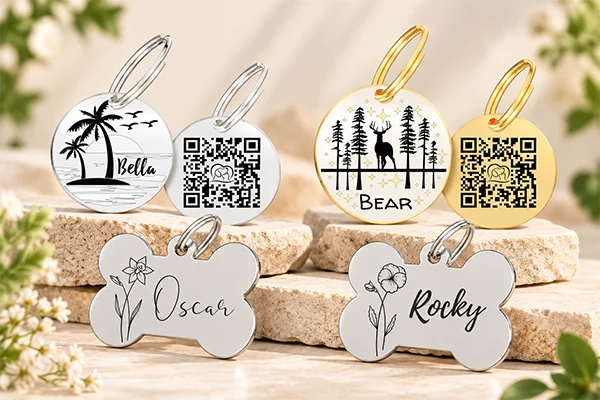
For example, PawFurEver’s dedicated QR Code Dog Tags connect the physical tag to a pet contact profile through its digital platform. The collection is presented as a no-subscription identification option, with profile information that owners can edit.
You can explore the QR Code Dog Tags collection to review the available designs and product details.
As with any connected product, read the current service terms to understand what is included and whether any optional features have separate conditions.
A dog tag should be comfortable enough to wear throughout the day. An oversized or heavy tag may be uncomfortable for a small dog, while a very small tag can leave insufficient room for a scannable QR code.
Consider your dog’s breed, size, collar, and activity level when choosing an identification tag.
The attachment deserves equal attention. A stable ring helps keep the tag connected to the collar, but it should also fit securely through the collar’s attachment point.
PawFurEver’s dedicated QR Code Dog Tags feature a circular shape measuring approximately 30 mm across, with a 20 mm stainless steel split ring included. Their plated stainless steel construction combines a compact size with a themed design on the front.
When comparing other tags, look at the dimensions rather than depending on product photographs alone. Images can make a small tag appear much larger than it is.
Check the attachment regularly for signs of bending, looseness, or wear. Even a durable identification tag cannot help if it becomes detached from the collar.
Identification tags are practical accessories, but they can also reflect a dog’s personality.
Depending on the product, customization may include the pet’s name, a themed design, a particular finish, or a photograph. The right choice should balance appearance with readability and comfort.
For QR code tags, make sure the decorative design does not interfere with the scannable code.
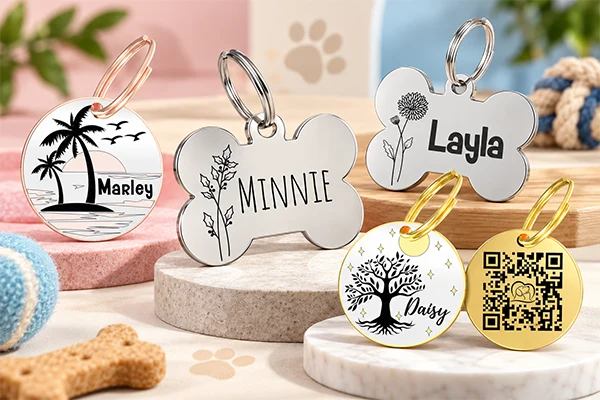
PawFurEver’s dedicated QR Code Dog Tags feature a themed design and the pet’s name on the front, with the QR code laser-etched on the back. The reserved range uses a circular shape and plated stainless steel construction, with different design and finish combinations available.
This format separates the decorative front from the identification function on the reverse. It allows the tag to look creative while keeping the QR code in a consistent location.
When shopping, check whether personalisation is included, which design options are available, and whether the code is positioned where it can be scanned easily.
A digital pet profile can make identification more convenient, but it also means thinking about which personal details to share.
A finder needs a practical way to contact you, but that does not necessarily require publishing your full home address or other important information.
Before activating a profile, review the provider’s privacy policy and understand which information becomes visible after a scan.
Consider the following precautions:
A well-designed profile should make contacting the owner directly without requiring the owner to showcase more personal information than necessary.
QR code tags and traditional engraved tags have different abilities.
A traditional engraved tag displays contact details directly on its surface. A finder can read the information without a smartphone or internet connection, but the available space is limited.
A QR code tag can connect to a digital profile containing additional information. Depending on the service, the owner may also be able to update that information without ordering a new tag to replace.
The trade-off is that QR identification depends on a scannable code and an accessible linked profile. If a phone cannot scan the code or the service is unavailable, the digital information may not be possible to access.
Some owners may prefer a combination of both approaches. A tag with a QR code and a visible phone number can provide an alternative contact method if scanning is not possible.
Whatever format you choose, make sure the physical tag remains securely attached, and the associated information stays accurate.
One of the most important things to consider while purchasing a tag is understanding the difference between identification technology and location tracking.
A QR code dog tag does not function like a GPS tracker. It does not automatically report your dog’s live location, create a movement history, or send an alert when your pet leaves a specific area.
Instead, it relies on someone finding the dog and scanning the tag to access the owner’s information.
A GPS tracker serves a different purpose by reporting location through its supported tracking system. Microchips also serve a different role: they provide a permanent identification method that can be read with an appropriate scanner, usually by a veterinarian or animal shelter.
These options can complement one another rather than compete directly.
For many pet owners, a sensible identification plan includes a collar tag with current contact information, a registered microchip, and additional tracking technology when felt right for the dog’s needs.
Even a high-quality QR code dog tag is less useful if its linked information is outdated.
After purchasing a tag, scan the code with a smartphone and confirm that it opens the correct profile. Check that the contact details are correct and that the page is easy to navigate.
Repeat this check every once in a while, particularly after changing your phone number, email address, or emergency contact.
It is also worth inspecting the tag itself. Look for deep scratches, damage to the code, or a loose attachment ring. If the tag becomes difficult to scan or shows signs of structural damage, contact the manufacturer to discuss replacement options.
Keeping the digital profile and physical tag in good condition is a simple maintenance habit that helps preserve their usefulness.
Choosing the best QR code dog tag means balancing durability, scanning reliability, comfort, privacy, and the quality of the digital profile.
Start with a tag made suitable for pets from PawFurEver, then check whether its QR code can be scanned with an ordinary smartphone camera. Review the linked profile, understand any subscription requirements, and make sure the tag fits your dog’s collar comfortably.
PawFurEver’s dedicated Dog Tags offer one option for pet owners looking for a personalised stainless steel tag with a laser-etched code and access to an editable digital pet profile without a recurring subscription.
Most importantly, remember that a QR code tag is an identification tool, not a live GPS tracking device. Its purpose is to help someone who finds your dog reach you quickly and easily.
With a durable tag, accurate contact details, and a broader identification plan, you can take a practical step toward helping your pet get home safely.
Ans: QR code dog tags can store more information and allow owners to update their pet’s profile online. Traditional engraved tags provide essential contact details without requiring a smartphone or internet connection. Using both offers an additional layer of identification.
Ans: Not always. Some QR code dog tags offer free profiles, while others charge recurring fees for features such as scan alerts or additional services. Check the pricing and terms before purchasing to understand which features remain available without a subscription.
Ans:Yes, when you choose a well-made tag that fits securely and does not irritate your pet. Select durable materials, check the attachment regularly, and review the privacy settings of the linked profile to control which personal details are visible to strangers.
