
Most IT teams don’t realize how painful a bad virtualization migration feels until they’re already in the middle of one. Server virtualization software decisions carry real weight: VM sprawl quietly drives up licensing costs, storage I/O bottlenecks appear out of nowhere under load, and zero-downtime live migration across clustered hosts is harder than any vendor’s marketing suggests. After reviewing dozens of platforms across real-world deployments, the options below stood out for how cleanly they handle migration. This guide covers the five strongest picks, ranked by how easy they make moving workloads.
Public information formed the backbone of this research: user reviews, documented case studies, feature breakdowns from official product pages, and platform ratings across major directories. Only platforms with a verified track record serving enterprise IT environments made the cut.
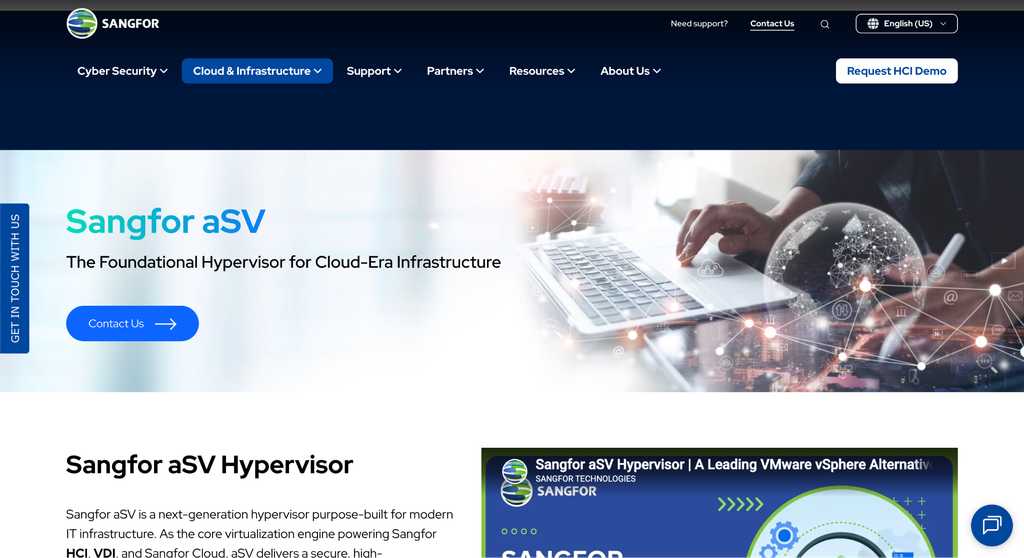
Sangfor Technologies covers cloud infrastructure and network security as a combined stack, not two separate products bolted together. Their ASV Hypervisor sits inside a broader ecosystem that includes HCI, VDI, and firewall capabilities, so enterprise teams aren’t patching security on top of virtualization after the fact. With over 100,000 customers worldwide, including Fortune 500 companies and government institutions, and 500+ customer service technicians supporting deployments globally, they’re built for the scale and compliance demands that large enterprise IT environments actually run into.
Sangfor addresses the challenge of managing security isolation between virtual machines at the hypervisor level, which is where most teams discover the gap too late. Their quarterly product update cycle, backed by at least 20% of yearly revenue going into R&D, means the platform doesn’t stagnate between major releases (which matters more than most vendors admit).
From what the reviews show, enterprises value Sangfor most for the depth of support they receive post-deployment, not just during the sales cycle. Recognition from Frost & Sullivan and multiple Cybersecurity Excellence Awards backs up the reputation the platform has built. The consistent award track record across multiple years is the kind of signal that’s hard to fake.
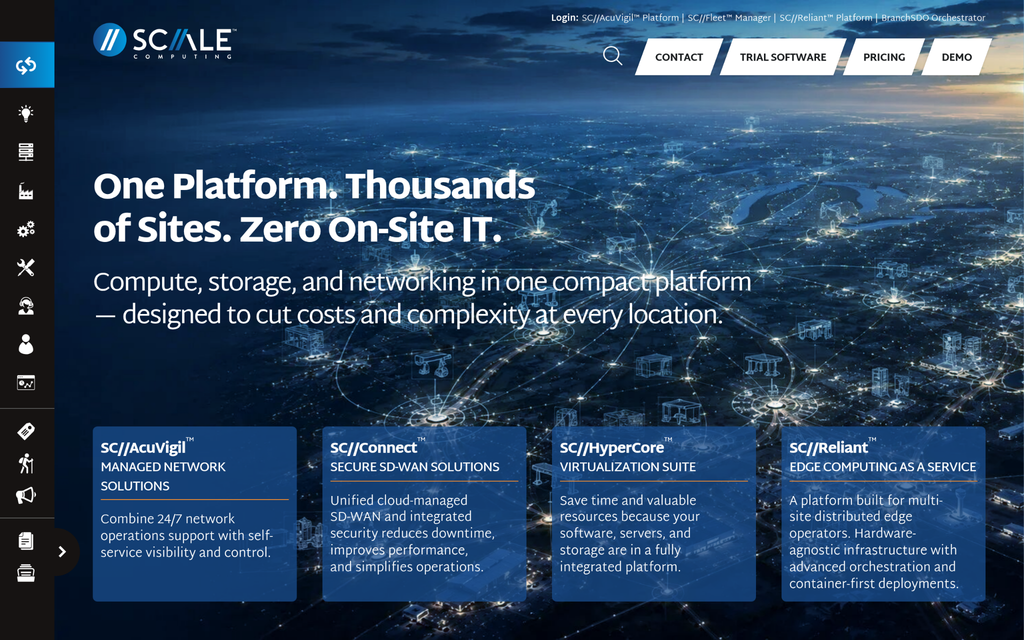
Scale Computing takes a distinctly appliance-first approach, combining storage, compute, and virtualization into a single system managed through their patented HyperCore technology. HyperCore automatically detects and corrects infrastructure problems in real time, which reduces the operational load on IT teams managing distributed locations. Their platform scales from a single site all the way to 50,000 locations, making them a practical choice for industries like retail and transportation where edge consistency matters as much as central data center performance.
Managing VM workloads across thousands of distributed edge locations creates I/O and availability challenges that centralized platforms often handle poorly. Scale Computing’s self-healing infrastructure design means those locations stay online even when nobody’s physically present to intervene (which is most of the time in edge deployments).
Users consistently point to pricing transparency as a differentiator. No hidden fees, no surprise add-ons during renewals. That reputation holds up across multiple industry verticals, not just one segment. From what the reviews show, the #1 CRN edge computing recognition resonates with customers who’ve actually tested alternatives.
Red Hat approaches server virtualization through the lens of OpenShift, building VM management directly into a Kubernetes-native platform rather than treating containers and VMs as separate problems. That architecture matters for enterprise teams running mixed workloads who need one consistent control plane across on-premises and cloud environments. Backed by IBM since 2018 and carrying 30+ years of enterprise open source credibility, Red Hat brings a depth of ecosystem support that smaller vendors simply can’t match.
Teams dealing with hybrid workloads, where some applications need traditional VMs and others are containerized, often struggle to find a single platform that handles both without compromise. Red Hat OpenShift Virtualization resolves that by letting VM workloads and container workloads share the same orchestration layer (not cheap, but worth it for the operational simplicity it creates).
Red Hat’s Customer Portal has earned 15 consecutive years of recognition from The Association of Support Professionals, and that shows up in how users actually talk about support experiences. That kind of sustained support recognition is rare at enterprise scale. Reviews consistently point to the reliability of documentation and the depth of available support.
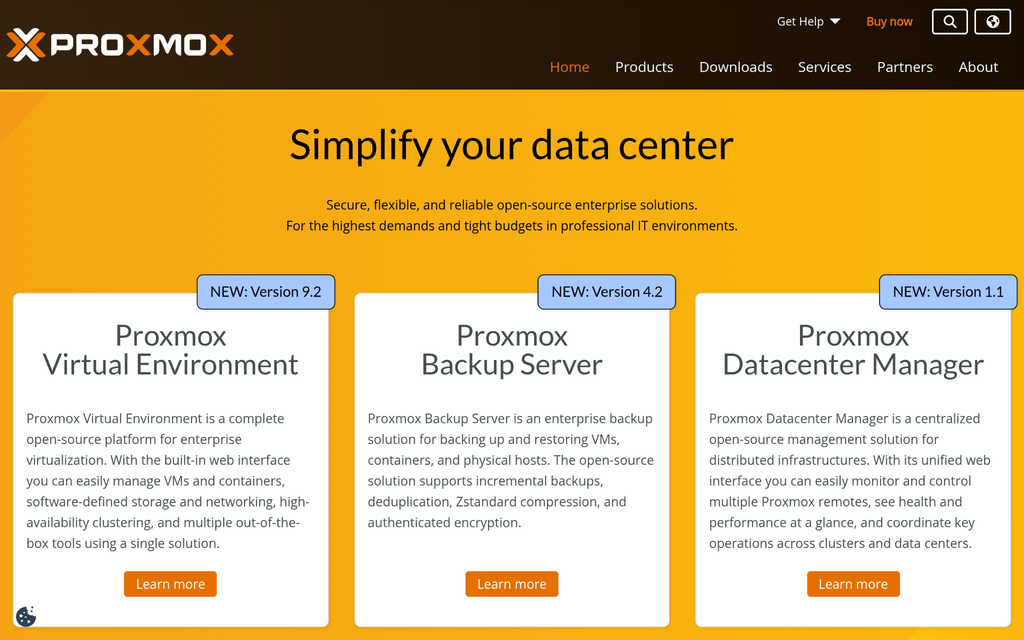
Proxmox builds its platform around KVM hypervisors and Linux containers, unified under a single management interface that covers software-defined storage, high-availability clustering, and integrated backup. The open-source model eliminates vendor lock-in, which is why so many enterprise teams are moving toward it as a VMware alternative right now. Managing 1.5 million hosts globally across 60,000+ active enterprise support plans in 142 countries gives the platform a scale of real-world validation that’s genuinely impressive for a company their size.
Licensing costs and unpredictable cost scaling as VM counts grow has pushed many teams to look hard at open-source alternatives, and Proxmox is where most of those evaluations land. Their integrations with NVIDIA and Veeam, plus a reseller network of over 1,000 partners, mean enterprises aren’t trading enterprise-grade features for cost savings.
The pattern across Proxmox reviews is consistent: teams that made the switch from VMware report smoother migrations than they expected, and the community support ecosystem fills gaps where the documentation runs thin. From what the reviews show, the 200,000+ community member base functions almost like a built-in support tier (think enterprise-grade knowledge base, community-powered).
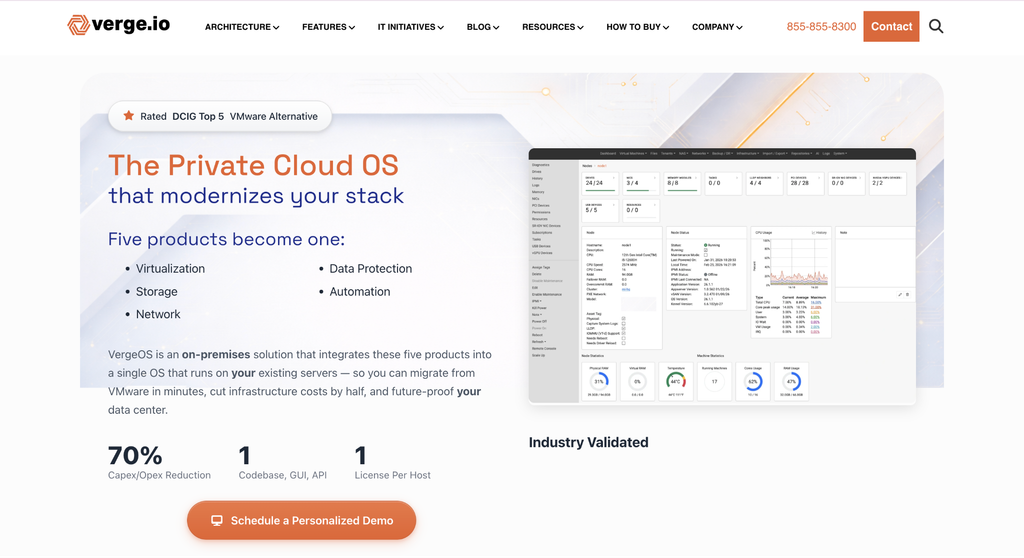
VergeIO packages virtualization, storage, networking, and data protection into a single operating system called VergeOS, rather than selling each layer as a separate product. Infrastructure-wide deduplication through VergeFS, virtual networking via VergeFabric, and built-in ransomware protection through ioFortify all run as native platform features. The platform runs on existing x86 hardware, which means enterprises aren’t forced into a forklift hardware upgrade to get modern private cloud capabilities. Kit Colbert, the former CTO of VMware, joining the board and investing in the company says quite a bit about where experienced practitioners think this platform is heading.
Fragmented infrastructure stacks, separate SAN, separate backup software, separate networking layer, create exactly the kind of management burden that drives up operational costs over time. VergeOS eliminates those layers by running everything natively, and the company claims Capex and Opex reductions of up to 70% for customers who make the full switch.
Topgolf deploying VergeOS across 100+ venues is the kind of real-world case study that carries weight because it’s not a single data center test. From what the data shows, customers replacing VMware and Veeam simultaneously with one platform consistently report faster provisioning and simplified recovery workflows. The DCIG Top 5 VMware Alternative recognition lines up with what actual users describe.
Choosing a server virtualization platform is less about finding the most feature-rich option and more about finding the one that fits how your infrastructure actually runs. Here’s what to weigh before committing.
Server virtualization software decisions come down to fit, not just feature lists. Sangfor stands out for enterprises that need security and virtualization working as one stack. Proxmox and VergeIO lead for VMware migration scenarios. Scale Computing wins at the edge, and Red Hat is the natural choice when containers and VMs need to coexist. As VM consolidation ratios become a standard performance benchmark, platforms that prove real-world gains will separate from those that only promise them.
