
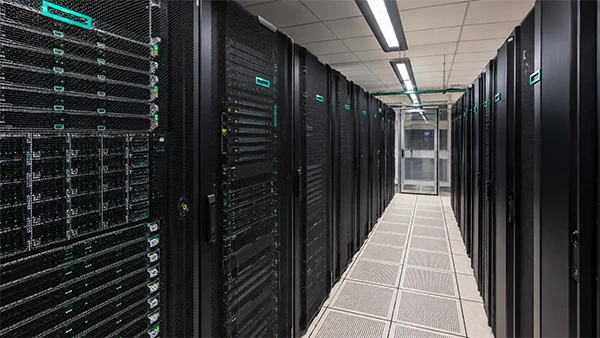
Enterprise infrastructure resets have become a regular process. Servers are replaced, and networking equipment is upgraded to support new tasks. What often gets ignored is what actually happens to the information stored on the equipment once it leaves production.
Most teams utilize live systems, leaving decommissioned devices for the vendors to pick up, which is often outside the coverage. Enterprise ITAD solutions exist to close that gap. Without a documented, verifiable process that identifies how assets are handled after their use, organizations lose visibility at the most vulnerable stages of the hardware lifecycle.
This article outlines the importance of correct data disposal and how compliance doesn’t end at decommissioning.
Key Takeaways
- One of the biggest misconceptions in IT asset disposal is the belief that formatting a drive or deleting files permanently leads to the complete removal of the present data
- Asset inventories, serial number tracking, and certificates of sanitization or destruction serve as evidence that established procedures were followed
- Security teams routinely evaluate cloud providers, software vendors, and managed service partners before granting access to sensitive environments
- Organizations that manage IT asset disposition consistently tend to integrate it into the broader asset lifecycle rather than treating it as an end-of-life afterthought
Cybersecurity programs typically focus on perimeter defenses, identity controls, and monitoring active systems. Retired hardware often falls outside that scope, even though the data it holds may be equally sensitive.
Evidence indicates that data exposure mostly occurs after the equipment is taken out of service. Independent investigations have concluded that used and decommissioned hard drives usually contain recoverable corporate and personal information, even when organizations assume that the data had been removed.
A long-running analysis by Computerworld documented how improperly disposed enterprise drives still contained financial records, customer data, and internal business documents.
From a risk perspective, a server in storage with intact data represents the same exposure as an unsecured system on the network.
The financial consequences reinforce this point. The Verizon Data Breach Investigations Report displays that sensitive data exposure often begins from overlooked operational inconsistencies rather than advanced technical exploits.
While the report covers a broad range of breach touchpoints, it consistently focuses on the data lifecycle failures that still contribute to multiple security incidents.
One of the biggest misconceptions in IT asset disposal is the belief that formatting a drive or deleting files permanently leads to the complete removal of the present data.
Practically, those actions just remove references to the information rather than the data itself.
Depending on the storage technology and deletion strategy used, forensic tools may still be able to recover files long after users believe they are gone.
This challenge has grown more complex as organizations deal with a large quantity of hard disk drives, solid-state storage, NVMe devices, encrypted media, and virtualized infrastructure.
Clear technical guidance exists on this issue. The National Institute of Standards and Technology states that accepted methods for media sanitization in Special Publication 800-88 specifying cleaning, purging, or physical destruction is required depending on the media type and data sensitivity.
This guidance places data removal as a security control instead of a convenience step at the end of a project.
Verification is as important as execution. Organizations must be able to demonstrate how each data-containing asset was processed, when sanitization took place, and whether the device was approved for reuse or destruction.
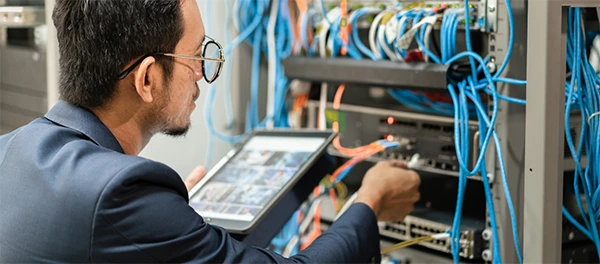
Most regulatory frameworks require organizations to protect information throughout its lifecycle, including disposal.
Healthcare entities must safeguard electronic protected health information. Organizations handling payment card data are expected to securely dispose of media. Companies operating under privacy regulations must ensure personal data cannot be reconstructed once it is no longer required.
Regulators routinely look for disposal practices during incident investigations, as improperly retired equipment can end up exposing the same confidential information as compromised live systems. As a result, documentation becomes as important as the technical process itself.
Asset inventories, serial number tracking, and certificates of sanitization or destruction serve as evidence that established procedures were followed.
Without them, organizations struggle to prove compliance during audits, insurance reviews, or customer assessments, even if the equipment was processed correctly.
Security teams routinely evaluate cloud providers, software vendors, and managed service partners before granting access to sensitive environments. The same scrutiny should apply to companies responsible for collecting and processing retired IT equipment.
Once hardware leaves an organization’s facility, responsibility for protecting the data does not disappear. Instead, it depends on controls maintained during transportation, processing, and downstream handling.
An experienced provider offering enterprise ITAD solutions extends security governance beyond the data center. This typically includes secure logistics, documented custody from pickup through final disposition, verified data sanitization or destruction, and reporting that can be retained for future review.
Vendor selection should therefore prioritize operational transparency instead of looking at price alone. Security and procurement teams must understand how assets are tracked during transit, where sanitization takes place, and what evidence will be present if questions arise later.
Fun Fact
For traditional magnetic Hard Disk Drives (HDDs), tech teams use a degausser, a machine that emits an immensely powerful magnetic field which instantly scrambles the magnetic domains of the disk, mixing the data so completely that it renders the disk permanently dead.
Organizations considering ITAD providers usually look for independent certifications as indicators of process maturity. One of the most widely recognized standards is R2v3, which states requirements for responsible electronics reuse and recycling.
It also covers data security, environmental controls, vendor management, and operational oversight through third-party audits.
Additional standards, such as ISO 9001 for quality management and ISO 14001 for environmental management, can provide further assurance that documented systems are in place and regularly reviewed.
Certifications do not eliminate risk on their own. They should be treated as supporting evidence that a provider’s processes have been evaluated against recognized benchmarks, rather than as guarantees.
IT asset disposition is often viewed purely as a compliance obligation or cost center. In practice, many enterprise assets retain measurable value after they leave production.
Servers, storage platforms, and specialized infrastructure continue to support secondary-market demand when they are professionally tested and sanitized.
A structured ITAD program allows organizations to recover value while also maintaining security controls.
Not every asset is meant to be reused. Devices containing confidential data or media that cannot be simply sanitized may require physical destruction. The right outcome precisely depends on the data classification, regulatory environment, storage technology, and organizational risk tolerance.

Organizations that manage IT asset disposition consistently tend to integrate it into the broader asset lifecycle rather than treating it as an end-of-life afterthought.
Effective programs typically include:
When procurement, security, infrastructure, compliance, and finance teams follow shared procedures, organizations gain greater visibility into hardware lifecycles and reduce friction during projects.
Organizations invest heavily in securing systems while they remain connected to the network. The same discipline should apply when those systems are retired.
A server removed from production may still hold the most sensitive data an organization owns. Without documented controls governing its final disposition, that hardware becomes an overlooked point of exposure.
Secure IT asset disposition must be treated as an integral part of a cybersecurity strategy instead of a logistics task. By combining verified data sanitization, documentation, compliance-focused reporting, and value recovery, organizations reduce risk considerably while also managing infrastructure transitions more effectively.
Q1) What do effective programs typically include?
Ans: Effective programs usually include:
Q2) What does the right outcome actually depend on?
Ans: The right outcome depends on the data classification, regulatory environment, storage technology, and organizational risk tolerance.
Q3) Which is the most widely recognized standard for verification of processes?
Ans: One of the most widely recognized standards is R2v3, which states requirements for responsible electronics reuse and recycling.
Q4) Why do regulators look for disposal practices?
Ans: Regulators routinely look for disposal practices during incident investigations, as improperly retired equipment can end up exposing the same private data as compromised live systems.
