
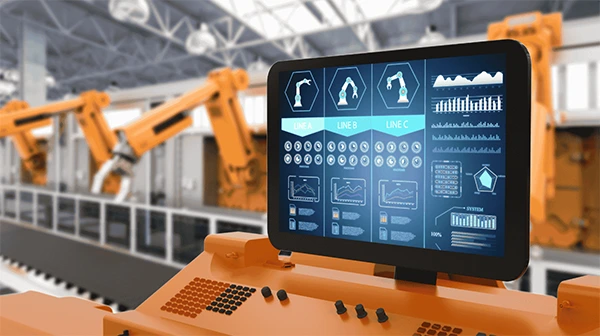
In today’s competitive industrial landscape, businesses look to enhance efficiency, safety, and productivity to remain successful. One of the most effective ways to achieve such goals is through process control system integration.
Companies display the value of expert control system integration by presenting tailored automation solutions for industries including manufacturing, food and beverage, and transportation. Their expertise helps in optimizing processes, improving machine safety, enhancing products, and more.
This article explains what control system integration is, the benefits of it, and in which practical scenarios these functions are used.
Key Takeaways
- Automating repetitive and complex tasks allows organizations to improve consistency and reduce downtime considerably, thereby enhancing overall production efficiency
- The goal is to make sure that all equipment, software, and processes work in sync while also supporting business objectives
- Automation helps maintain consistent operating conditions and process parameters. This advantage reduces regular variations in processes, resulting in higher-quality products
- By connecting every functionality into a single system, businesses can optimize performance and make smarter decisions
Industrial automation refers to the use of control systems, software, robotics, and communication technologies to maneuver equipment and processes with little to no human intervention.
By automating repetitive and complex tasks, organizations improve consistency and reduce downtime considerably, and enhance overall production efficiency.
Modern automation systems often include:
Together, these technologies create an environment that allows for real-time monitoring and consistent optimization of industrial operations.
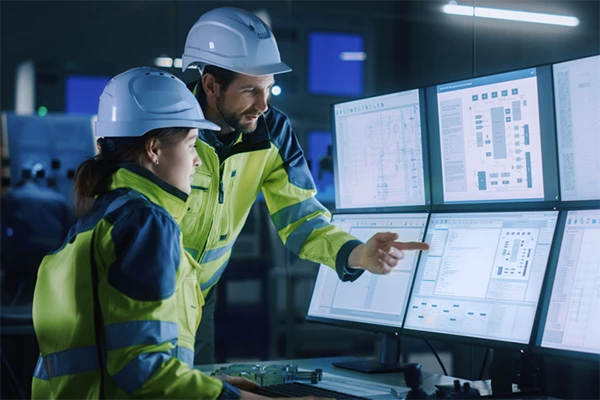
Control system integration is the process of connecting multiple components under a unified, reliable system. Instead of operating as isolated machines, integrated systems communicate smoothly, allowing data to flow seamlessly across the entire operation.
A control system integrator typically handles:
The goal is to make sure that all equipment, software, and processes work in sync while also supporting business objectives.
The following are the benefits of the integration of a process control system in an industrial setting:
Integrated control systems automate regular tasks, reduce manual changes, and streamline workflows. Operators gain better visibility into production processes, thus providing the option of faster decision-making and reducing downtime with it.
Automation helps maintain consistent operating conditions and process parameters. This advantage reduces regular variations in processes, resulting in higher-quality products and less of a lower chance of defects.
Machine safety systems, automated monitoring, and advanced control strategies help protect employees and equipment, as modern safety solutions are equipped with technology that can identify potential hazards before they go on to become serious incidents.
These safeguards can be strengthened with environmental health and safety management software, that helps teams manage risks, track incidents, and coordinate corrective actions across industrial operations.
Many facilities continue to depend on outdated systems that make it quite difficult to maintain and support. Integration projects include upgrading obsolete PLCs and SCADA platforms while minimizing disruption to production.
Integrated systems organize operational data from across the facility. Businesses can utilize this information to identify and get rid of bottlenecks, improve current strategies, optimize production schedules, and make better decisions.
Fun Fact
Unlike human operators, automated functions don’t fatigue and run flawlessly 24 hours a day, 7 days a week, keeping product quality completely uniform.
Here’s how these modern systems are applied across various industries:
Manufacturers utilize integrated automation systems to improve throughput and reduce waste consistently. Automated production lines operate with greater precision and reliability than manual processes.
The food and beverage industry relies on automated functions to enhance product quality, improve traceability, and ensure compliance across locations. Integrated control systems support everything from ingredient handling to packaging and distribution.
These organizations need highly controlled environments and validated processes. Automation helps ensure accuracy and repeatability throughout production operations.
Modern transportation systems depend on such modern functions for consistent monitoring, control, and operational efficiency. Integrated control platforms improve safety, communication, and system performance.
From theme parks to theatrical productions, automation systems enhance safety, reliability, and operational performance while creating engaging experiences for guests and audiences.
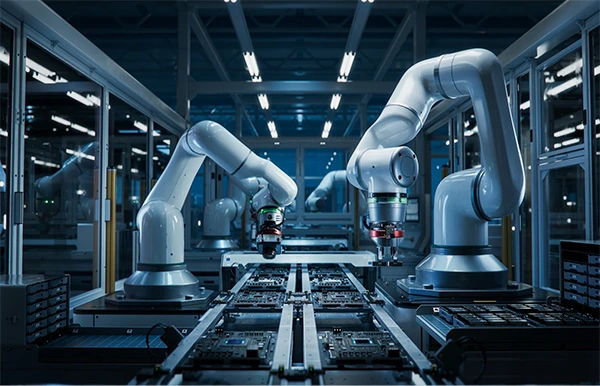
As industrial technologies continue to advance, automation is becoming increasingly intelligent and connected. Artificial intelligence, predictive analytics, IIoT devices, and cloud-based monitoring platforms are enabling businesses to gain deeper insights and achieve better efficiency.
Organizations that invest in modern control system integration position themselves to remain competitive, adaptable, and resilient in the future.
Industrial automation and control systems play a significant role in improving productivity, safety, quality, and profitability across multiple industries. By connecting every functionality into a single system, businesses can optimize performance and make smarter decisions.
Experienced integrators such as Pacific Blue Engineering help organizations successfully implement such technologies, modernize traditional infrastructure, and unlock the full potential of automation-driven operations.
Ans: Machine safety systems, automated monitoring, and advanced control strategies help protect employees and equipment, as modern safety solutions are equipped with technology that can identify potential hazards before an incident occurs.
Ans: A firm can improve its product quality by making use of modern systems that allow for automation and greater connectivity across workflows, thus improving all aspects of a business.
Ans: From theme parks to theatrical productions, automation systems enhance safety, reliability, and operational performance while creating engaging experiences for guests and audiences.
Ans: Yes, artificial intelligence, predictive analytics, IIoT devices, and cloud-based monitoring platforms are enabling businesses to gain deeper insights and achieve better efficiency.
