
The conversation around modern technology often revolves around software, artificial intelligence, and cloud computing. However, a vital piece of the puzzle is often overlooked and not talked about enough.
That part is the physical infrastructure that powers these digital advancements. But, as data centers expand and demand rises, centralized grids face a quiet crisis. To deal with such an issue, the world must fundamentally shift towards clean and decentralized energy, driven by systems that generate power directly where it is consumed.
This article discusses the drawbacks of centralized power and how software integration and smart microgrids can solve such issues.
Key Takeaways
- Centralized grids are often plagued by significant transmission losses, vulnerability to extreme weather, and an inability to scale with sudden technological advances
- Transitioning to decentralized networks helps limit vulnerabilities by segmenting risk and ensuring local resilience
- This combined usage of clean technology and smart software turns passive infrastructure into an active, self-optimizing asset
- Clean energy is a strategic financial advantage that directly creates an impact
For a long time, the standard model of electricity delivery has depended on massive, centralized power plants transmitting energy over large distances.
While this exact system fueled the industrial age, it’s increasingly become unsuitable for the modern digital economy.
Centralized grids are often plagued by significant transmission losses, vulnerability to extreme weather, and an inability to scale with sudden technological advances.
When a local grid fails, the domino effect can disrupt an entire supply chain, digital networks, and essential community services. Centralized systems create single points of failure.
If a major transmission line becomes unavailable due to a storm or an operational error, millions of people and countless businesses suffer and lose power immediately.
It is terrifying how quickly everything comes to a stop when the power cuts out. Transitioning to decentralized networks helps limit these vulnerabilities by segmenting risk and ensuring local resilience.
It’s about survival in a digital-first world.
Designing this new infrastructure requires deep knowledge and expertise in large-scale project execution and grid integration. This is precisely where independent power producers play a huge role in modernizing our energy landscape.
By developing, owning, and operating localized clean energy assets, such entities allow various businesses and municipalities to avoid the existing limitations of traditional utility providers.
These producers build solar arrays, battery storage systems, and microgrids that safeguard modern facilities from external grid volatility.
This advanced operational model transforms energy from a volatile operational expense into a stable, predictable utility resource.
Instead of simply waiting for public utilities to upgrade aging transmission lines, forward-thinking organizations are advancing and partnering with these producers to establish dedicated, on-site power generation, thereby meeting their specific capacity needs.
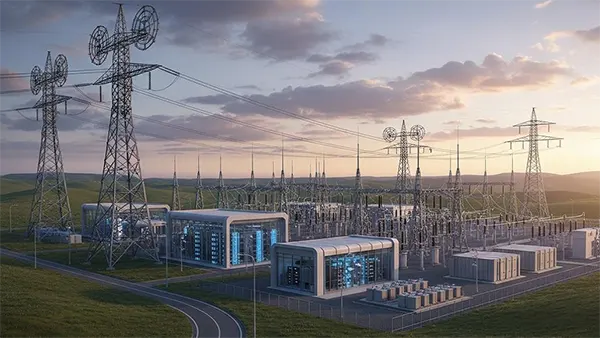
The true catalyst for this decentralized shift is the integration of intelligent software into physical energy assets. A modern solar array or battery installation is no longer just a collection of hardware.
It’s a sophisticated node on a digital network. Advanced energy management systems utilize predictive analysis methods to understand weather patterns, historical consumption rates, and real-time market pricing.
So, what happens when the software takes over the heavy lifting?
By processing this data, the system automatically learns to store power at appropriate timings, when to consume it, and when to feed excess electricity back into the grid.
This combined usage of clean technology and smart software turns passive infrastructure into an active, self-optimizing asset.
Technology companies are uniquely positioned to appreciate this evolution, as it showcases the shift from static on-premise servers to dynamic, software-defined cloud architecture.
And that’s the point. The grid is becoming code.
Fun Fact
Computing centers are utilizing Solid Oxide Fuel Cells (SOFCs) to convert chemical fuels into electricity directly without combustion, yielding energy efficiency and eliminating traditional grid fluctuation issues.
Resilience remains the primary driver for organizations looking to adopt localized energy solutions. Industrial facilities, research labs, and logistics hubs need completely uninterrupted power to function efficiently.
Even a minor voltage fluctuation can result in massive financial losses, equipment damage, and severe data corruption. I remember sitting in a server room a few years ago during a blackout, listening to the sudden, deafening silence of hardware failing, and the sheer panic that followed.
And that is a risk few can afford to take. Maybe none of us can anymore.
By making use of local clean energy generation paired with advanced battery storage, facilities can end up completely disconnecting from the main grid during periods of high-risk instability or expensive pricing.
This capability ensures that critical operations remain fully functional regardless of external grid conditions.
True reliability no longer comes from relying on a distant utility company. It comes from taking ownership of the generation process on-site.
Beyond operational security, the economic incentives of decentralized clean energy have become impossible to ignore. Historically, transitioning to renewable energy was viewed as a purely environmental decision, often requiring a financial sacrifice.
Today, the economics have entirely flipped. Localized generation allows organizations to avoid peak-demand charges, which are the premium rates utilities charge during periods of highest consumption.
But what if ‘cleaner’ also meant ‘significantly cheaper’?
By drawing power from local batteries during peak hours, operations lower their total expenditure considerably.
Clean energy is no longer just a far-fetched sustainability goal. It’s a strategic financial advantage that directly creates an impact.
Reducing carbon emissions has transformed from a corporate social responsibility checkbox into a core mechanism for cost reduction of operations.
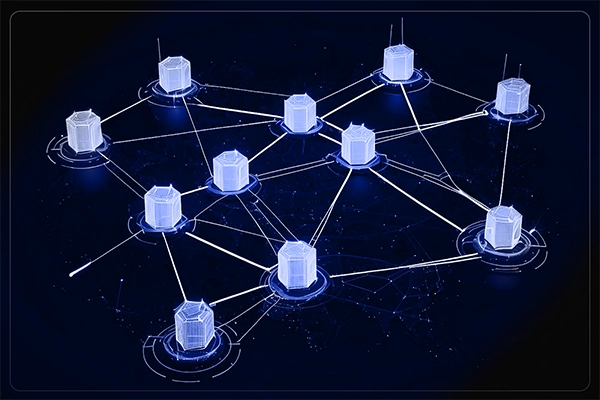
The transition to a decentralized energy model also introduces better predictability into long-term financial planning.
Traditional markets are extremely volatile, influenced by geopolitical tensions, supply chain disruption, and shifting regulatory guidelines.
When an organization depends entirely on the open power market, budgeting becomes an exercise in guesswork.
