
Have you noticed how fast remote work is evolving in engineering spaces? Modern development teams now work from different corners and time zones of the world. This practice is widely praised, but it often faces challenges that traditional offices rarely faced.
That is, the feedback is late due to the inefficient communication. The ODC environment moves fast and demands quick checks for the issues and repositories for a structured flow, but it becomes tough to achieve.
To overcome this, learn the best practices for remote code collaboration in ODC environments.
Key Takeaways
- In today’s modern development environment, remote work has become a standard for most of the technological brands.
- ODC environments demand structured workflows, managed time zones, and smooth communication to work properly.
- Considering the repository as a single source of truth can boost the consistency across teams.
Spreading work across an ODC offshore development center changes the surface area of almost every engineering ritual. Even a simple pull request can hop through three time zones before it lands in production. Latency is therefore not only about round-trip ping times; it is also the six-hour gap between question and answer when half the team is asleep.
GitLab’s 2025 DevSecOps Report confirms that professionals lose seven hours per week to inefficient processes and communication barriers. Every hour a message waits in limbo is potential idle WIP and a hidden risk.
When you layer contractual boundaries like those found in a build-operate-transfer model or the independence expected of a remote R&D hub, the frictions compound:
These frictions can’t be eliminated, but they can be aggressively minimized. The following practices are what high-performing teams inside an ODC offshore development center typically adopt within their first six months of operation.
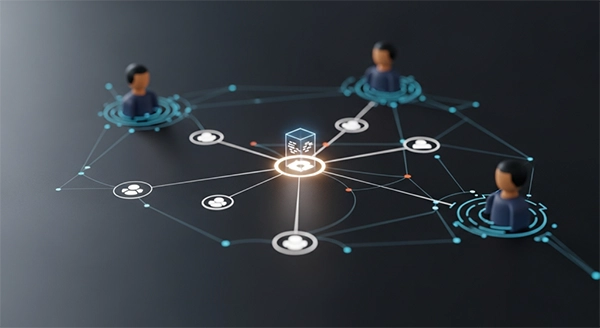
Before we dip into smaller practices, remember the core rule: the single origin of truth must be the repository itself. Once that social framework is in place, every team member, whether shared premises, part of a remote R&D hub, or working under a new build-operate-transfer model, knows where to go first.
Documentation debt is the silent assassin of distributed velocity. The fix is to store docs in the same repo, same branch, and under the same revision policy as the source. That means Markdown next to sections, quick-start notes under /docs, and ADRs (Architecture Decision Records) written in clear text that follow CI checks for broken links and typos.
Coupling docs to code also unlocks version-matched knowledge: checking out a previous tag reproduces both the implementation and the docs that were true at the time. No more sleuthing through wikis frozen in 2022.
Automated gates act as neutral referees; they never sleep, never take holidays, and immediately flag drift. A modern gate stack inside an ODC offshore development center usually includes:
Each time code uploads, tests trigger automatically, letting team members across global hours catch problems while it’s still day where they are. Once the checks clear, whoever reviews shifts attention to how things should work, not small formatting slips.
Most times, a pipeline run ought to wrap up in under ten minutes. Once it drags beyond, people lose focus, shifting attention elsewhere. The wait pulls apart how quickly they can respond.
Long feedback cycles are the kryptonite of distributed agility. Validation bottlenecks now cause nearly 30 percent of production merges to fail. That finding underlines a simple truth: the sooner peers review your code, the fewer bugs escape.
An ODC team rarely shares continuous overlap, so reviews must be designed for “read-once” clarity. Instead of embedding a rigid template block inside every pull request, leading teams use a lightweight checklist baked into their PR description guideline:
This short list replaces the wall of boilerplate and sends reviewers directly to what matters. Adding a “Focus Areas” field alone often slashes back-and-forth questions by half.
Between fully asynchronous reviews, sprinkle low-friction micro-syncs: fifteen-minute “review huddles” during the minor time-zone overlap many teams still possess. Record the call and post the link in the PR for anyone asleep at the time. That small hybrid tweak preserves deep-work blocks while recovering lost throughput.
Lengthy branches are magnets for merge hell. While GitFlow shines in monolithic release schedules, it is sub-optimal for a globally distributed cadence. Trunk-based development with feature flags is leaner because integration happens continuously, not once a fortnight.
Below is a quick comparison of branching schemes often considered by remote teams:
| Strategy | Typical Branch Lifetime | Merge Conflict Risk | Suits 24 h Dev Cycle? | Notes |
| GitFlow | 1-3 weeks | High | No | Heavy on ceremony; good for infrequent releases |
| Trunk-Based + Feature Flags | < 48 h | Low | Yes | Flags let you merge early and release later |
| Fork-and-PR | Variable | Medium | Partly | Works for open source, slower for internal use |
After selecting a strategy, use a two-lane review policy. The sprint lane helps low-risk changes (docs, tests, comments) auto-merge once the bots allow them. The full lane covers critical modules requiring two human reviewers and, optionally, a security sign-off. This asymmetric approach unclogs pipelines without compromising safety.
Remember to track the average “PR Lead Time” metric: the clock starts with the first commit and ends when the code reaches main. If that number creeps upward, revisit staffing on the geographies feeding the longer lane.
Security posture often slips when ownership spans multiple geographies and legal frameworks. A build-operate-transfer model adds a third-party layer until the operation flips in-house, confusing who holds the keys. Embedding security before committing neutralizes that complexity.
The industry learned the hard way that perimeter firewalls and last-mile scans are too late. Sonatype’s 2026 report suggests that over 454,000 new malicious open-source packages were issued in a single year. To lower that risk:
Once scanning baselines live in the repo, an ODC offshore development center can update policies without waiting on a distant infosec team or external vendor portal. After each merge, a bot posts the updated risk score to the team channel; transparency keeps everyone honest.
Copy-pasting .env files in Slack is a key sin. Secrets belong in an encrypted vault – HashiCorp Vault, AWS Secrets Manager, or Azure Key Vault – that allows for short-lived tokens and intricate audit logs. In practice:
In a remote R&D hub, the gain is dual: engineers never manage raw keys, and recall is fast if a laptop is lost.
Even flawless pipelines cannot salvage collaboration if humans feel isolated. Culture eats YAML for breakfast, so invest as seriously in rituals as in automation.
Real-time stand-ups break people’s sleep schedules. Adopt a “handoff.md” artifact that each time zone cohort updates at the day’s end. It captures the latest successful pipeline ID, remaining TODOs, and blockers needing async input. Team members in the next region pick up exactly where you left off, preventing duplicated effort and midnight pings.
Pair programming remains potent in distributed contexts. Use 30-minute “pairing clinics” twice a week, where a senior dev from headquarters co-drives with a colleague in the ODC offshore development center. Screen sharing plus quick editing promotes rapport and fosters knowledge flow – highly important if you need to convert the joint effort into a full build-operate-transfer model later.

Bug bashes, doc-thons, and refactor Fridays barely make the changelog pop on screen but exclude plenty of future issues. Pop open a shared Miro board where team members compose virtual kudos notes for whoever blocked unwanted flaky tests or cut 30 seconds off CI. This honor may feel casual, yet it supports a setting where engineers volunteer for low-profile glue work that keeps global interactions humming.
Operating an ODC offshore development center without performance indicators is like flying in fog. Publish a focused scoreboard pinned to Slack and refreshed daily so every developer sees leading indicators, not vanity stats.
Below is a quick cheat sheet of healthy target ranges:
| Metric | Target | Warning Zone |
| Merge Request Cycle Time | ≤ 24 h | > 48 h |
| Review Depth | 4-7 comments / 100 LOC | < 3 or > 12 |
| Rollback Frequency | < 2 per quarter | ≥ 1 per sprint |
| Bus-Factor (per module) | ≥ 3 active contributors | 1-2 only |
| Pipeline Success Rate | ≥ 90% green | < 80% |
Share these numbers in an always-visible dashboard; transparency inspires choice, and minor cuts signal swift action before they multiply.
Remote work is not just for comfort, but for more efficient work by providing the right environment. But for the engineering teams, making the right communication and instant review of the repositories in the ODC environments becomes a struggle. But with the help of strong development practices, teams can efficiently work together while reducing the common friction that comes across in the routine workflows.
At the end of the day, remote work is spreading widely and has become the reality of the modern world; hence, one needs to build smarter, faster, and better strategies to survive in such environments.
