
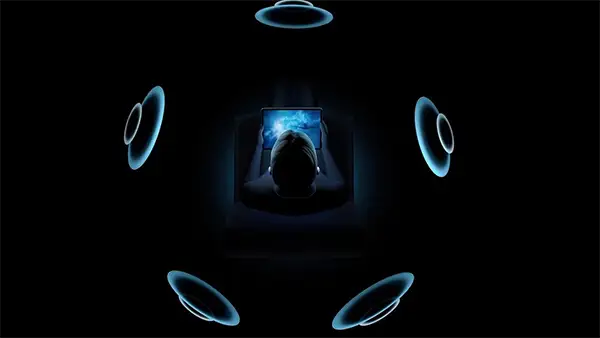
Immersive experiences aren’t just a technical upgrade. They reshape how we feel, navigate, and connect with distinct digital worlds. Binaural audio and spatial sound techniques are at the center of this shift.
These advancements enable creators to craft lifelike experiences, making them feel convincingly real through headphones alone. From virtual reality to cinematic gaming sequences, sound is no longer just a background score. It’s a guiding force.
Let’s understand how these techniques actually work and why developers and storytellers push forward such dynamic environments for audiences.
Key Takeaways
- Binaural recordings emphasize timing differences, frequency shifts, and HRTF functions.
- Spatial audio is making it possible for games to be enjoyed to their highest potential by allowing users to experience the environment the way it was meant to be felt.
- 3D sound design comprises HRTF modelling, ambisonics, object-based audio, and real-time rendering.
- The games and experiences that support these functions require input of specialised knowledge from the developers to be enabled.
Binaural audio essentially copies how human ears perceive sound. By capturing or simulating audio through two different channels, left and right, it creates depth, direction, and distance.
The obtained result is a three-dimensional soundscape that forces the brain into believing the sound is coming from specific points in space.
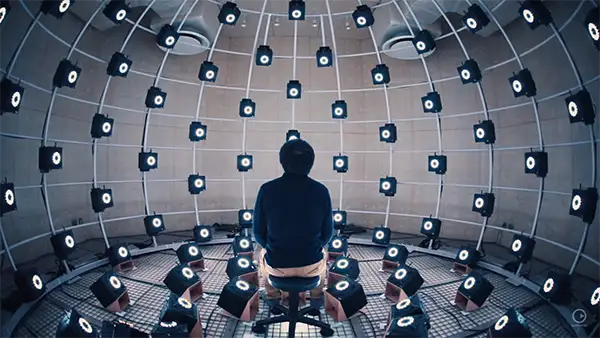
Unlike traditional audio, binaural recordings emphasize subtle timing differences, frequency shifts, and HRTF (Head-Related Transfer Functions) functions. These important components allow listeners to recognize the direction of the sound.
This realism is especially powerful in headphone-based experiences, where external noise is reduced, and spatial cues can fully thrive.

Virtual reality depends heavily on immersion, and audio plays a critical role in maintaining that illusion. Without accurate spatial sound, even the most visually stunning VR environments can feel flat or artificial.
In gaming, spatial audio enhances both storytelling and gameplay mechanics, as players mostly rely on sound cues to detect movement, anticipate potential threats, and navigate layered environments.
Whether it’s footsteps echoing in a long corridor or distant environmental effects, sound design directly impacts a player’s performance and emotional engagement.
Studios are increasingly investing in high-quality game sounds and music for video games to meet these expectations. Rich, spatially-aware audio assets help developers build believable virtual worlds that respond dynamically to player actions.
Creating immersive audio isn’t just about recording—it’s about how sound is processed and delivered. Several techniques are shaping the future of 3D sound:
These approaches allow developers to move beyond static soundtracks and create responsive audio ecosystems.
Fun Fact
While it feels like a modern tech trend, the concept of immersive sound dates back to 1940, with Walt Disney’s Fantasia. They developed “Fantasound”, an early surround sound system that used multiple audio channels.
As the techniques of storytelling transform across various platforms, sound has become a narrative tool rather than just an enhancement. Spatial audio can bring attention, build tension, and reveal story elements without relying too much on visuals to carry the scene.
For example, a subtle whisper behind the listener can invoke an uneasy feeling, while shifting environmental sounds can signal changes in mood or setting. This kind of audio-driven storytelling is particularly used in genres like horror, adventure, and narrative-driven games.
It also opens up accessibility opportunities. For visually impaired users, spatial audio can provide essential cues for navigation and interaction, making experiences more inclusive.
Despite its potential, implementing the same comes with a few challenges. It requires specialized knowledge, processing power, and careful integration with other systems like physics and animation.
But the opportunities often outweigh the hurdles. As hardware continues to improve and tools become even more accessible, more creators can experiment with an immersive sound design.
Game engines and audio software are already looking to incorporate spatial audio features in their setups, thus lowering the barrier of entry.
Looking ahead, we can expect tighter integration between audio and AI, more personalized sound experiences, and broader adoption across industries—from education to virtual events.
The move towards immersive audio isn’t just a trend. It’s a fundamental upgrade in how digital experiences are constructed. As audiences become more discerning, the demand for realism and engagement continues to rise.
Binaural audio and 3D sound techniques are helping reach those expectations, offering creators a better way to connect with users on a deeper level. Whether through subtle environmental cues or dramatic surround effects, sound is becoming one of the most powerful tools in the storytelling toolkit.
For developers, designers, and content creators, now is the time to rethink how audio fits into the experience—not as an afterthought, but as a core element of immersion.
