

Revenue forms the roots of every industry, whether it is manufacturing, food or wellness. The idea of revenue remains the centre of its growth.
The core reason why revenue holds such an important role is that it is how any industry grows: by providing finances, reciprocating the efforts of trainers with incentives and much more.
But in 2026, the idea of revenue is not just limited to mechanical models or investing in human resources; it has expanded to include technology as a multiplier of revenue.
This is because digital devices break the ceiling. For instance, investing in fitness app development services is not just a future; rather, it helps in the development of industries that wish to scale.
Check out this article to know more!
Key Takeaways
- The market opportunity is way larger than it appears for the health and wellness industry, with subscriptions leading the established path.
- Understanding what purpose-built fitness apps actually deliver to the people.
- Decoding the strategies to retain customers so that revenue builds up
- Not everything that appears free of cost is beneficial – explaining the off-the-shelf solutions that cost more than they appear.
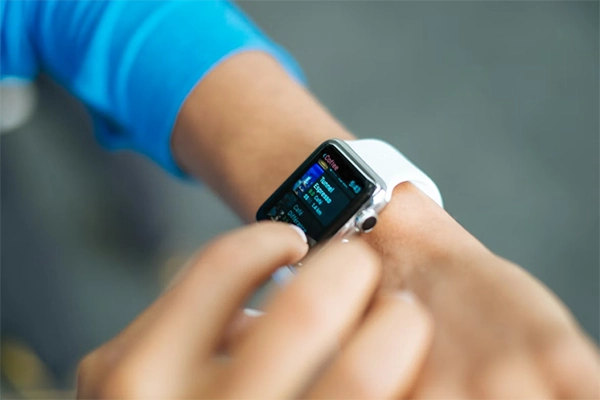
According to projections, the global fitness app market is expected to reach nearly $45 billion by 2035, with a current valuation of about $13.8 billion. Although raw market size provides helpful context, an owner’s internal model is more important.
With a steady monthly income, lower churn than one-time purchases, and a direct customer relationship that you truly own, subscriptions are the most well-established strategy, and for good reason. Subscriptions are just the start, though.
Corporate wellness contracts, tiered content libraries, in-app coaching, and branded training programs all become viable revenue streams once you have a product people return to consistently, which is why more businesses are examining how fitness apps help drive revenue in the digital health industry.
At scale, the economy changes dramatically. About 20 to 30 clients a week is the natural limit for a personal trainer working one-on-one.
That same trainer with a well-built fitness app faces no such constraint. The ceiling effectively disappears.
White-label fitness platforms initially appear appealing. minimal technical overhead, quick setup, and cheap admission fees. But the true cost usually shows up later and isn’t always apparent in a line item.
The user data on a white-label platform is not yours. The roadmap for the product is beyond your control.
When a feature your business needs doesn’t exist, you wait—or you work around it indefinitely. And every competitor using the same platform presents an experience nearly identical to yours.
One thing unites the companies that have truly thrived in this market, rather than just surviving: they created and possessed their own digital goods.
That’s not a coincidence. Owning your fitness app means owning the customer relationship, the data architecture, and the ability to respond quickly when market conditions change or user needs evolve.
Developing a single product that functions equally well for both complete beginners and competitive athletes is a challenge that US-based fitness platform Level Method faced.
Different goals, different available time, different thresholds for what counts as a challenging workout.
The team at Lampa.dev developed a mobile application with dynamic workout personalization at its core.
by length, level of difficulty, and intensity guarantees that no user gets a workout that isn’t appropriate for their current situation.
What was important was the business outcome: increased engagement, better retention, and a platform with real growth potential.
At launch, Level Method had scalable infrastructure. When the business plan is incorporated into the product from the beginning rather than being added as an afterthought, that is how fitness app development services appear.
Most conversations about fitness apps focus on user acquisition. How do you get people to download it? That’s the wrong first question.
Churn is what destroys fitness app businesses. Users sign up in January, engage for a few weeks, and quietly disappear. If your product doesn’t give people a compelling reason to return :
The monetization strategy has to be defined before development begins, not discovered afterwards.
What’s the pricing model—subscription, usage-based, tiered access? Is the target audience direct-to-consumer, business-to-business, or a hybrid of both?
These decisions directly shape the product architecture. Attempting to retrofit a revenue model onto an existing solution rarely works, and the cost of rebuilding is steep.
Custom fitness app development packages address this by treating the business model and the product design as inseparable from the beginning.
The businesses positioned to benefit from custom fitness app development aren’t limited to large, established brands.
Boutique studios with loyal local communities have existing audiences ready for a digital extension.
When their in-person schedule is full, independent coaches need to find a way to serve more clients without taking on more hours. HR departments at corporations are working hard to create organized wellness initiatives for remote workers.
Startups with a niche that are health-focused stand to benefit the most from a product that embodies their unique selling points.
The barrier to entry has come down substantially. You don’t need an in-house engineering team to build something serious.
What you require is a development partner who understands both the technical requirements and the underlying business, because a technically sound app that fails to retain users doesn’t generate a return on the investment.
Fitness apps are becoming table stakes for health and wellness businesses, following the same trajectory that websites once did for retail. Having one is no longer a competitive differentiator—not having one is increasingly a disadvantage.
At the niche level, there is still an opportunity. The market isn’t yet dominated in the majority of niche verticals, such as corporate health, sport-specific conditioning, recovery-focused wellness, or functional training.
It will be difficult to replace companies that invest in fitness app development services now and create products that are truly centered around their users and revenue model in three to five years.
That window is open. It won’t stay that way permanently.
Lampa.dev creates health and fitness applications that are meant to expand with your company, so it’s worth looking into sooner rather than later if you’re considering what a custom fitness product might look like for your brand.
Digital products can play a key role in escalating the revenue of the healthcare industry. Especially, apps such as step counters and heartbeat-detection watches can be key contributions in this field.
Therefore, it can be said undoubtedly that technology is a boon to the healthcare industry.
