
Homeowners want seating that is as beautiful as it is comfortable, and interior designers are challenged with an interesting question: How do you marry high-end aesthetics with true comfort and wellness features?
The conversation around traditional recliners and zero gravity massage chairs has moved far beyond basic upholstery options.
Today it sits at the intersection of health-conscious living, smart-home integration and sophisticated interior design.
Whether you are furnishing a dedicated home theatre or updating a family living room, the recliner you choose is a strong design statement and directly affects the daily comfort for everyone using it.
In this article, we will dive into the design differences between these two seating categories and how they function in today’s spaces.
We will discuss the aesthetic pros and cons of traditional recliners, the modern allure of zero gravity technology, and the practical realities that interior designers must consider when recommending luxury recliners to discerning clients.
We think of every angle, from material selection and spatial planning to massage functionality and ergonomic support, to help you make informed, design-forward decisions.
Key Takeaways
- Exploring the design evolution: traditional recliners vs zero-gravity massage chairs
- Understanding design integration for home theatre seating and beyond
- Analyzing functional features: massage, lumbar support, and comfort
- Assessing the practical solutions for interior designers: choosing the right recliner
The recliner has come a long way from its origins as a bulky, mechanically simple chair designed purely for leaning back in the early 20th century.
The traditional recliner was born out of a simple idea: to give people a comfortable place to relax after a long day. They were about plush cushioning, mechanical levers and familiar shapes that could blend into suburban living rooms.
Zero gravity massage chairs, however, came about through the merging of aerospace-inspired ergonomics with wellness technology, designed to distribute body weight evenly by lifting the legs to at or above the level of the heart.
These two categories now represent two fundamentally different approaches to what luxury recliners can be.
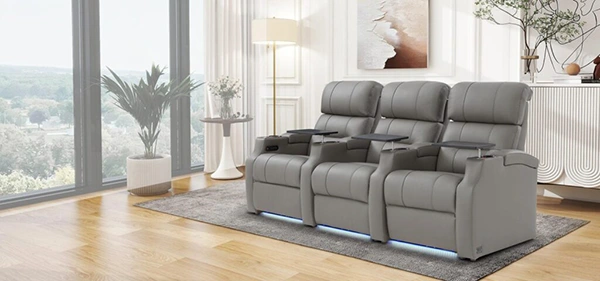
Traditional recliners have a warm, familiar feel, usually overstuffed, with wide armrests and generous proportions.
They are made of top grain leather, bonded leather, woven fabrics and microfibre, providing a broad range of colour and texture. Styles include tufted wingback designs ideal for transitional interiors, as well as streamlined wall-hugger styles that save space. However, their design constraints become obvious in contemporary situations.
Many classic recliners have a visual bulk that can overwhelm a minimalist or mid-century modern room. The footrest mechanism is exposed and can create crisp lines. The overall form factor can appear dated in comparison to more streamlined furniture.
If you are a designer working with limited urban space or a modern aesthetic these chairs can seem like a compromise: comfortable and aesthetically stiff.
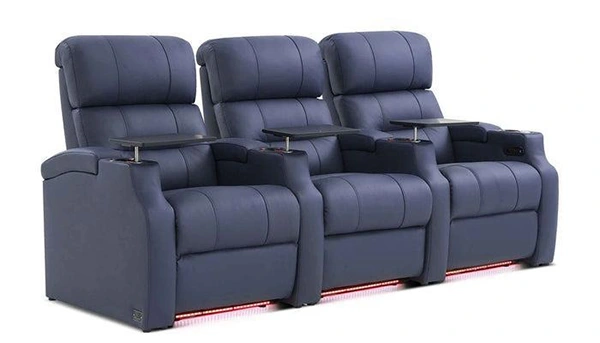
Zero gravity recliners are changing the way we look at what a recliner can be, in both appearance and feel. The zero gravity position, which is based on NASA’s neutral body posture, reclines the user into a weightless-feeling position that reduces spinal pressure and improves circulation. This useful innovation has created a parallel design revolution. Manufacturers like Weilianda are going with sculptural forms, sleek profiles and high-end materials such as synthetic leather with matte finishes and brushed-metal accents.
The result is a chair that reads more like a piece of modern furniture than a traditional lounger. For interior designers, the zero gravity recliner massage chair offers a compelling blend of health-forward engineering and contemporary visual appeal, making it a natural fit for spaces where form and function must coexist seamlessly.
Choosing the right recliner for a particular room is not just about picking a comfortable seat, it’s about a delicate balancing act between the chair’s aesthetic character and its surroundings.
Traditional recliner and zero gravity massage chairs can be home theatre seating or anchors in your living room, but require a different design approach. The secret ingredient lies in understanding how color, material, scale, and layout interact with existing décor to create a cohesive, inviting space.
Zero gravity massage chairs are better suited to a minimalist interior, characterised by neutral shades and clean geometry. Their sculptural silhouettes and clean profiles echo the restraint of modern design, particularly when covered in charcoal, matte black or warm taupe synthetic leathers.
Pairing one with a low-profile media console and recessed lighting creates a home theatre seating arrangement that feels intentional rather than cluttered.
For rustic or farmhouse-inspired rooms, traditional recliners hold a distinct advantage.
A distressed leather recliner with nailhead trim is nestled into the cosy media room, surrounded by reclaimed wood shelving and warm textiles. Transitional spaces can benefit both categories as long as the upholstery and finish complement the surrounding pieces.
Designers should consider how the recliner’s texture plays against other soft furnishings—a velvet zero gravity chair might echo a nearby sofa’s fabric, while a smooth leather traditional recliner could provide welcome contrast against woven throws and linen curtains.
Colour coordination is enormously important; pulling accent tones from artwork or rugs into the recliner’s upholstery ties the entire room together without making the chair feel like an afterthought.
Practical spatial realities often determine which recliner type works best.
Traditional recliners typically require significant clearance behind them to fully extend, sometimes needing twelve to eighteen inches of wall clearance.
Wall-hugger models reduce this footprint, but they still occupy more visual and physical space than many zero gravity alternatives. Zero gravity massage chairs, while compact in depth when upright, need generous room to recline into their full position—some extending nearly flat.
Designers should map the full range of motion for any recliner before committing to a layout.
In dedicated home theater rooms, staggered rows with tiered platforms can accommodate either type, but zero gravity chairs often work better on risers because their recline path stays more contained. In open-plan living areas, placement near walls or in defined seating zones prevents recliners from disrupting traffic flow.
Grouping two recliners with a shared side table creates a conversational arrangement that feels purposeful, while a single statement recliner angled toward a fireplace or screen becomes a natural focal point.
Always account for power cord routing if the chair requires electricity for massage or adjustment motors—exposed cables undermine even the most beautiful design.
Beyond visual appeal, the features that distinguish traditional recliners from zero gravity massage chairs center on what happens once you sit down.
For interior designers advising clients who prioritize wellness alongside aesthetics, understanding these functional differences is essential.
A massage recliner doesn’t just offer relaxation—it transforms a piece of furniture into a daily wellness tool. Meanwhile, traditional recliners rely solely on passive comfort from cushioning and recline angles. The gap between these two approaches has widened dramatically as massage technology has become more refined, quieter, and better integrated into sleek chair designs.
Knowing how these features work helps designers recommend pieces that satisfy both the body and the eye.
Today’s zero gravity massage chairs have multiple massage mechanisms working in combination.
Roller systems operate on tracks inside the backrest, mimicking the kneading, tapping and shiatsu motions of a professional masseuse. Higher end models have 3D or 4D rollers that move up and down and side to side, as well as change depth and speed to accommodate the user’s body contour.
The arms, legs, hips and shoulders are surrounded by airbag compression systems that apply rhythmic pressure to improve circulation and relieve muscle tension.
Built-in heat therapy elements in the lumbar region offer an additional therapeutic benefit without adding visual bulk to the outside of the chair. What’s of interest to design is how these technologies now integrate seamlessly into the shell of the chair.
Gone are the days of exposed mechanical parts or industrial-looking frames. The complexity is hidden inside the sophisticated, sculpted, smooth-upholstered forms of today’s massage recliners, so the sophistication inside does not detract from the sophistication outside.
A massage recliner that looks like a designer lounge chair removes the awkwardness of overtly medical-looking equipment in a social space for the client who entertains often.
Lumbar support represents one of the most critical recliner features for long-term comfort and spinal health.
Most recliners have built-in lumbar padding, which is great for sitting for short periods of time, but can be less than ideal for long periods of time. Over time, the padding becomes compressed and loses its supportive shape.
Zero gravity massage chairs solve this problem with adjustable lumbar mechanisms that conform to individual body shapes, sometimes automatically, with body-scanning technology mapping the user’s spine before calibrating support.
Reclining angles also differentiate the two categories. Traditional designs usually have only two or three fixed positions.
Zero gravity chairs can be infinitely adjusted between upright and fully reclined, so users can find their exact comfort sweet spot. The adjustability also makes the chair attractive to designers as it can fulfil many functions during the day – upright for reading or conversation, partially reclined for watching a film and fully reclined for restorative rest.
Premium models improve the ergonomic package with a footrest extension, headrest tilt and armrest height adjustments.
This versatility means that, from a design perspective, one chair can replace what could have been many seating pieces, making a room’s furniture plan simpler and offering better comfort. The outcome is a cleaner design that does not compromise on the personalised support clients are increasingly demanding from luxury recliners.
To find out which is best for you, traditional recliner or zero gravity massage chair, you’ll need a structured approach, as each client has a unique blend of aesthetic preferences, wellness priorities, and spatial constraints.
Interior designers who create a reliable selection framework can confidently steer their clients to luxury recliners that enhance the look and liveability of a space. The goal is not to fall into one category or the other, it is to match the right chair to the right context every time.
Start by assessing the room’s primary function.
A dedicated home theater seating environment calls for different considerations than a multifunctional living room where the recliner must coexist with dining areas or workspaces.
Next, evaluate the client’s health and comfort needs. Clients dealing with chronic back pain, poor circulation, or high stress levels will benefit significantly from zero gravity massage chairs with adjustable lumbar support and built-in massage programs.
Those seeking straightforward relaxation without therapeutic features may find a well-crafted traditional recliner perfectly sufficient.
Third, measure the available space meticulously—not just the chair’s footprint when upright, but its full recline envelope, including clearance for wall proximity and foot traffic.
Fourth, align the chair’s visual identity with the room’s design language by requesting material samples and reviewing the chair in context against mood boards or 3D renderings.
Finally, confirm practical logistics: power source availability for motorized models, ease of maintenance for chosen upholstery materials, and warranty coverage that protects the client’s investment. Working through these criteria in sequence prevents costly mismatches and builds client confidence in the recommendation.
When it comes to giving clients recliner options, context is key.
Rather than presenting chairs on their own, put them into rendered room scenes or curated flat lays with surrounding furniture, lighting and accessories.
This allows clients to see how the sculptural form of a zero gravity massage chair might fit into a contemporary media wall or how the rich leather of a traditional recliner can anchor a classic study. To achieve a cohesive look, match the material and colour of the recliner to at least two other elements in the room (rug, a set of throw pillows, or a piece of accent furniture).
For projects with multiple recliners, such as paired seating or theatre rows, order samples ahead of time to guarantee colour consistency across the units.
And get ahead of the game in terms of long-term satisfaction by discussing upholstery care routines with clients and recommending chairs from manufacturers such as Weilianda, known for durable construction and responsive service.
Designers who make the choice of a recliner an integrated design decision, not an afterthought, consistently create spaces that feel polished and deeply comfortable, and they get repeat business and referrals from clients who appreciate that level of thoughtfulness.
At the end of the day, the question of traditional recliners vs zero gravity massage chairs is a contextual one — there is no one size fits all, just the one that fits the space, the client and the lifestyle.
Warmth, familiarity, and versatile material choices make traditional recliners the perfect anchor for classic, rustic, and transitional interiors, bringing with them an effortless charm.
Zero gravity massage chairs counter with sculptural modern aesthetics, advanced wellness technology and adaptive ergonomic support that resonates with health-conscious homeowners and contemporary design sensibilities.
The real opportunity for interior designers is to treat this decision as a process integrated into design and not a binary choice.
By carefully evaluating room purpose, spatial constraints, client health needs, and visual aesthetics, designers can recommend luxury recliners that complement and enrich any space, from snug reading nooks to immersive home theatre seating setups.
The lines between traditional recliners and massage chairs will continue to blur as wellness-driven design gains momentum and smart home technology becomes standard.
And manufacturers are already rolling out hybrid models that combine the heritage styling with built-in massage systems and zero gravity recline.
The designers who are ahead of these trends and understand the functional depth behind each category will always deliver spaces that clients love living in for years to come.
Traditional recliners offer timeless comfort and blend easily with most home décor styles.
Zero gravity massage chairs have advanced relaxation features and a more modern, high-tech look.
Massage chairs are more about wellness and body support. Recliners are good for everyday seating. The best choice depends on whether you value classic design flexibility or a luxury relaxation experience.
