
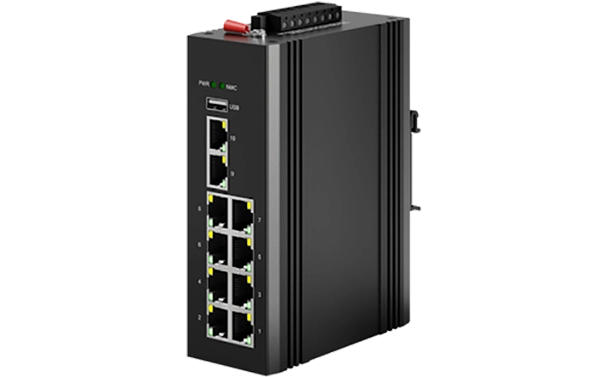
Gone are the days when industrial equipment and machines were restricted to certain movements and environments. Today, there is a great demand for devices that work perfectly in any work setting.
Furthermore, an industry requires a device that performs well even in rugged conditions with high temperatures, while also maintaining a consistent power supply. This is why an industrial switch is used.
This guide explains how the industrial switch functions in an industrial environment and why it is ideal and beneficial for these places.
Key Takeaways
- Working of the Industrial Switch system
- Why the industrial switch is ideal for factory work
- Benefits of industrial switches
- Applications of industrial switches in multiple industries
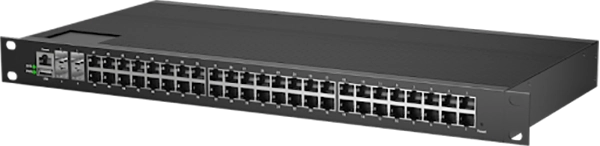
Industrial switches are networking devices that allow devices to collaborate seamlessly within a ruggedised setting. Without internal fans, these switches prevent dust and metal fillings from getting into the unit.
Although versatile, the industrial switch primarily joins Programmable Logic Controllers (PLCs), Human-Machine Interfaces (HMIs), and robotic sensors into a collaborative network. This environment doesn’t have the slightest capacity to tolerate latency, as it sees it as a major risk.
As an example, if there is a digital safety signal on the road and it stop for a few seconds then it could result in a bigger congestion or worse, an injury. This is why engineers have carefully constructed these switches to make sure they avoid interruptions and delays and stay consistent.
Industrial switches are crucial in many industries as they provide multiple benefits in whichever field they are used in.
The typical factory floor setting tends to have ambient temperatures that standard networking hardware can hardly withstand. Sophisticated pieces of industrial devices usually throttle or fail completely in these environments. Meanwhile, industry veterans rate industrial switches highly for how well they operate in extreme temperatures ranging from -40°C to +75°C.
Factory floors can be some of the most intense environments, even for machines. To illustrate, having heavy machinery, variable frequency drives, and high-voltage cabling in the same setting creates an atmosphere of intense electromagnetic disturbance. In the intense conditions of these environments, commercial switches suffer from packet loss.
So, industrial switches are used for work in these intense conditions. They are fabricated with superior shielding and tested against inflexible Electromagnetic Compatibility (EMC) standards before they get into the market.
Their metal chassis protects the internal linings from the noise of nearby motors. This protection from nearby interference keeps the data stream clean while ensuring uninterrupted communication between crucial devices.
Fun Fact
Industrial switches are known for their extreme survivability, as they can operate even in -40 celsius to 85 degree celsius temperatures, making them ideal for working in Arctic and desert conditions.
Factories don’t usually have a stable power supply; voltage spikes and power surges are quite common, so only industrial switches are efficient in these situations, as they contain dual-redundant power inputs.
Industrial switches are usually powered by the standard 24V DC, which allows them to easily integrate directly into the PLC power circuit. If the main power supply fails, the industrial switch automatically transitions to the backup power supply with ease.
They also come with advanced surge protection capabilities that prevent a major power surge from frying the networking framework.
The frequent vibration or sudden shock of a surrounding heavy-duty movement can disconnect cables in standard factory hardware. Industrial switches come with mechanical reinforcement that resists these shocks.
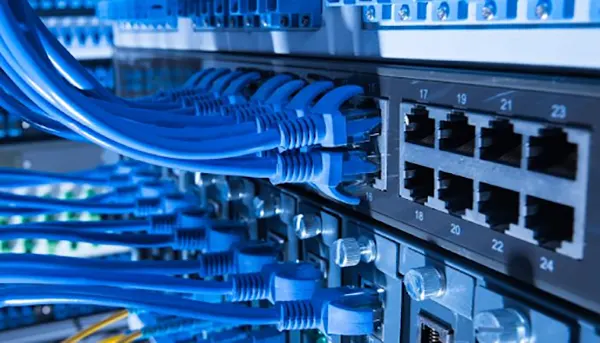
Industrial switches are extremely useful and dynamic devices used across various sectors. Each field utilises specific features of the hardware for various projects:
At the end of the day, every factory manager or director wants to run a fully connected work environment. Achieving this goal has much to do with how they perceive networking. Industrial switches are integral pieces of the entire production equipment. These devices make sure that the interaction between organisational technologies remains fluid by providing immunity to electromagnetic noise and battling through extreme temperatures.
When you compare the advantages of installation to the work loss in one hour of downtime, you get to know the considerable losses and realise why these switches make the most sense.
Physical hardware carrying data must be as formidable as the devices they control in these modern times. It is no coincidence that only hardware built for this responsibility is reliable enough to sustain the future of manufacturing.
Ans: It is a high-performance networking device used mostly in factories and rugged conditions where conditions are not favourable for regular devices.
Ans: The following are the benefits of an industrial switch:
Ans: Industrial switches can be used in industries which require real-time data transfer, even in bad conditions, such as Oil and Gas, automotive assembly, water and wastewater
Ans: Industrial switches do not take a lot of time and start up pretty quickly on first connection.
