
Management of payroll in the hospitality industry is quite tricky as it presents unique challenges that standard payroll systems often fail to address.
Between tracking tips, managing shift differentials, handling employee turnover, and ensuring compliance in multiple locations, such hotel and restaurant operators need customised tools built for their specific needs.
This guide lets you in on the best hospitality payroll solutions available and what features to look for in this software that assist you in enhancing your operational efficiency.
Key Takeaways
- Streamlined process with the Hybrid Payroll software
- Automation of tasks with the use of AI tools in FactoHR
- Multi-location management and a developed infrastructure solution with Yomly
- Broader application and dynamic processes using Kronos Workforce Ready
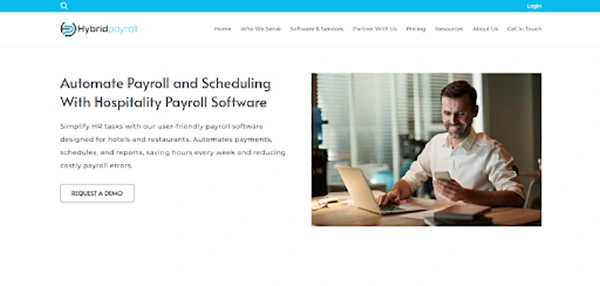
Hybrid Payroll specializes in serving the hospitality industry with features designed for businesses managing hourly workers, tipped employees, and seasonal staff. The platform handles complex wage calculations that restaurants, hotels, and other hospitality businesses deal with regularly.
You get integrated time tracking and scheduling tools that sync directly with payroll processing. This reduces manual data entry and helps prevent errors when calculating hours worked across multiple shifts and locations.
The software features compliance management options made specifically in accordance with hospitality regulations. You can track tip reporting, manage different pay rates for various positions, and handle multi-location payroll requirements.
Hybrid Payroll offers POS integration capabilities that allow tip data to flow directly into payroll calculations. This streamlines the process for businesses with tipped staff and ensures accurate reporting.
Additionally, the platform also provides employee self-service features where the staff can access pay stubs, tax documents, and update personal info. This reduces administrative workload for your HR team.
You’ll find support for managing high turnover rates common in hospitality, with onboarding tools and automated tax form processing for new hires.
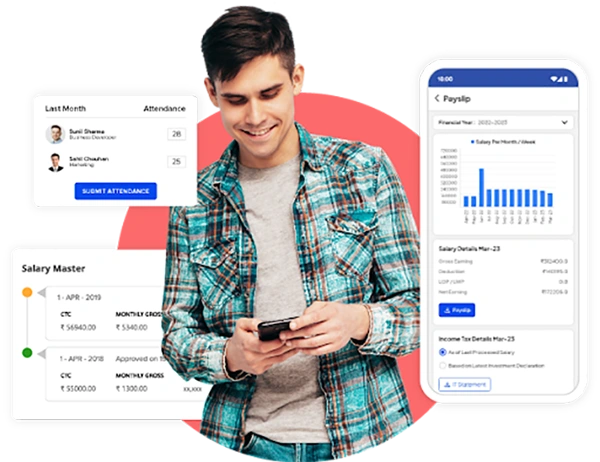
FactoHR is an AI-powered, cloud-based HR and payroll platform designed to automate workforce management tasks. The software centralizes employee data, attendance tracking, payroll processing, performance management, and recruitment within a single system.
For hospitality businesses, FactoHR offers specific features that address industry challenges. You can transition from manual timecards to automated attendance capture using integrated devices.
The platform allows the admins to define attendance rules and customise leave management policies that align with the company’s operational needs.
The payroll module syncs attendance data directly with payroll calculations to reduce errors. This integration eliminates manual data entry and improves accuracy when processing payments for diverse staff types.
You can manage hourly workers, tipped employees, and salaried managers through the same system.
FactoHR’s database management capabilities help you maintain employee records efficiently.
Their mobile app extends its functionality, enabling people to manage workforce information from anywhere. The platform aims to streamline HR processes from hiring through employee retirement, providing tools for the complete employment lifecycle.
Did You Know?
These systems automatically update themselves with changing tax laws, helping hospitality businesses avoid penalties.
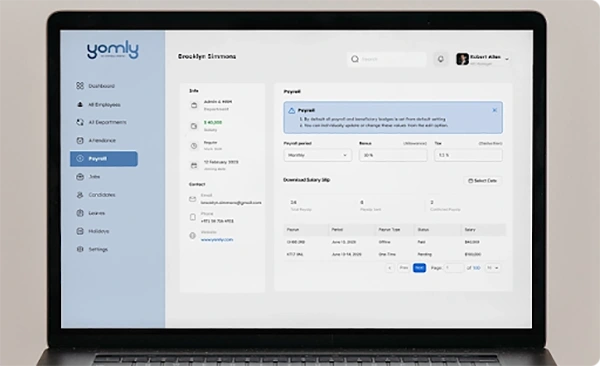
Yomly specializes in payroll management for larger hospitality operations with 200 or more employees. The platform is designed specifically for hotel groups, restaurant chains, and multi-location hospitality businesses that process complex payroll requirements each month.
The software handles the unique challenges hospitality businesses face, including managing shift differentials, tip tracking, and varying pay structures across different departments.
Payroll processing for front desk staff, management teams, housekeeping, and food service can all be done from the same system.
Yomly supports multi-location management, which is valuable if you operate several properties or restaurant locations. The platform consolidates payroll data across your different sites while maintaining compliance with local wage laws and regulations.
The system integrates with time tracking and scheduling tools commonly used in hospitality settings. These features assist in reducing manual data entries and minimizing payroll errors that occur when information is transferred within systems.
This helps reduce manual data entry and minimizes payroll errors that can occur when transferring information between systems.
If you run a large hospitality business with complex payroll needs across multiple locations, Yomly offers the infrastructure to handle these requirements. The platform focuses on the specific workflows and compliance demands that come with managing hospitality payroll at scale.
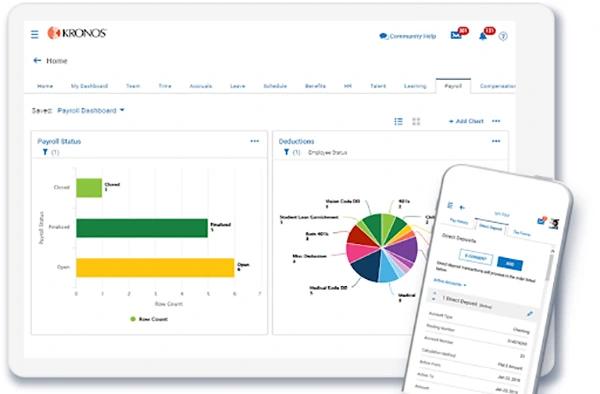
Kronos Workforce Ready is designed for mid-sized to large hospitality enterprises, particularly those managing over 1,000 employees. The platform handles the complex workforce management needs common in hotels, resorts, and large restaurant groups.
You can manage scheduling, time tracking, and payroll processing within a single system. This integration helps reduce administrative overhead when coordinating across multiple locations or departments.
The software addresses specific hospitality challenges like vacation and sick leave management, remote work tracking, and coordination across dispersed teams. Kronos maintains compliance tracking features to help you stay aligned with labor laws and wage requirements.
The platform serves various industries beyond hospitality, including healthcare, manufacturing, and retail. This wide application means the system offers robust features, though some functionalities may extend beyond what is needed in smaller hospitality operations.
Kronos Workforce Ready provides tools for managing dynamic workforces with varying schedules and compliance requirements. You can automate routine payroll tasks while maintaining oversight of labor costs and staffing levels across your organization.
Hospitality payroll systems need to handle tipped wages, rotating shifts, multiple locations, and complex labor compliance requirements that standard payroll platforms often can’t manage.
The right software should automate tax calculations, sync with your scheduling tools, give employees direct access to their information, and scale across multiple properties.
Your payroll software should include the functionality to calculate federal, state, and local taxes for every jurisdiction where you operate.
This includes handling tip credit calculations, minimum wage requirements that vary by location, and overtime rules specific to hospitality workers.
The system should track and report FICA tip credits, which can significantly reduce your tax burden. It needs to manage tip pooling arrangements and ensure they comply with current Department of Labor regulations.
Key compliance features include:
The violations of labor law result in significant penalties. Your software should flag potential compliance issues before they become problems, such as employees approaching overtime thresholds or working without required breaks.
Direct integration with your scheduling system eliminates double data entry and reduces payroll errors. When your roster and payroll sync automatically, approved hours flow directly into payroll calculations without manual input.
The integration should capture shift differentials, which are common in hospitality when employees work nights, weekends, or holidays. It needs to handle multiple pay rates for employees who work different roles during the same pay period.
Real-time data synchronization ensures that last-minute schedule changes appear in payroll immediately. This matters when managers adjust shifts or employees swap schedules through your scheduling platform.
Look for systems that validate timesheet data against scheduled hours and flag discrepancies. The software should also accommodate clock-in/clock-out functionality through POS systems or mobile devices that your staff already use.
Self-service portals let your employees access pay stubs, tax forms, and update personal information without contacting HR or management. This reduces administrative workload and gives staff immediate access to their payroll information.
Employees should be able to view their current and historical pay information, download W-2s and other tax documents, and adjust their withholdings. Mobile accessibility is essential since hospitality workers often don’t have regular access to desktop computers.
The portal must support direct deposit management so that payments can be split between the accounts of employees or any updates to banking information. Some systems also allow staff to access earned wages before payday, which can improve retention in an industry with high turnover.
Clear visibility into tip earnings, hours worked across different roles, and accrued paid time off helps employees understand their compensation. This transparency reduces payroll-related questions and disputes.
Managing a payroll system across various locations requires a centralized overview with location-specific controls.
Your system should let you process payroll for all properties while maintaining separate reporting for each location’s labor costs and compliance requirements.
The software must handle employees who work at multiple properties during the same pay period. It should automatically apply the correct tax rates, minimum wages, and overtime rules based on where the employee worked each shift.
Essential multi-property capabilities:
You need permission controls that let property managers access their location’s data while corporate administrators maintain system-wide visibility. The software should consolidate reporting so you can compare labor costs, productivity metrics, and compliance across your entire portfolio from a single dashboard.
Selecting the right payroll software for your hospitality business requires careful evaluation of your specific operational needs. You need a system that handles the unique complexities of your industry, from tip tracking and shift differentials to multi-location management and high employee turnover.
The platforms covered in this guide offer different strengths. Some excel at POS integration and tip management, while others prioritize robust scheduling features or comprehensive compliance tools. Your choice should align with your business size, budget, and the specific challenges you face daily.
You should make use of free trials whenever offered. Testing this software with your team members reveals limitations that product demos might not show. Pay attention to how intuitive the interface is for employees with varying technical skills.
Your payroll system becomes the backbone of employee satisfaction and operational efficiency. The right choice reduces administrative burden, minimizes errors, and ensures your staff gets paid accurately and on time. Focus on finding software that scales with your growth and adapts to regulatory changes without requiring constant manual adjustments.
Ans: The following are the important features to have in a custom payroll software;
Ans: Hybrid payroll custom hospitality payroll software provides a streamlined process, optimizing the administrative workflow of the team.
Ans: It means that all the tax filing and payments with the wage and hour law adherence should be automatically performed and taken care of by hospitality payroll management software.
Ans: The Kronos Workforce Ready platform supports the healthcare and retail industry, along with the hospitality industry as well.
