
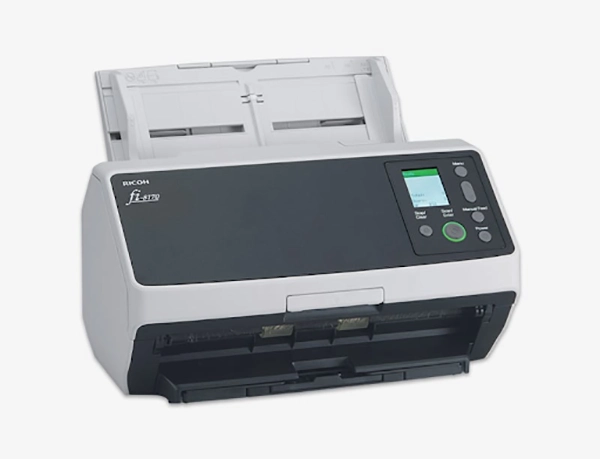
Modern workplaces still have a lot of paper documents, which are used in offices for documentation and other tasks. To ensure all processes run smoothly, companies require the use of document scanners that ensure speed and reliability.
Furthermore, this technology isn’t limited to only big companies; firms of all sizes can use these advanced scanners to create digital copies of their documents and focus on digitization.
This guide outlines how these advanced document scanners use new scanning technology to enhance productivity and integrate into the workflows of the business while also ensuring reliability
Key Takeaways
- Understanding the technology used in high-speed scanners
- How performance is maintained for the long term
- Why each component is crucial for the correct functioning of advanced document scanners
- Integration of high-speed scanners in modern business workflows
Poorly scanned files result in many errors, which slow down other business processes; this is not acceptable in modern businesses.
Hence, advanced scanners now include precision-improving optics and intelligent image processing features, which ensure these types of bottlenecks never occur.
Similarly, high-resolution imaging makes sure that all signatures, barcodes, and other small texts are perfectly readable. This is vital for the healthcare and legal services industries, where accuracy is paramount.
Therefore, using a professional-grade high speed scanner allows large processing of data without a drop in image quality.
Also, features such as auto colour detection, blank page removal, and more minimize the need for manual changes, overall reducing the need for a chance of rescanning the whole document again.
Optical Character Recognition (OCR) capabilities also play a key role. When text is accurately captured and converted into searchable data, documents become easier to organize and retrieve. This functionality transforms static files into accessible digital assets that support compliance, reporting, and collaboration.
Maintaining uniformity amongst different batches is extremely important, as when thousands of pages are being scanned, the contrast, alignment, and brightness should remain the same, ensuring that professionalism is kept and documents stay organized.
Fun Fact
Early scanners could only read 8-bit, but modern scanners are capable of reading 16-bit, meaning that they detect over 60,000 shades of gray, a lot more than what we can distinguish!

Performance is not just about speed. It is about endurance. Organizations that process documents daily require hardware capable of handling heavy workloads without frequent maintenance interruptions.
This is why high-quality scanners contain various performance-enhancing components like durable internal mechanisms, fortified feed rollers, and intelligent paper handling systems.
As a result, the chances of jams or misfeeds are reduced significantly, which helps departments steer clear of long delays and downtimes.
So, departments that deal with heavy documentation invest in these specialized production scanners as they provide the throughput needed for long term sustained performance.
Automatic document feeders with high page capacities further enhance efficiency. Instead of manually loading each sheet, users can process stacks of paperwork in one continuous operation. This feature is particularly valuable in centralized scanning operations, records management departments, and service bureaus.
Additionally, cost efficiency is also ensured as durable equipment means less need for repairs and replacements, which protects budgets of the firm. When the technology is made with keeping long term performance in mind, then businesses gain confidence in their infrastructure too.
Ultimately, advanced document scanners are designed to support modern workflows with speed, clarity, and durability. By combining high-quality imaging with robust engineering, these solutions empower organizations to digitize efficiently and maintain dependable operations. In fast-moving environments, that level of performance is not just beneficial. It is essential for sustained productivity and growth.
Ans: Advanced scanners are made with keeping long term performance in mind and have highly durable components and intelligent imaging components, providing confidence to businesses that use them.
Ans: Optical character recognition plays a vital role as it captures text perfectly and converts it into searchable data, which makes documents easier to organize, classify, and retrieve.
Ans: These industries involve precision in their work, with every small value change that could mean a big difference in the whole workflow. This is why high-quality imaging is vital for their proper functioning.
Ans: Maintaining consistency among thousands of documents ensures professionalism is maintained and all documents are organized properly, so all documents must have the same level of brightness, contrast, and alignment.
