
Every brand must know all about its market and its potential customers; the only way they can accomplish that is by implementing thorough market research techniques.
This is why successful furniture companies apply these market analysis methods to understand their customer’s needs and target demographic, which helps them compete globally and respond to an ever changing consumer environment by using these techniques.
This guide covers all the methods your furniture brand needs to understand the marketplace, ensure an advantage over your competitors, and establish long-term growth for your firm.
Key Takeaways
- Importance of accepting feedback from customers
- Understanding the market and conducting trend analysis
- Conducting in-depth interviews with customers
- Turning insights into real growth

Surveys are a scalable, cost-effective way for furniture brands to gather structured feedback from many different types of customers.
Moreover, they give companies quantitative data on their customers’ preferences, satisfaction levels, and unmet needs. They may be sent after a purchase (post-purchase follow-up), after an online interaction, or at retail locations.
As a result, brand surveys can validate product, design, and pricing decisions. They provide brands with the means of monitoring customer attitudes and perceptions over time and identifying new trends. Surveys also provide brands with ongoing competitive intelligence, helping them assess how their brand is performing and developing. Surveys can be used to consistently monitor customer trends and brand performance as opposed to using event-based methods.
Qualitative research uncovers consumers’ inner thoughts and feelings regarding furniture purchases. Qualitative research projects use methods such as in-depth interviews and focus groups and thus are less representative, but provide more detail about how individuals think and feel about the decisions that go into the purchase of furniture.
Customer interviews and group conversations reveal how customers perceive style, comfort, materials, sustainability, and brand values, understand the motivation behind purchasing and what hesitations customers may have about committing to a purchase, as well as where customers will be flexible or have some compromises in their purchases; additionally, many customers have specific lifestyle, personal identity or family connection to a particular piece of furniture that influences their purchasing decision.
The insights gleaned from gathering these verbal customer need statements are extremely important to furniture brands internally as input for producing a more authentic voice for their brands through storytelling efforts, as well as to inform product development to better fit consumer needs.
Did You Know?
The earliest form of “market research” dates back to 4200 B.C, where cave paintings were used to show others the benefits of using tools like a spear for survival.
Furniture brands gain insights about their industry through market and trend analysis, which refers primarily to how brands currently engage with customers, but also how brands can obtain better insight into the market and gain insights about how the brand can sell products or services through various methods of engagement with their market.
Urbanization, remote working, and e-commerce trends are some of the macro offshoots of the market and trend analysis process.
Additionally, brands can predict demand based on market size, growth patterns, consumer demographic data, and new design preferences. Brands that provide market research services take advantage of industry reports, consumer data, and predictive modeling to determine where the market is headed and which opportunities are worth pursuing. Market Research allows a brand to be better prepared for future growth, motivated by long-term strategies, investment options, and future portfolio expansion.
Customer experience greatly drives furniture sales. In both brick-and-mortar and online sales channels, usability & experience testing analyzes how consumers interact with all types of customer-facing touchpoints or “journeys.”
Hence, even the smallest amount of friction (e.g., poor site navigation, lack of clear product information, long checkout process) can lead to lower conversion rates.
Market research services employ many different methods in order to identify and map consumer experiences to recognize both barriers and possible areas of growth within the customer experience journey. By addressing these touchpoints, furniture companies have the opportunity to improve engagement, increase brand loyalty, minimize cart abandonment, and ultimately drive increased revenue through higher sales.
The market research process can be understood better by this illustration:
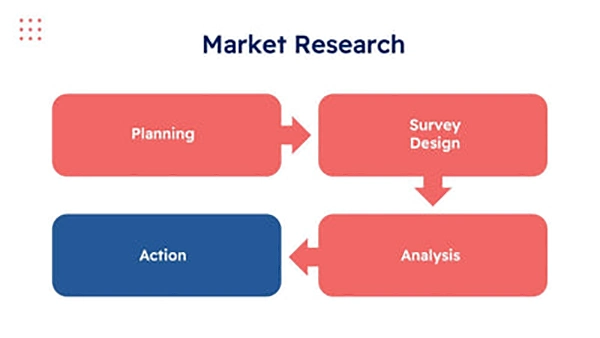
Market research services help furniture brands minimize risk, enhance decision-making, and develop products and experiences that truly reflect their customers’ desires. Due to rapidly changing trends in the furniture market and aggressive competition, brands must implement insight-focused strategies to grow sustainably.
Ans: Market research is vital for a company’s growth as it helps the brand understand potential customers and their needs, pain points, and what they require in a product.
Ans: Ans: The following are the market analysis methods a brand should apply to grow:
Ans: To grow your brand successfully, you must apply market research methods and analyse the marketplace using them. This helps your company compete with global competitors.
Ans: To improve your brand’s products, you must conduct customer surveys and take feedback from them. This helps you know the problem in your products, which can be used to refine your goods.
