
In the current FinTech, data is the most valuable asset. The companies make better strategic decisions, create a better user experience, and have better financial results. However, there is so much incoming data today, typically measured in zettabytes, and coming from digital wallets, online banks, investment apps, and many others.
The time involved to analyze incoming data manually will cost companies weeks or even months to process that data, limiting their agility. This is why specialized analytics companies allow FinTech firms to go from guessing what’s going on with their data.
Knowing what’s going on enables FinTech to make better, more informed decisions using data to build smarter, more reliable fraud detection systems; to create highly personalized services for their customers; and to continue to evolve to keep pace with the rapidly changing market environment.
KEY TAKEAWAYS
- Using big data allows service providers to create individualized service offerings and accurately predict client financial risk.
- Analytics providers take large amounts of complicated data and turn it into actionable reports.
- Using data as a tool for meeting increasing customer demands.
- Professional analytic systems help ensure a company can detect fraudulent activity and comply with regulatory standards.
The days when a single bank account was sufficient to comprehend a customer’s behavior are long gone. These days, a huge amount of data is created every second by people using digital wallets, online banks, QR payments, investment apps, cryptocurrency exchanges, and lending platforms.
For financial companies, ignoring this data is a big mistake. By understanding clients’ interests and purchase history in addition to what they already know about them, companies can:
Instead of guessing what customers they need, they can rely on real evidence.
However, handling this volume of data the way it’s been done before is physically exhausting. We are talking not only about zettabytes of data, but also about data that is diverse in nature and structure, which needs to be sorted and analyzed as well.
Big data technologies have revolutionized the financial industry in this regard. Using big data tools, businesses can collect data from various sources, clean it up, arrange it, and produce comprehensive reports that financial institutions can use.
It’s also important to note that modern customers expect the quality of service to be as good as the quality of the financial product itself. According to recent surveys, 66% of people believe that financial companies should be able to predict their needs. Since this doesn’t always happen, 73% choose neobanks over traditional banking.
All of this underscores the importance of leveraging big data to stay competitive and meet customer needs.
Now let’s take a look at the top DA companies fintech firms turn to when seeking to uncover the potential hidden within big data.

Topping our list of the leading data analytics companies for FinTech is CHI Software. CHI Software’s big data experts have made a name for themselves in the industry by providing top-notch solutions for fintech firms. From transaction logs to behavioral patterns, they help businesses make sense of this complex data and use these insights for smarter decisions.
Unlike other companies, CHI Software does not provide universally applicable tools. Whether a start-up wants to introduce a new app or an established bank needs to update its legacy systems, the team offers services that are customized for each client.
With deep knowledge of AI and machine learning, the folk behind CHI Software give businesses what they need to stay ahead of the curve and keep their customers happy.
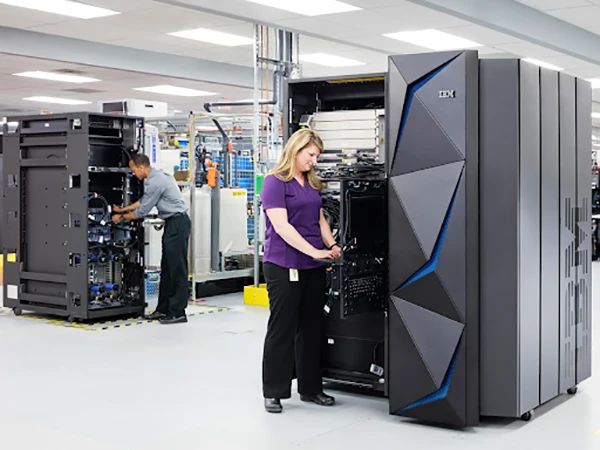
Another name worth a spot on this list is IBM. This company’s been in the market for decades, and its Watson platform proves that it remains a serious player today. Watson uses artificial intelligence to analyze data in real time, helping fintech organizations spot fraud, predict trends in customer behavior, manage risks, and improve service quality.
IBM not only has a long history of success, but it’s also one of the favorites among large banks and financial institutions, thanks to its cloud-based solutions. The company keeps advancing its solutions, adding new features and improving integrations so that financial firms can use them as efficiently as possible.

Accenture combines deep industry knowledge with cutting-edge analytics. Their FinTech solutions help companies:
They forecast market trends and spot chances for expansion and enhancements using sophisticated machine learning.
If you’re looking for a partner that brings both brains and business acumen, Accenture is a solid choice. They don’t just throw numbers at you – they help you develop more effective strategies needed to stay at the forefront of the industry.
Next comes TCS (Tata Consultancy Services), a big name among fintech DA companies. This company’s been delivering its services for years and earned a reputation as one of the strongest providers of data analytics solutions for FinTech. TCS’s solutions help FinTech companies improve customer experiences, simplify daily tasks, and manage risks.
Real-time analytics can be tracked with TCS, and their scalable platforms guarantee that you can handle as much data as you require. TCS is a terrific option for businesses that want premium service without going over budget because they are also reasonably priced.
Mu Sigma is another big name when it comes to data analytics firms. The company partners with over 500 140 Fortune organizations to improve their data analytics capabilities and takes pride in delivering fast and actionable insights.
The founders of Mu Sigma are adamant that improving decision-making should be the primary goal rather than big data per se. As such, they emphasize the importance of transforming unprocessed data into actionable steps that financial institutions can immediately implement.
Although Palantir first collaborated with government agencies, they have since turned their attention to FinTech. Financial institutions can make well-informed decisions by delving deeply into hidden patterns within data streams thanks to their platforms, which are designed for deep data analysis.
Where they particularly shine, though, is in the areas of fraud detection and compliance. For companies handling sensitive financial data and looking to add an extra layer of protection to their systems, Palantir’s solutions are hard to beat.
SAS has been in the analytics game for years, and they’re still going strong. Their tools are perfect for FinTech firms that need serious number-crunching power. From risk modeling to customer behavior analysis, SAS delivers clean, reliable insights.
Their software is user-friendly, and their support is top-tier – great for teams that want to hit the ground running.
Big data is now a necessity for fintech companies, not just a “nice to have.” Businesses can make better decisions, identify risks before they become more significant issues, and gain a deeper understanding of their customers with the help of the right analytics partner.
Whether you’re a startup building your first data pipeline or an established financial institution ready to modernize, partnering with a reliable data analytics provider can help unlock new levels of efficiency, speed, and accuracy.
Ans: Big Data enables companies to make smarter decisions, be better able to predict risk, and achieve a higher level of customer personalization, leading to growth.
Ans: Manual data analysis is limited to processing terabytes of different types of data and takes much longer and is less efficient at doing so than what is now possible with computers.
Ans: Big Data helps Fintech by identifying patterns of unusual or anomalous activity within real-time transactions.
Ans: Specialized analytics companies provide insight into complex data through customized solutions and have the technical know-how to quickly convert complex data sources into actionable insight.
