
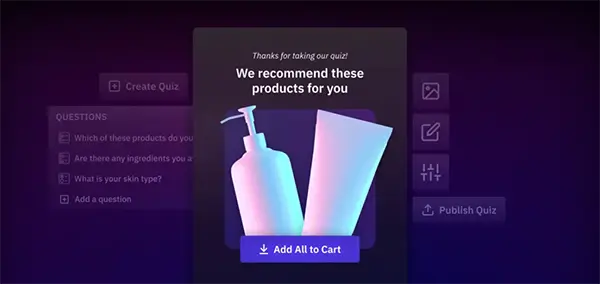
Most people don’t know exactly what their skin needs. A well-designed skin quiz for products helps solve those doubts. It not only guides shoppers but also boosts metrics that matter most.
When brands understand the individual concerns of a visitor, they stop scrolling and start clicking. Creating conversations, gathering intent data, and nudging people toward products that suit their personal needs. The result? Higher engagement, better traffic, and more confident buyers.
This article highlights how a skin quiz for products works to increase CTR and make your products perform more effectively.
Click-through rate is one of the clearest signals that your content is connecting with the right people. A higher CTR means more people are moving from browsing to buying, and in a category as personal as skincare, that transition doesn’t happen by accident.
The beauty and personal care industry faces a particularly tough challenge here. According to MailerLite’s 2025 email marketing benchmarks,the beauty and personal care sector has one of the lowest email click rates across all industries, sitting at just 0.95%.
Making this even more crucial for skincare brands to explore smarter ways to earn clicks. This is why personalized product quizzes are proving to be one of the most effective tools available.
Regular product pages and simple recommendations no longer cut it. Consumers expect to be understood more. A quiz creates that moment of relevance, precisely lifting CTR across campaigns, product pages, and ads.
A skin quiz for products works because it taps into something every shopper wants: a personalized recommendation.
Instead of suggesting the same product to every user, a quiz understands visitors in real time based on their answers and delivers custom results.
This shift from passive browsing to active participation changes how people interact with your brand.
Shoppers who receive a recommendation based on their skin type, concerts, and lifestyle are more likely to click through and purchase a product.
They feel seen. They trust that the product was chosen for them, not just placed on a shelf. That trust translates directly into action.
Research from Interact’s 2026 Quiz Conversion Rate Report shows that the overall conversion rate when people start a quiz is 40.1%, meaning roughly 4 out of 10 people who begin a quiz become a lead.
Even more telling: 65% of quiz takers complete the entire quiz once they start. This completion rate garners genuine interest and engagement, fueling higher CTRs for the long-term.
One of the biggest obstacles to conversion in skincare is choice overload. A typical brand might offer dozens of moisturizers, serums, and cleansers.
For someone new to the brand, navigating that catalog feels overwhelming. A well-designed quiz for skin care products removes that friction. It narrows down the options, guides the shopper, and presents only the most relevant choices.
That streamlined experience makes clicking “Add to Cart” feel easy rather than risky.
According to a breakdown by Outgrow on product recommendation quizzes, interactive content like quizzes increases dwell time, reduces bounce rates, and boosts organic engagement metrics.
When people spend more time on your site and interact with your content, the search engines take notice, boosting your rankings.
Bonus Tip
Adding in images, videos, and engaging visual layouts improves user experience and retention over the course of the quiz.
A strong real-world example of this approach is the Skin Analysis Quiz by Mario Badescu. The brand built a quiz that walks visitors through a series of questions about their skin type, primary concerns, and lifestyle factors.
Based on the results, it delivers a custom skincare routine, a complete set of suggested products, including cleanser, toner, and moisturizers.
The results have been significant. According to a case study published by Visual Quiz Builder, the Mario Badescu skin quiz has recorded over 55,000 skin profiles, with a quiz completion rate above 80%.
That is way more than the average completion benchmark for most interactive content, reflecting just how attractive a personalized skincare tool can be when it is designed with care.
Several features make this quiz particularly effective:
The quiz is also positioned accurately in the main navigation under the “Skin analysis” section. A placement signalling immediate value to visitors.
Per the Visual Quiz Builder case study, the optimal quiz length sits at 6 to 8 questions. Beyond that, completion rates drop. Mario Badescu keeps the quiz within this range, which contributes to the high finish rate.
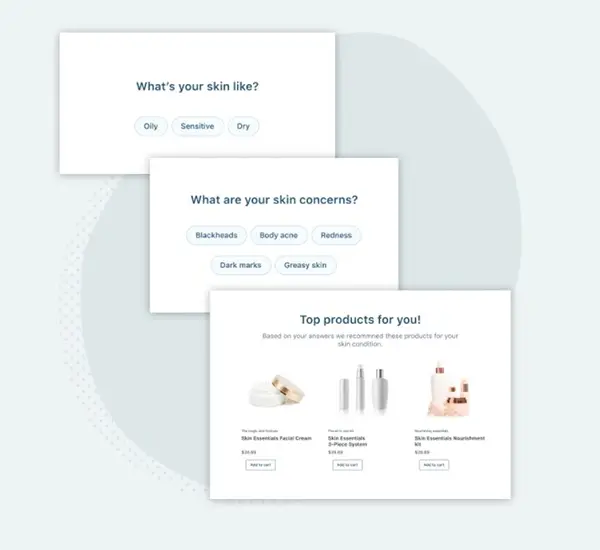
The impact of a quiz for skin care products does not stop at the results page. When set up correctly, it creates a significant impact across your entire marketing funnel.
When the quiz data is inserted into the email campaigns, the emails that follow become more relevant. A shopper who indicated dry, sensitive skin gets an email about hydrating serums and gentle cleansers, not just a generic one showing the brand’s catalog.
This level of targeting is what separates average email performance from exceptional CTR.
Triggered emails — messages sent based on a specific action, like completing a quiz — consistently outperform broadcast campaigns.
According to data highlighted by Opensend’s analysis of ecommerce CTR, triggered emails can reach CTRs of up to 21.32%, compared to the industry average of around 2.62%. A quiz is one of the best ways to generate that trigger.
When a quiz is placed prominently on a homepage or in the main navigation, it becomes a conversion tool from the very first visit. Visitors who engage with it spend more time on the site, visit more pages, and are more likely to return. Each of those behaviors signals stronger purchase intent and contributes to higher overall CTR across product pages.
Quizzes are also used to amplify landing page experiences for increased paid traffic. When someone clicks an ad and lands on a quiz instead of a regular product page. They are drawn into an interactive experience rather than being asked to convert immediately.
This softer entry point builds trust and increases the likelihood of that post-quiz click-through to a product.
Not every quiz will drive the same results. The structure, design, and follow-through all matter. Here are the elements that separate a quiz that converts from one that users abandon:
A skin care quiz for products that combines all three of these elements efficiently creates a full experience, from discovery to recommendation to purchase, without requiring the user to do much of the work themselves.

A strategically designed skin quiz for products does more than help shoppers find what they need. It generates zero-party data, fuels personalized follow-up campaigns, reduces bounce rates, and — most importantly — drives higher click-through rates across every channel it touches.
For beauty product brands competing in a crowded market, this offers a significant advantage. The brands that choose this option often treat them as a core part of the customer experience, rather than a novelty feature.
When the quiz is well-structured, placed prominently, and connected to your email platform, it becomes one of the most cost-effective tools in your marketing stack.
If your brand has not yet built a dedicated quiz, now is the time to start. The data is clear, the tools are accessible, and the opportunity to stand out is real.
