
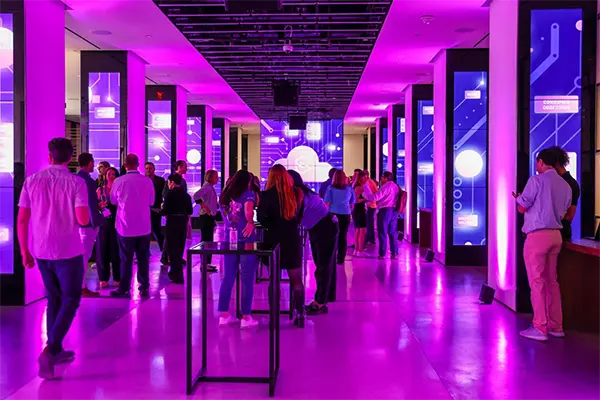
Brand identity isn’t just denoted by a logo or a colour palette. It’s the feeling people carry away after they’ve had a conversation with you, assuming what you’ll be like the next time and what they tell others when you’re not in the room.
This is why corporate events matter. They take your brand and put it into a lived experience. In the modern world, where every interaction is limited to digital scenes, an in-person event can make advances that even your website can’t.
Here are seven concrete ways corporate events strengthen brand identity and how to make each one work harder for you.
Key Takeaways
- A corporate event isn’t just about displaying perfection all across; it’s more about how the brand’s values are reflected through the gathering
- It serves as a way for people to remember the experience and tell others about the same
- This allows the construction of a strong community that enhances the brand’s identity as a whole
- Operational excellence isn’t just about perfection. It’s about clear communication, visible staff support, and recovery when something inevitably changes.
A strong brand is consistent, but also human. People trust what they are able to verify through real interactions and conversations.
The way the team treats guests, how they handle an error, whether the content delivers on the promise, and whether the atmosphere matches the story that is told publicly.
Events compress those signals into a few hours. Done well, they accelerate trust. Done poorly, they expose gaps between “what we say” and “what we do.”
The following are the unmatched benefits of corporate events that help create an even stronger identity for your brand:
Most companies claim similar things—innovation, customer focus, integrity. An event forces you to prove it.
If being customer-centric is a genuine value, it must show up in choices like accessibility, dietary choices, thoughtful pacing, and how Q&A is handled, but if innovation is your priority, the event format should feel fresh with interactive demos, live problem resolutions, or curated labs rather than generic slide decks.
Guests don’t remember your mission statement. They leave recalling how the experience made them feel, and that particular emotional residue is brand identity in action.
Brands are constructed through repetition and recognisable signs. Events are one of the few channels where the company can control multiple touchpoints at once: visuals, sound, lighting, language, flow, even scent and texture.
This is where identity becomes distinctive. A premium brand might lean into spacious layouts, minimal staging, and high-touch service. A challenger brand might opt for bold design, faster pacing, and more audience participation. Neither is “better”—but each should be deliberate.
The key is coherence: the moment should feel like an extension of your brand, not a template.
Here’s an underrated advantage: events force you to articulate your narrative under pressure. A positioning line that works on a website may fall flat when spoken from a stage. A product story that seems clear internally might confuse a room full of prospects.
That feedback loop is gold. When you watch where people lean in—or tune out—you learn what your brand actually stands for in the market’s mind.
This is also where the choice of the right production partner can assist in translating strategy into experience. If you’re coordinating venues, suppliers, run-of-show, and attendee experience in a busy space, working with a specialised corporate events planner for London companies helps keep the execution clean and aligned closely with the brand intent, so the day doesn’t drift into “nice event, unclear message.”
Brands that are successful in the long-term tend to create belonging. Corporate events can turn a loose network, such as clients, partners, alumni, and prospects, into a huge community with shared language and moments.
Think about what actually happens at a roundtable or customer summit: people interact with peers, swap stories, and start associating your brand with access and insight, making the brand not just a vendor, but a convenor.
To make this work, interaction design instead of assuming it will happen. Curate the guest mix. Structure “collisions” (short facilitated discussions, topic tables, hosted networking) so attendees leave with relationships, not just notes.
Bonus Tip
Giveaways should include high-quality, practical items that attendees use daily, ensuring the brand remains top-of-mind long after the event concludes.
External brand identity starts internally. Events are one of the strongest tools for employee alignment because they create a shared reference point.
A product launch, all-hands, leadership offsite, or awards night can reinforce what “good” actually looks like, how decisions are made, what behaviours are celebrated, and what the vision of the company is.
When employees experience the brand clearly, they express it more in client conversations, interviews, and day-to-day work.
One practical tip: involve different teams in the planning process early, as sales, customer success, product and marketing people often interpret the brand differently.
An event planning cycle can surface those differences and resolve them—before they become market confusion.
Brand identity today is shaped in public. The most believable brand messages are the ones your audience shares for you: a speaker quote, a photo that captures the vibe, a candid video of the CEO handling tough questions well.
Events create a high-density environment for that kind of content, but you need to plan beyond “we’ll film it.” Decide what the brand should look like on camera. Create moments worth capturing: a strong opening scene, clear stage branding, interesting audience participation, and interview-friendly spaces.
And don’t underestimate post-event assets. A single keynote can turn into a short clip series, an executive POV article, or a customer case study, each seeing the same identity from different angles.

This one is a subtle but powerful factor; a smooth event communicates competence.
If the registrations are chaotic, sessions start later than the decided time, or AV fails repeatedly, attendees may not be able to connect it to your product or service, making them feel the friction.
Alternatively, an event that runs smoothly signals that you’re dependable, detail-oriented, and prepared.
This matters the most, especially in industries where risk is a factor, such as finance, healthcare, cyber, and professional services. People are not only buying what you do but are buying the confidence that your brand delivers when it counts.
Operational excellence isn’t solely about perfection. It’s about resilience, clear communication, visible staff support, and calm recovery when something inevitably changes.
The difference between an enjoyable event and a brand-building event is in its intentionality. Before you lock the venue, ask yourself three questions:
If the answer is clear, the creative choices get straightforward, the agenda gets sharper, and the event stops being a standalone activity; it becomes a brand asset, one that pays in trust, loyalty, and clarity long after the last guest has gone home.
