
Maintaining a vehicle is no longer limited to maintenance; it has turned into a hobby for riders. Ensuring this, they want to stay ahead through systems that centralize all the functioning of the vehicle and allow them to focus on things that truly matter.
That’s exactly where fleet maintenance management software provides total control of things. Most of the fleet managers’ tools control things, and such a system not only boosts maintenance control but also helps in decision-making for things like work order tasks.
Keep reading this article that shares how fleet maintenance management software puts you from chaos to total control.
Key Takeaways
- From chaos to clarity: A software that replaces guesswork with structured management for better digital support
- Automated scheduling to prevent you from unexpected breakdowns and last-minute rush, for stabilising the whole operation
- Access to the real-time information, activities, and much more with just a simple dashboard on your system
- Empowering your technicians and drivers with the mobile- friendly technology to report detection and faults
- A relatively changed mindset from what is the loss to how to prevent it the next time
Traditional fleet maintenance often runs on memory and manual tracking. When something feels faulty or when someone remembers it’s past due, a car comes in for service. Records live in wooden cabinets or separate digital tools that don’t talk to each other. Over time, this creates blind spots.
Modern maintenance management software replaces guesswork with structure. Every vehicle has a digital report that includes service history, reviews, mileage, and repair trends. Supervisors can view which vehicles are proving high-risk, which ones need repair, and which ones are healthy. Instead of being confused by failures, teams work with clear goals and estimated schedules.
One of the major benefits of fleet maintenance software is automated scheduling. The maintenance schedule can be defined by mileage, engine hours, or time. Oil changes, brake inspections, and checks can be done before a situation becomes an emergency.
This helps in avoiding unplanned repair work and keeping the vehicles in a safer condition. It also helps in balancing the workload of the technicians, as there are no last-minute rushes or overtime schedules. When maintenance is done on a routine basis, the whole operation becomes stable.
Over time, vehicles last longer, and capital replacement decisions are based on real data rather than frustration.
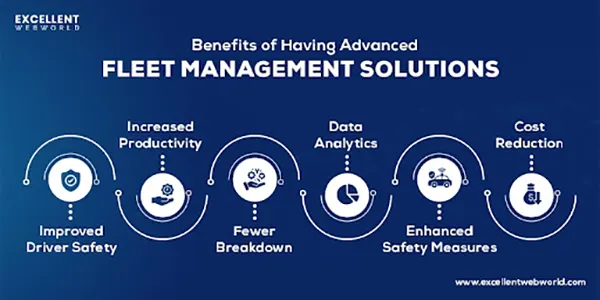
Apart from this, fleet management systems lead to various other benefits as well, such as increased productivity, improved driver safety, etc., which can be observed in the infographic :
Control depends on visibility. Without it, managers have no choice but to wait for expired information or hear about it secondhand. Real-time data on work orders, asset condition, and technician activity offered by fleet maintenance management systems helps one stay current.
With one dashboard, managers can monitor the following:
For companies that have more than one depot or work location, having this information is vital.
Fleet maintenance does not only happen in the shop. It begins with the people who use the vehicles every day. Drivers are often the first to notice strange noises, vibrations, or warning signals. When addressing issues is difficult, those signals get ignored.
With mobile-friendly software, drivers can submit inspection results and issue reports instantly. Photos, notes, and fault descriptions go directly into the system, creating a clear path from detection to repair. The National Highway Traffic Safety Administration also clarifies that regular vehicle inspections and proper maintenance are essential to reducing safety risks on the road.
Technicians also benefit from having everything in one place. They can view work orders, check service histories, and document repairs on their phones or tablets. This reduces paperwork, speeds up repairs, and keeps records accurate.
When local teams have tools designed for real-world work, productivity rises, and frustration goes away.
Downtime often lasts longer than necessary because parts aren’t available or vendors aren’t organized properly. Fleet maintenance software connects inventory and vendor management directly to work orders.
Teams can track spare parts in real time, set reorder points, and link parts to specific vehicles. When a repair is created, the system already knows what parts are required. This puts off delays and reduces emergency purchasing.
Vendor performance can also be monitored. Response times, quality of work, and costs become visible, helping organizations choose the right partners and hold them accountable.
Every inspection, repair, and service action creates data. Over time, that data becomes one of the organization’s most valuable resources.
Maintenance management software takes raw data and turns it into intelligence. Leaders can discover which vehicles break down most frequently, which parts have the shortest lifespan, and where funds are being allocated. Even more, AI-based solutions can point out trends that will lead to future mistakes.
Rather than asking, “What broke last week?” teams begin to ask, “What can we prevent next month?” This mindset change causes maintenance to become a strategic operation rather than a constant crisis response.
Fleet maintenance management software is not just about tracking repairs. It is an integration that involves moving parts—vehicles on the road, drivers reporting problem and managers trying to keep things on time.
Furthermore, it builds confidence across the operation. As a result, vehicles feel safer, teams get more organized, and leaders get insight instead of confusion. And drivers can report the problems fast, technicians work through previous histories, and managers get a retired access to what all is actually happening.
For industrial frontline organizations looking to transform how they operate, this level of control changes everything.
Ans: Fleet management software is used for improving your business operation by providing real-time insights into your fleet’s performance
Ans: MaintainX is one of the most famous and trusted software for maintaining fleet performance and ensuring proper work execution.
Ans: Some of the major advantages of fleet management include improving your vehicle’s health, reducing breakdowns, and keeping them running longer.
Ans: The four pillars of fleet success include efficient tracking, cost management, driver safety, and compliance that frame the roots of an efficiently working fleet system.
